 Pin It
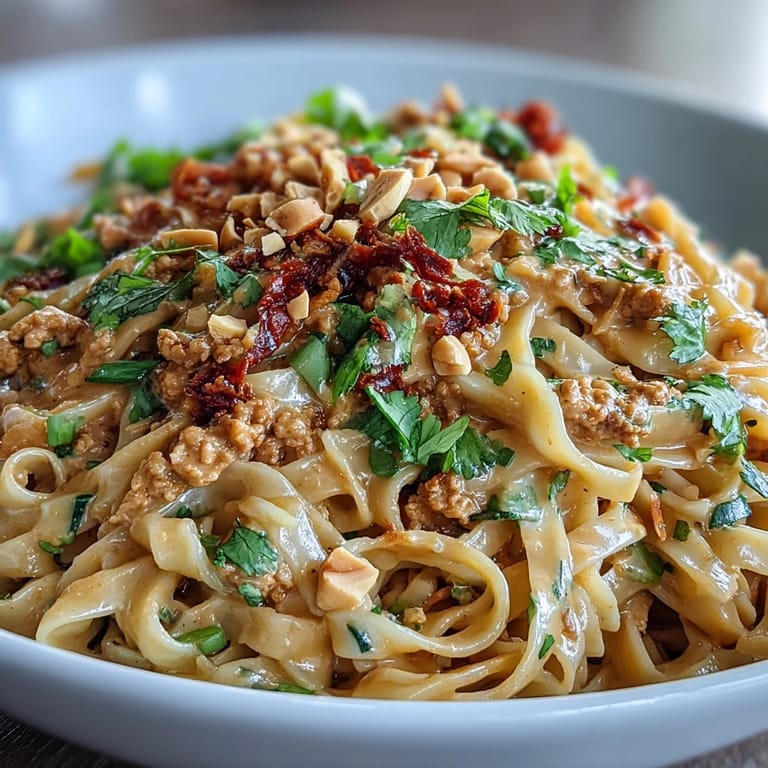
 There's something almost magical about watching a skillet transform into a complete meal in under twenty minutes. My kitchen was steaming one weeknight when I discovered that cooking noodles directly in a sauce—the way you would crispy potstickers—could yield something far more interesting than the usual separate-step approach. The peanut butter melted into the broth, the noodles softened while soaking up every bit of flavor, and suddenly dinner felt less like assembly and more like alchemy. Thai-inspired but entirely approachable, this creamy peanut noodle bowl became the dish I reach for when I want something that tastes like I spent hours cooking but actually took about forty minutes from start to finish.
I'll never forget cooking this for my neighbor who'd recently moved in, standing in her unfamiliar kitchen with just a wok and determination. She was nervous about entertaining, worried she'd mess something up, so I walked her through building the sauce while the chicken browned. By the time we tossed it all together, she was laughing about how the apartment smelled like a Thai restaurant and asking for the recipe before we'd even sat down to eat. That bowl of noodles turned an awkward new-neighbor moment into something warm and connected.
Ingredients
- Ground chicken (1 lb): Choose meat that's not too lean—a bit of fat keeps everything tender and flavorful as it cooks directly with the sauce.
- Dried wide rice noodles (10 oz): These absorb liquid beautifully and develop a slightly tender texture that pairs perfectly with creamy sauces, unlike thin rice noodles which can turn mushy.
- Red bell pepper: The sweetness balances the savory-spicy sauce, and slicing it thin means it softens just enough in the quick cooking time.
- Shredded carrots (1 cup): Carrots add natural sweetness and a hint of earthiness that deepens the overall flavor profile.
- Snap peas (1 cup): They stay crisp even with brief cooking, giving you that textural contrast that makes each bite interesting.
- Garlic and ginger: These create the aromatic foundation—don't skip them, and mince them small so they distribute evenly throughout the sauce.
- Creamy peanut butter (1/3 cup): The heart of your sauce; use a natural peanut butter if possible, or make sure it's fully stirred if oils have separated.
- Low-sodium soy sauce and hoisin (1/4 cup and 2 tbsp): These provide umami depth and slight sweetness without oversalting the finished dish.
- Rice vinegar (2 tbsp): A splash of acidity brightens the richness and prevents the sauce from feeling one-dimensional.
- Honey or maple syrup (2 tbsp): This balances heat and saltiness, creating the rounded sweetness that makes Thai food so craveable.
- Toasted sesame oil (1 tbsp): Use genuine toasted sesame oil—the flavor is concentrated and aromatic, so a little goes a long way.
- Sriracha or chili garlic sauce: Start with less than you think you want; you can always add heat but you can't take it away.
- Chicken or vegetable broth (1 1/2 cups): Low-sodium is essential here since soy sauce and hoisin already contribute salt.
- Lime juice: Squeezed fresh at the end, this adds brightness that somehow makes all the other flavors pop.
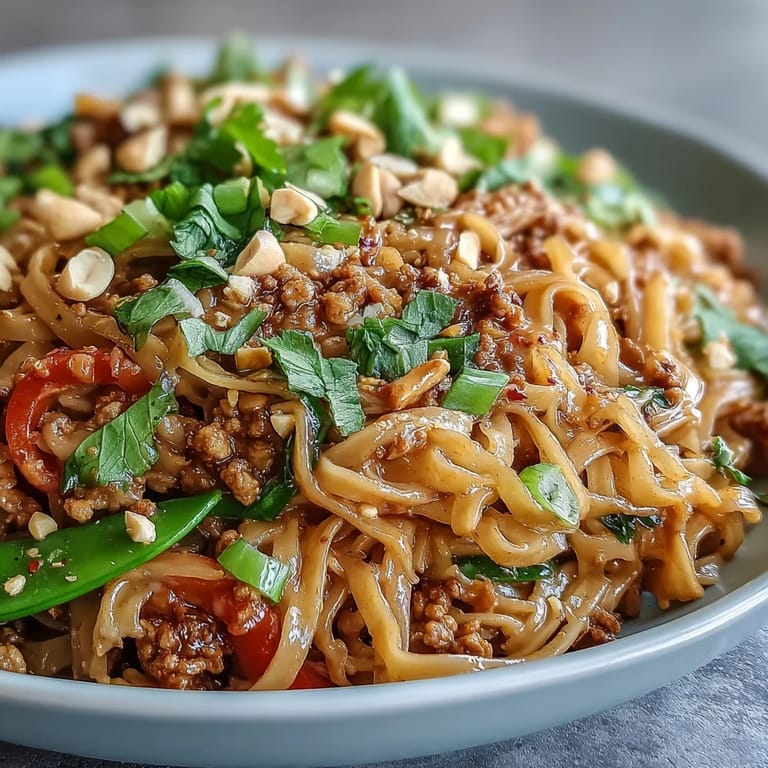
- Roasted peanuts, cilantro, and lime wedges: These garnishes aren't just decoration—they add texture, freshness, and visual interest that make the dish feel complete.
Tired of Takeout? 🥡
Get 10 meals you can make faster than delivery arrives. Seriously.
One email. No spam. Unsubscribe anytime.
Instructions
- Brown the chicken foundation:
- Heat oil in your large skillet over medium-high heat and add the ground chicken, breaking it apart with a wooden spoon as it cooks. You'll know it's ready when there's no pink left, about five minutes—don't rush this step because you want the meat to have some color and texture.
- Build the aromatic layer:
- Once the chicken is cooked, add minced garlic, grated ginger, and the white parts of the green onions to the pan. Let them sizzle for about a minute so the scents bloom and coat the pan—your kitchen will smell like a Thai restaurant right about now.
- Add the vegetables:
- Toss in the sliced bell pepper, shredded carrots, and snap peas, stirring occasionally for two to three minutes. You're not trying to fully cook them; you just want them to start softening while still keeping that fresh crunch.
- Spread the noodles:
- Add the dry rice noodles directly to the pan, spreading them in an even layer over the vegetables and chicken. This is the technique that makes everything work—the noodles will cook right in the sauce and absorb all that flavor.
- Whisk and pour the sauce:
- In a separate bowl, whisk together the peanut butter, soy sauce, hoisin, rice vinegar, honey, sesame oil, sriracha, and broth until the peanut butter is fully dissolved and the sauce is smooth. Pour this over the noodles and vegetables, making sure to distribute it evenly.
- Simmer and soften:
- Bring everything to a simmer, then cover and cook for four to six minutes, stirring occasionally so the noodles cook evenly and absorb the sauce. They should be tender and the mixture should look creamy, not soupy or dry.
- Return and toss:
- Add the cooked chicken back to the pan and toss everything together over low heat for two to three minutes until it's all warm and well combined. Finish with a squeeze of fresh lime juice and taste—adjust seasoning if needed.
- Serve with garnish:
- Divide into bowls and top with chopped peanuts, fresh cilantro, the reserved green onion tops, and extra lime wedges so everyone can adjust the flavor to their taste.
 Pin It
 I made this for my son's friend group during one of those chaotic cooking nights where everyone was hungry and loud and nobody wanted to wait for complicated food. The smell of that peanut sauce simmering filled the whole apartment, and somehow it quieted the room—there's something about good food that brings people together, even teenagers. When they asked for seconds, I knew I'd found something special.
Why This One-Pan Technique Works
The magic of cooking noodles directly in the sauce instead of separately is that they become seasoned from the inside out rather than coated from the outside. The starch from the noodles also helps thicken and emulsify the sauce, creating that silky texture that makes you want to eat every drop. Plus, there's something satisfying about the efficiency of it all—less cleanup, more flavor, less time spent standing in front of the stove.
Protein Flexibility
While ground chicken is my go-to because it absorbs flavors quickly and cooks fast, this recipe is genuinely flexible. Ground turkey works beautifully and has a slightly leaner taste, crumbled tofu gives you a vegetarian option that becomes wonderfully tender in the sauce, and I've even used shrimp cut into bite-sized pieces—just reduce the initial cooking time to a couple minutes so they don't toughen up. The sauce carries whatever protein you choose, so don't hesitate to use what you have on hand.
Heat and Customization
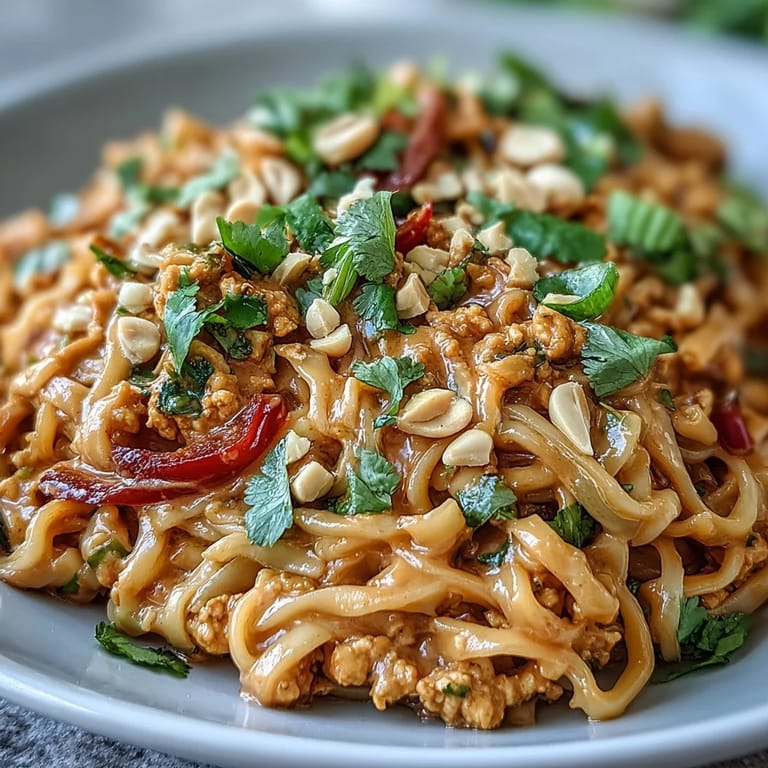
Sriracha and chili garlic sauce bring different heat levels, so taste as you go and remember you can always add more spice but can't remove it once it's mixed in. Some people love the clean heat of sriracha, while others prefer the garlic undertones of chili garlic sauce—both work, it just depends on your mood that night. I've also served it with extra chili flakes or fresh Thai chilies on the side so people can customize their own heat level at the table, which eliminates the inevitable complaints about it being too hot or not hot enough.
- Start with half the sriracha called for and add more only if you want extra fire.
- A squeeze of lime at the table lets everyone adjust brightness to their taste.
- Keep extra fresh cilantro handy because people always want more than you expect.
 Pin It
 This bowl of noodles has become my quiet answer to weeknight chaos, the dish that reminds me good food doesn't need to be complicated to feel special. Every time I make it, I'm grateful for how a simple technique—cooking noodles in sauce instead of separately—can turn an ordinary Tuesday into something worth remembering.
Recipe FAQs
- → Can I make this dish vegetarian?
Yes, substitute crumbled firm tofu or extra vegetables for the ground chicken. Use vegetable broth instead of chicken broth to keep the dish fully plant-based while maintaining all the creamy peanut flavor.
- → What type of rice noodles work best?
Wide rice noodles (pad thai style) are ideal because they hold up well during the one-pan cooking method and absorb the creamy sauce beautifully. Look for dried noodles labeled as rice sticks or pad thai noodles in Asian markets or well-stocked grocery stores.
- → How can I adjust the spice level?
Start with 1 teaspoon of Sriracha and add more to taste after the sauce is combined. For milder flavor, omit the Sriracha entirely or reduce it to ½ teaspoon. You can also serve extra chili sauce on the side so diners can customize their bowls.
- → Is this dish gluten-free?
The dish can be made gluten-free by using tamari instead of soy sauce and choosing a gluten-free hoisin sauce. Most rice noodles are naturally gluten-free, but always check labels to confirm. The peanut sauce base remains delicious with these simple substitutions.
- → Can I prepare this ahead for meal prep?
This dish reheats well for meal prep. Store individual portions in airtight containers for up to 4 days. When reheating, add a splash of broth or water to loosen the sauce, as the noodles will continue to absorb moisture. Garnish with fresh toppings just before serving for the best texture.
- → What vegetables can I substitute?
Feel free to use whatever vegetables you have on hand. Shredded cabbage, broccoli florets, baby corn, bok choy, or sliced mushrooms work wonderfully. Aim for about 3 cups of vegetables total to maintain the balance with the noodles and sauce.