 Pin It
 My grandmother kept a ham hock in her freezer at all times, always ready for "soup weather." One blustery October afternoon, she handed me a bag of split peas and said, "This is how you know someone," before setting me loose in her kitchen with nothing but a pot and her quiet confidence. That soup taught me more about cooking than any recipe ever could—how patience transforms simple things, how smoke and salt and time become something deeply nourishing. Now whenever I make it, I can almost hear her humming while she stirred.
I made this soup for my neighbor during her first winter in our building, when she seemed a bit lost and homesick. She came back three days later asking for the recipe, and I realized that's when I knew this wasn't just soup—it was the kind of dish that reminds people they're cared for.
Ingredients
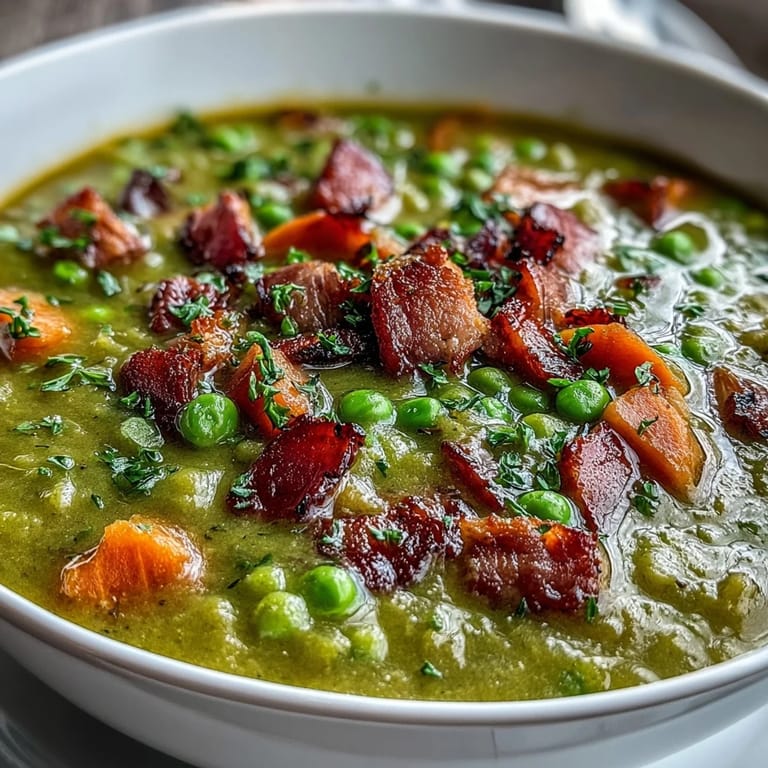
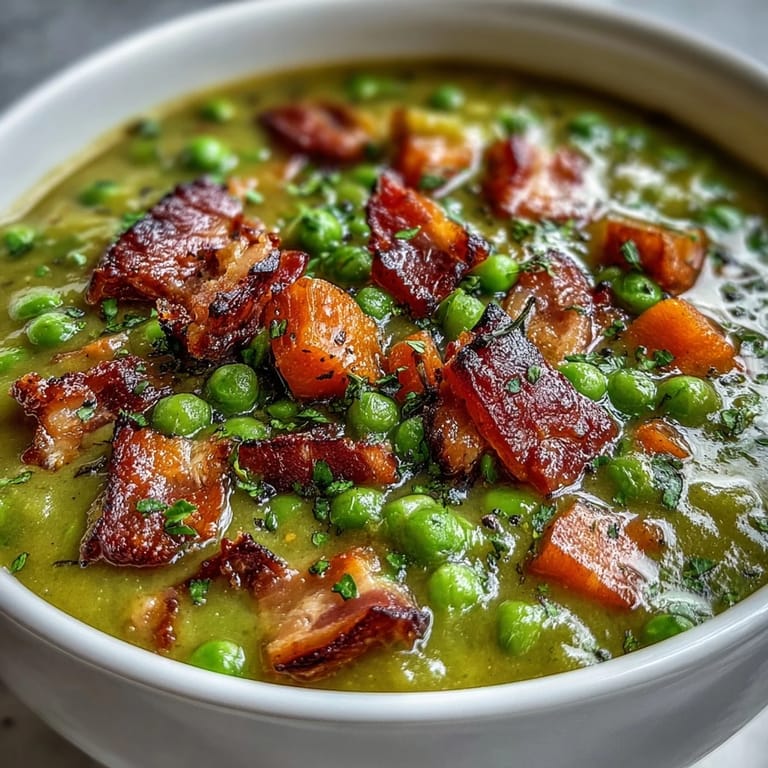
- Smoked ham hock or diced cooked ham (1 lb / 450 g): The soul of this soup—that smoky, salty backbone that makes everything else sing. If you use a hock, don't skip the step of shredding the meat back into the pot; those little smoky pieces are what people remember.
- Dried green split peas (1 lb / 450 g), rinsed and sorted: These humble legumes absorb all the flavors around them while creating that creamy texture naturally, without any cream needed. Sorting them catches the occasional stone that somehow sneaks in.
- Carrots (2 medium, peeled and diced): They soften into almost nothing, adding sweetness that balances the smoke and salt beautifully.
- Celery (2 stalks, diced): The quiet backbone of flavor that most people can't name but definitely notice when it's missing.
- Onion (1 large, diced): Caramelize it gently in that first step—this is where the depth begins.
- Garlic (2 cloves, minced): Just enough to whisper its presence, not shout it. Add it after the softer vegetables so it doesn't burn.
- Low-sodium chicken broth or water (8 cups / 2 liters): Use broth if you want more flavor, water if you want the ham and peas to be the stars. Either works beautifully.
- Bay leaves (2): They disappear during cooking but leave behind an herbal grace that ties everything together.
- Dried thyme (1 tsp): A gentle herb that feels right at home with split peas and smoke.
- Freshly ground black pepper (1/2 tsp) and salt to taste: Start conservative—you can always add more, and that ham hock brings its own saltiness to the party.
Tired of Takeout? 🥡
Get 10 meals you can make faster than delivery arrives. Seriously.
One email. No spam. Unsubscribe anytime.
Instructions
- Build your flavor base:
- Heat a splash of oil in your pot over medium heat, then add the onion, carrots, and celery. Let them soften for 5 to 7 minutes, stirring now and then—you're not rushing this, you're coaxing out their natural sweetness. The kitchen will start smelling warmer already.
- Wake up the garlic:
- Stir in your minced garlic and let it cook for just about a minute, stirring constantly so it becomes fragrant without turning bitter. You'll know it's right when you can smell it but it's still pale.
- Bring it all together:
- Add the split peas, ham hock (or diced ham), bay leaves, thyme, and black pepper to the pot. Stir everything so the peas are coated and distributed—this matters because they cook more evenly this way.
- Add the liquid:
- Pour in your broth or water and stir until everything is well combined. There should be plenty of liquid—the peas will drink it up as they cook.
- Simmer with patience:
- Bring the pot to a boil, then turn the heat down to low and cover it. Now let it simmer for 1 to 1 1/2 hours, stirring occasionally. The longer it simmers, the thicker it becomes and the deeper the flavors get—this is when the magic happens.
- Finish the ham:
- If you used a ham hock, carefully remove it from the pot and set it aside to cool slightly. Once it's cool enough to handle, shred any meat from the bone, discard the fat and bone, and return the shredded meat to the soup where it belongs.
- Taste and adjust:
- This is crucial—taste a spoonful and see what it needs. Salt and pepper are your only friends here, so add them slowly and taste again. Remove those bay leaves before serving; they've done their job.
- Serve with warmth:
- Ladle the soup into bowls and serve it hot with crusty bread or crackers on the side. Watch people's faces when they taste it.
 Pin It
 Years ago, my roommate was going through something difficult, and I left a container of this soup on her desk without saying much. She later told me it was the first meal that made her feel like someone was thinking of her, and that matters more than technique or perfect seasoning ever could.
The Beautiful Science of Split Peas
There's something almost miraculous about how split peas transform during cooking. They start hard and small, but as they absorb the broth and heat, they soften and release their starches into the liquid, naturally thickening the soup without any cream or added thickener. This is why split pea soup tastes so velvety and rich even though it's fundamentally simple—the peas do the work for you. Understanding this means you'll never feel anxious about whether you're doing it "right."
When to Blend and When to Leave It Whole
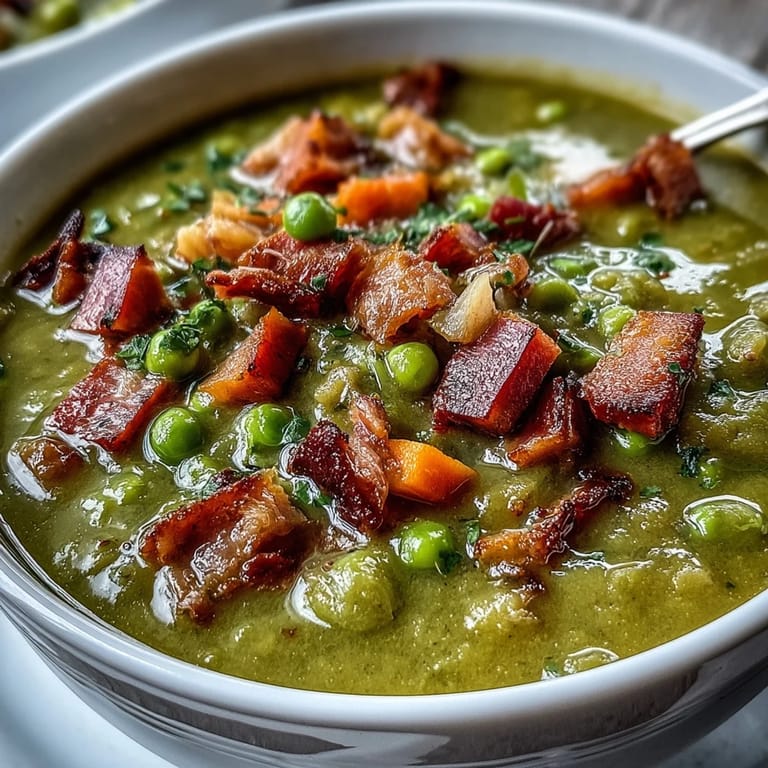
Some people love a completely smooth soup, and others prefer it chunky with visible vegetables and meat. If you want something in between—creamy but still rustic—use an immersion blender to partially puree just the bottom half of the pot, which gives you that luxurious texture without losing all the character. I learned this trick after over-blending a pot and turning it into something that tasted more like baby food, which wasn't the point at all. The choice is yours, and neither way is wrong.
Storage, Freezing, and Making It Last
This soup keeps beautifully in the refrigerator for up to four days, and it actually improves as the flavors marry overnight. It also freezes wonderfully for up to three months, so making a double batch is always smart. Thaw it overnight in the fridge and reheat gently on the stove, adding a splash of broth if it seems too thick.
- Let it cool completely before freezing in portions—shallow containers thaw faster than one giant block.
- Add fresh parsley or a squeeze of lemon juice after reheating for brightness that tastes like you just made it.
- If you're adapting this for dietary needs, it's naturally gluten-free, dairy-free, and endlessly forgiving.
 Pin It
 This is the kind of soup that gets made again and again, that becomes part of your rotation without you really planning it. It's honest food that asks nothing of you except time and attention, and rewards you generously in return.
Recipe FAQs
- → Can I use smoked turkey instead of ham?
Yes, smoked turkey works as a lighter alternative, offering a similar smoky flavor while keeping the soup lower in fat.
- → How do I achieve a smoother texture?
Use an immersion blender to partially puree the soup, creating a creamier consistency without losing hearty bits.
- → What cooking time ensures perfectly tender peas?
Simmering for 1 to 1 1/2 hours allows the split peas to soften fully and the flavors to meld together beautifully.
- → Are there suitable broth alternatives?
Low-sodium chicken broth is preferred, but water can be used for a lighter base, adjusting seasoning accordingly.
- → How can I add extra heartiness to the soup?
Add diced potatoes during cooking for additional texture and substance, enhancing the comfort level of the dish.