 Pin It
 There's something about the moment when roasted sweet potatoes hit a hot pan and the edges start to caramelize that makes me pause and just breathe in the smell. I discovered these bowls on a lazy Sunday afternoon when I had a half-empty fridge and needed something that felt both nourishing and exciting. What started as improvisation became the meal I now make whenever I want to feel like I'm taking care of myself without any fuss. The first time I served them to friends, everyone went quiet for a moment—that specific quiet that happens when food tastes exactly right. It's been my go-to ever since.
I remember making a huge batch of these for my sister's potluck last spring, nervous that the vegan angle might be a tough sell. She took one bite and immediately asked for the recipe, then spent the next week texting me photos of her own attempts with different additions. By the end of that month, I'd heard from three of her friends who'd become obsessed too. That's when I realized this wasn't just a meal—it was the kind of dish that makes people feel inspired in their own kitchens.
Ingredients
- Sweet potatoes: Look for ones that are similar in size so they cook evenly; the smaller chunks caramelize better and get that crispy exterior that makes everything taste better.
- Red bell pepper and red onion: These add both sweetness and a slight char when roasted, which deepens the whole flavor profile in a way that raw versions just can't match.
- Black beans: Canned are perfectly fine here—I rinse them to reduce sodium and warm them gently so they stay creamy rather than mushy.
- Brown rice or quinoa: I tend to make extra and eat the leftovers cold the next day; quinoa adds a nutty texture if you want something a bit different.
- Cumin and smoked paprika: These two spices do almost all the heavy lifting; they're what make these bowls taste intentional and layered rather than just thrown together.
- Fresh lime juice: Bottled works in a pinch, but fresh lime juice wakes up all the roasted vegetables in a way that feels like turning up the volume on a song you already loved.
- Avocado: Add this at the very end or even just before eating so it doesn't oxidize and turn brown; it's too good to let that happen.
Tired of Takeout? 🥡
Get 10 meals you can make faster than delivery arrives. Seriously.
One email. No spam. Unsubscribe anytime.
Instructions
- Heat your oven and prep:
- Get your oven to 425°F and line a baking sheet with parchment paper. This simple step means almost no cleanup later, which is its own small victory.
- Season and roast the sweet potatoes:
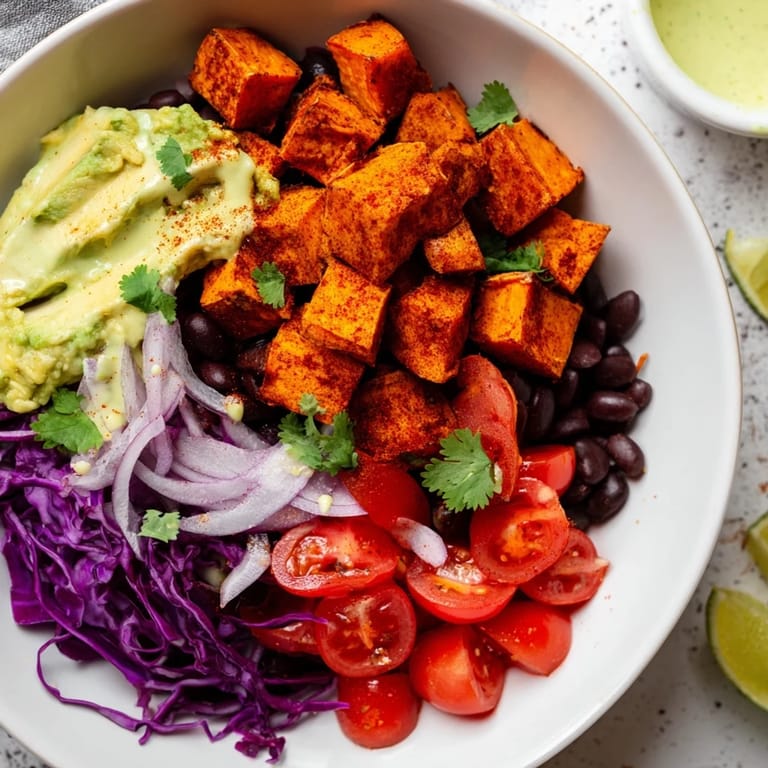
- Toss cubed sweet potatoes with olive oil and all those warm spices—cumin, smoked paprika, chili powder, garlic powder, salt, and pepper. Spread them in a single layer and roast for 20 minutes until the edges start to look almost caramelized.
- Add the remaining vegetables:
- Scatter the bell pepper and red onion over the same pan, drizzle with a bit more oil, and roast for another 10 minutes. Watch for that moment when everything smells impossibly good and the onions have turned a deeper color—that's your signal.
- Make the lime dressing while vegetables roast:
- Whisk together fresh lime juice, olive oil, maple syrup, minced garlic, cilantro, and a pinch of salt in a small bowl. The maple syrup balances the acidity of the lime and somehow makes everything taste more sophisticated.
- Warm the beans:
- Heat your black beans in a small saucepan over low heat until they're warm and fragrant. This gentle warming keeps them from becoming mushy.
- Assemble your bowls:
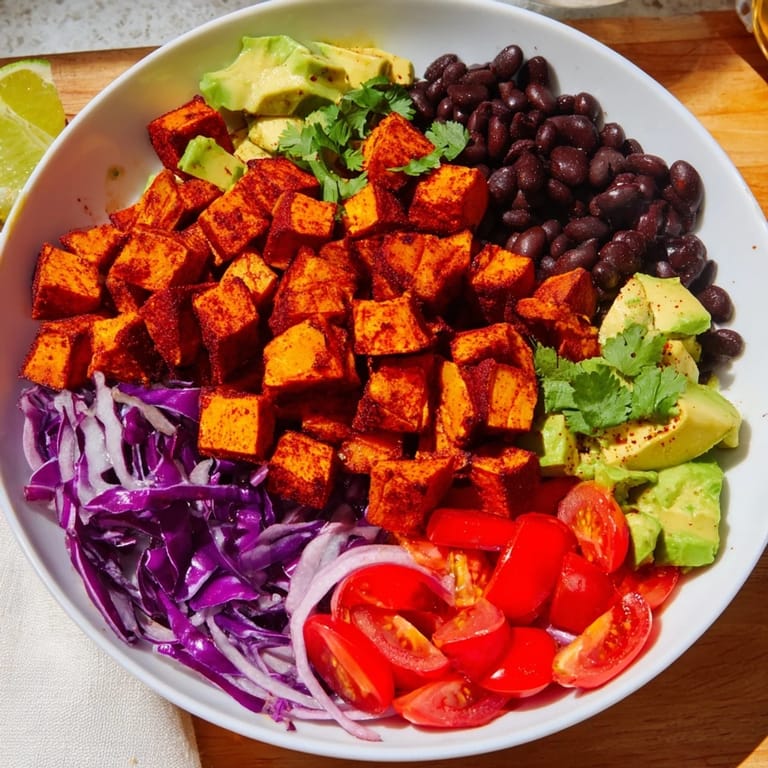
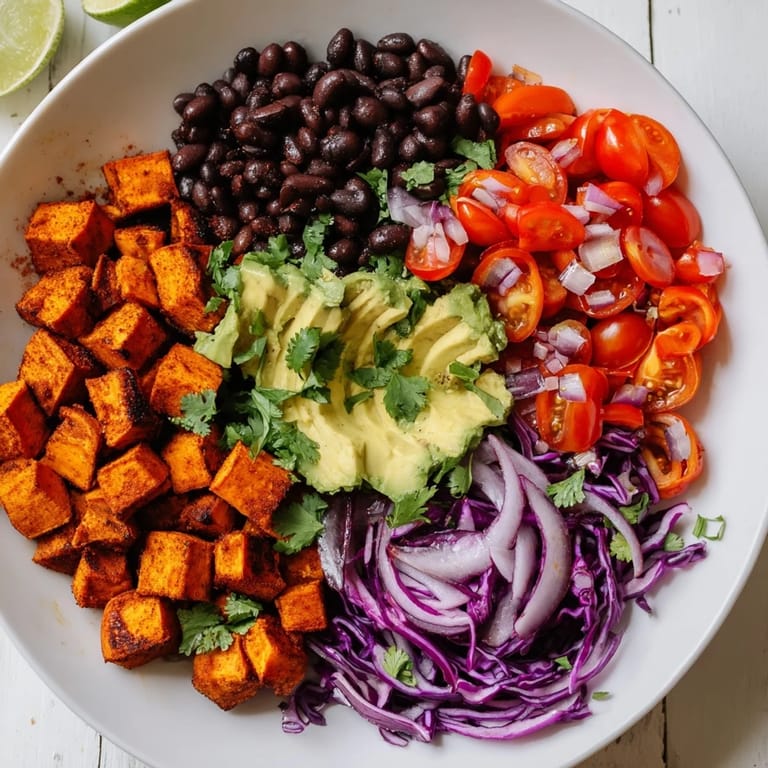
- Divide rice or quinoa among four bowls, then layer on the roasted vegetables, beans, cherry tomatoes, shredded cabbage, avocado, and jalapeño slices if you like heat. The order doesn't really matter, but I like putting the warm roasted stuff on the rice and the fresh vegetables on top.
- Finish with dressing and garnish:
- Drizzle the lime dressing over everything and finish with fresh cilantro leaves and a lime wedge. If you want richness, add a dollop of vegan sour cream right at the end.
 Pin It
 What struck me most about cooking these bowls over and over is how they became more than breakfast or lunch for me—they turned into a ritual. There's something grounding about chopping and roasting vegetables with intention, building something that looks as good as it tastes. Now whenever someone tells me they're trying to eat better or feel more creative in the kitchen, this is the recipe I suggest.
Why These Bowls Work as Leftovers
I've learned that if you keep the dressing separate and assemble the bowl fresh, everything tastes almost as good the next day. The rice or quinoa stays fluffy, the roasted vegetables develop even deeper flavor overnight, and only the avocado needs to be added just before eating. I actually prefer some leftover components cold, pulled straight from the fridge in the morning—there's something refreshing about that combination of temperatures and textures.
Customization Without Losing the Thread
These bowls are forgiving in a way that makes them perfect for using whatever you have on hand. I've swapped in roasted cauliflower for extra substance, added crispy chickpeas for crunch, and even used leftover roasted squash when I ran out of sweet potatoes. The structure stays the same—warm roasted vegetables, a grain base, fresh elements, and that lime dressing—but you can play within it without losing what makes it work.
Serving and Sharing
These bowls have become my answer to bringing something to potlucks or feeding a crowd without stress. I often roast all the components ahead of time, keep the dressing in a jar, and let people build their own at the table, which somehow always feels more special than plating ahead. The flexibility of each component also means I can accommodate whatever my guests need without having to cook entirely different meals.
- Toasted pepitas or crushed tortilla strips add a satisfying crunch that changes everything in the best way.
- A squeeze of hot sauce or sriracha transforms these from gentle to more assertive if that's your mood.
- Make extra lime dressing because it's good on salads, grains, and even roasted vegetables the next day.
 Pin It
 There's real pleasure in a meal that takes 50 minutes from start to finish, feeds four people, and leaves you feeling both satisfied and energized. These bowls have become my quiet favorite—not flashy or complicated, just honest and nourishing.
Recipe FAQs
- → Can I use other grains instead of brown rice or quinoa?
Yes, cauliflower rice is a great grain-free alternative, or you can try other cooked grains like farro or bulgur.
- → How do I make the roasted vegetables more flavorful?
Toss vegetables with spices like cumin, smoked paprika, and chili powder before roasting for a smoky, rich flavor.
- → What can I add for extra crunch?
Toasted pepitas or tortilla strips can be sprinkled on top to add a satisfying crunch to the bowls.
- → Is there a way to make the lime dressing sweeter?
Adjust the maple syrup amount to taste, or add a touch of agave or honey for additional sweetness.
- → Can I omit the jalapeño if I prefer less heat?
Absolutely, the jalapeño is optional and can be left out or replaced with milder peppers for a gentler spice level.