 Pin It
 The smell of browning beef in butter is what hooked me on pot roast. I never understood why my neighbor always made hers on Wednesdays until I tasted the leftovers she brought over one rainy afternoon. The meat fell apart with a fork, and the gravy soaked into everything on the plate. I went home that night and called my mom for her recipe, scribbling notes on the back of a grocery receipt.
I made this for my family the first winter in my new house, when the kitchen still felt too big and unfamiliar. The windows fogged up from the steam, and by the time I pulled the pot from the oven, the whole place smelled like home. My brother showed up unannounced and stayed for dinner, mopping up gravy with bread until there was nothing left. That pot roast turned my kitchen into a gathering place.
Ingredients
- Beef chuck roast or blade roast (3 to 3.5 lb): Look for good marbling because that fat breaks down during the long braise and keeps the meat juicy and flavorful instead of dry.
- Kosher salt (1 ½ tsp plus more) and black pepper (1 tsp): Season generously before searing so the crust develops deep flavor, and always taste the gravy at the end to adjust.
- All purpose flour (2 tbsp): A light dusting helps the sear develop color and also thickens the braising liquid slightly as it cooks.
- Olive oil or vegetable oil (3 tbsp divided) and unsalted butter (1 tbsp): The combination gives you a high smoke point for searing plus the rich flavor butter brings when it browns.
- Yellow onion (1 large), garlic (4 cloves), carrots (4 medium), celery (3 ribs), baby potatoes (1 ½ lb): These vegetables become sweet and soft as they braise, soaking up all the savory liquid and turning into the best part of the meal.
- Tomato paste (2 tbsp): Cooking it until it darkens adds a deep umami backbone that makes the gravy taste richer and more complex.
- Dry red wine (1 cup): Use something you would actually drink, not cooking wine, because the flavor concentrates and bad wine makes bad gravy.
- Low sodium beef broth (2 ½ cups) and Worcestershire sauce (1 tsp): Together they build a savory base you can control for salt, and the Worcestershire adds a subtle tangy depth.
- Fresh rosemary (2 sprigs), fresh thyme (3 sprigs), bay leaves (2): These herbs infuse the broth with earthy, aromatic flavor that makes the whole house smell incredible.
- Cornstarch (1 ½ tbsp) mixed with cold water (2 tbsp): This is optional but helps thicken the gravy to coat the back of a spoon if you like it less soupy.
- Fresh parsley (for garnish): A handful of chopped parsley at the end brightens the rich, heavy dish and makes it look more inviting.
Tired of Takeout? 🥡
Get 10 meals you can make faster than delivery arrives. Seriously.
One email. No spam. Unsubscribe anytime.
Instructions
- Prep and season the beef:
- Preheat your oven to 300°F if using that method. Pat the roast completely dry with paper towels, then season every side generously with kosher salt and black pepper before dusting lightly with flour and shaking off the excess.
- Sear the roast:
- Heat 2 tablespoons oil and the butter in a heavy pot over medium high heat until shimmering. Sear the roast for 4 to 5 minutes per side until a deep brown crust forms, turning to brown the edges too, then transfer to a plate.
- Cook the aromatics:
- Lower the heat to medium and add the remaining tablespoon of oil if the pot looks dry. Add the onion wedges and cook for 3 to 4 minutes until softened and golden, then add the smashed garlic and cook for 30 to 60 seconds until fragrant.
- Build the braising base:
- Stir in the tomato paste and cook for 1 to 2 minutes until it darkens and smells sweet. Pour in the red wine and scrape up all the browned bits stuck to the bottom, then let it simmer for 2 to 3 minutes to reduce slightly.
- Add liquid and herbs:
- Stir in the beef broth and Worcestershire sauce until combined. Toss in the rosemary, thyme, and bay leaves, then nestle the roast back into the pot along with any juices so the liquid comes about halfway up the meat.
- Braise the roast:
- Bring everything to a gentle simmer over medium heat, then cover tightly and either reduce the heat to low or transfer the pot to the oven. Cook undisturbed for 1 ½ hours.
- Add the vegetables:
- After 1 ½ hours, carefully turn the roast over with tongs. Nestle the carrots, celery, and potatoes around the meat, pushing them into the liquid, then re cover and cook for another 1 ½ to 2 hours until the beef is fork tender and the vegetables are soft but still hold their shape.
- Rest and finish the gravy:
- Remove the roast and vegetables to a platter and tent loosely with foil. Skim any excess fat from the surface of the liquid, then bring it to a simmer and stir in the cornstarch slurry if you want a thicker gravy, cooking for 2 to 3 minutes until it coats a spoon.
- Serve:
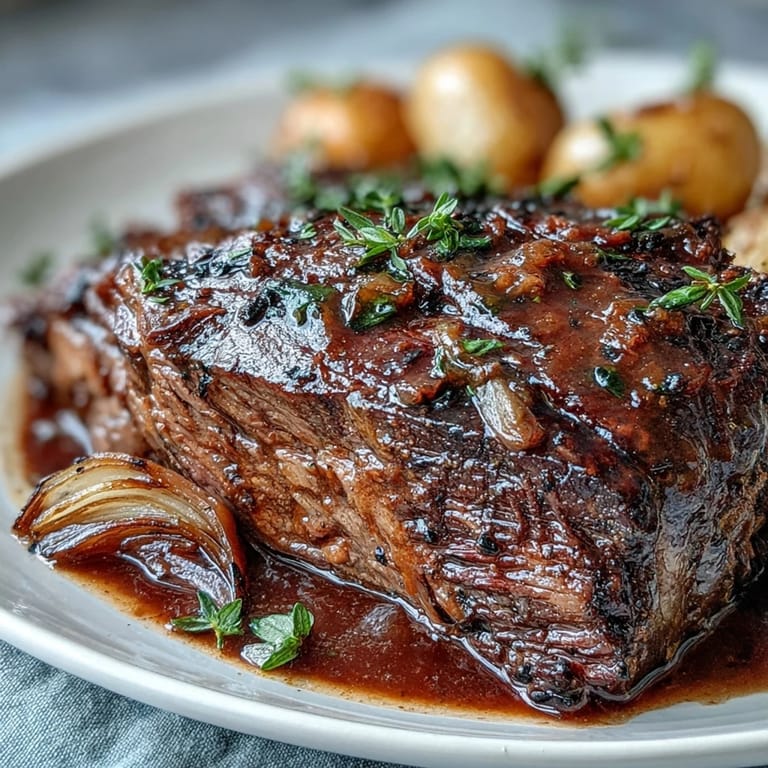
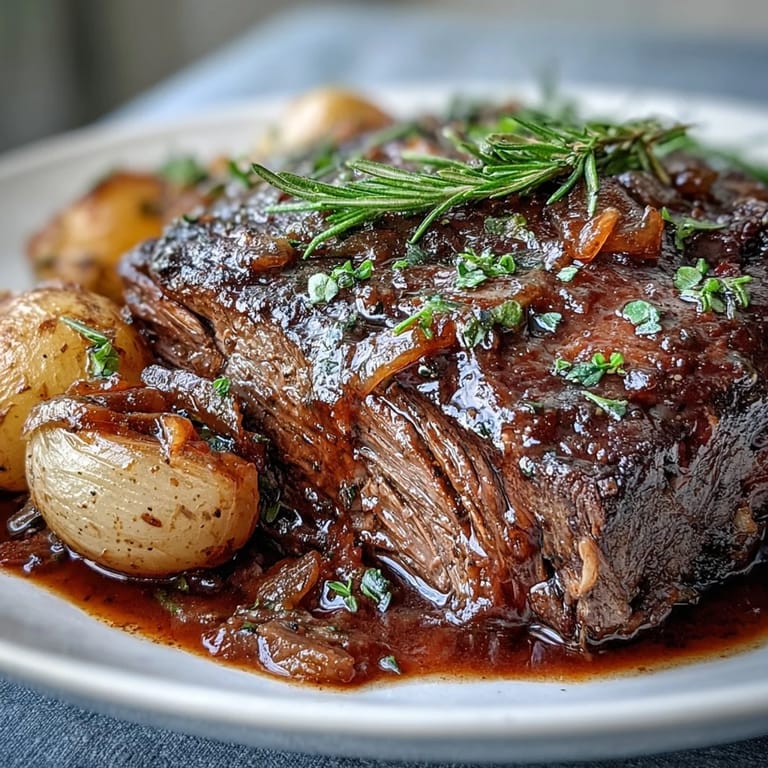
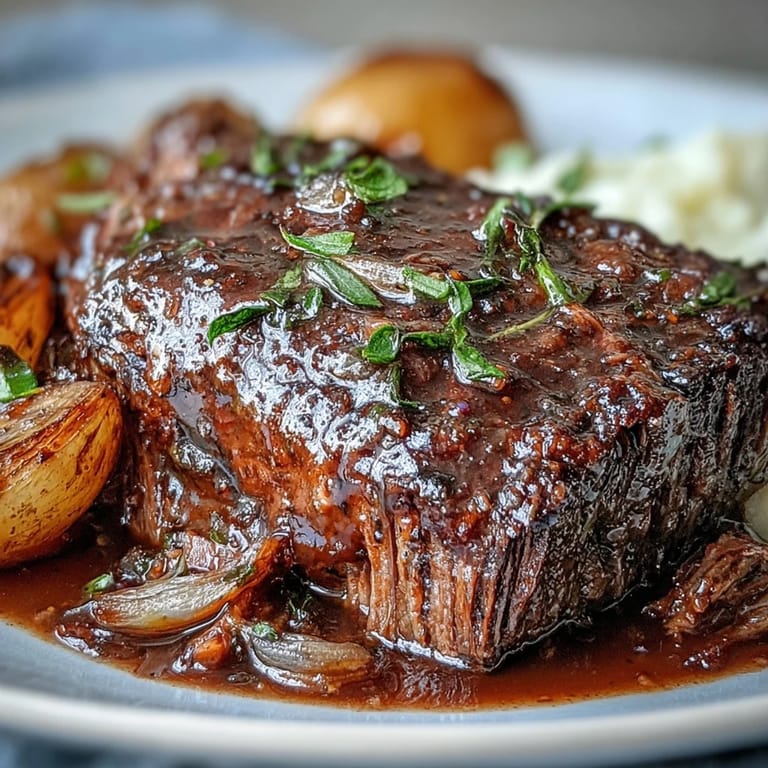
- Discard the herb stems and bay leaves, then shred the beef into large chunks or slice it against the grain. Return the beef to the pot or arrange it over the vegetables, spoon the gravy on top, and garnish with chopped parsley if desired.
 Pin It
 One Sunday I made this for a potluck and forgot to bring serving spoons. People used their forks to scoop beef and vegetables straight from the pot, standing around my kitchen counter and talking until the pot was empty. Nobody cared about the missing spoons. That is when I realized pot roast is not fancy, it is just good, and good is enough.
Slow Cooker Adaptation
After you sear the beef and cook the aromatics on the stovetop, transfer everything to your slow cooker and pour in the broth, wine, and herbs. Cook on low for 8 to 10 hours or high for 5 to 6 hours, adding the vegetables halfway through if you want them to hold their shape instead of falling apart. The slow cooker makes the whole process more forgiving, and you can start it in the morning and come home to dinner ready.
Make Ahead and Storage
Pot roast actually improves after a day in the fridge because the flavors deepen and the fat solidifies on top so you can lift it off easily before reheating. Store the beef and vegetables in the gravy in an airtight container for up to four days, or freeze portions for up to three months. Reheat gently on the stovetop or in the oven, adding a splash of broth if the gravy thickened too much.
Serving Suggestions
This pot roast begs for something to soak up the gravy, so I serve it with crusty bread, buttered egg noodles, or creamy mashed potatoes. Leftovers are incredible piled onto soft rolls for sandwiches, tucked into tacos with a little slaw, or served over rice or polenta for a completely different meal the next night.
- Serve with a simple green salad dressed in vinaigrette to cut through the richness.
- Pour any extra gravy into a small pitcher so guests can add more as they go.
- If you have any roasted garlic on hand, stir a few cloves into the gravy for even more depth.
 Pin It
 Pot roast taught me that the best meals are the ones you can walk away from while they cook, filling your home with the kind of smell that makes people linger. Make this on a cold day, invite someone over, and let the pot do the work.
Recipe FAQs
- → What cut of beef works best for pot roast?
Chuck roast or blade roast are ideal choices due to their marbling and connective tissue. These cuts break down during long braising, becoming fork-tender while developing rich flavor. Look for well-marbled pieces weighing 3-3.5 pounds for optimal results.
- → Can I make this without wine?
Absolutely. Replace the red wine with additional beef broth or stock. While wine adds complexity, the dish remains delicious with just broth, tomato paste, and aromatic herbs providing depth of flavor.
- → How do I know when the roast is done?
The beef is ready when it forks apart easily with minimal resistance. This typically takes 3-4 hours of braising. The meat should shred into large chunks rather than slicing cleanly, indicating proper tenderization.
- → Can I use a slow cooker instead?
Yes. After searing the roast and sautéing aromatics, transfer everything to a slow cooker. Cook on low for 8-10 hours or high for 5-6 hours. Add vegetables halfway through cooking to maintain texture.
- → What should I serve with pot roast?
Crusty bread for dipping in gravy, buttered noodles, mashed potatoes, or polenta are classic accompaniments. The dish is substantial enough to stand alone with just the vegetables braised alongside the meat.
- → How long do leftovers keep?
Store refrigerated for up to 4 days. The flavors actually improve overnight as the beef continues absorbing the braising liquid. Reheat gently with a splash of broth to maintain moisture.