 Pin It
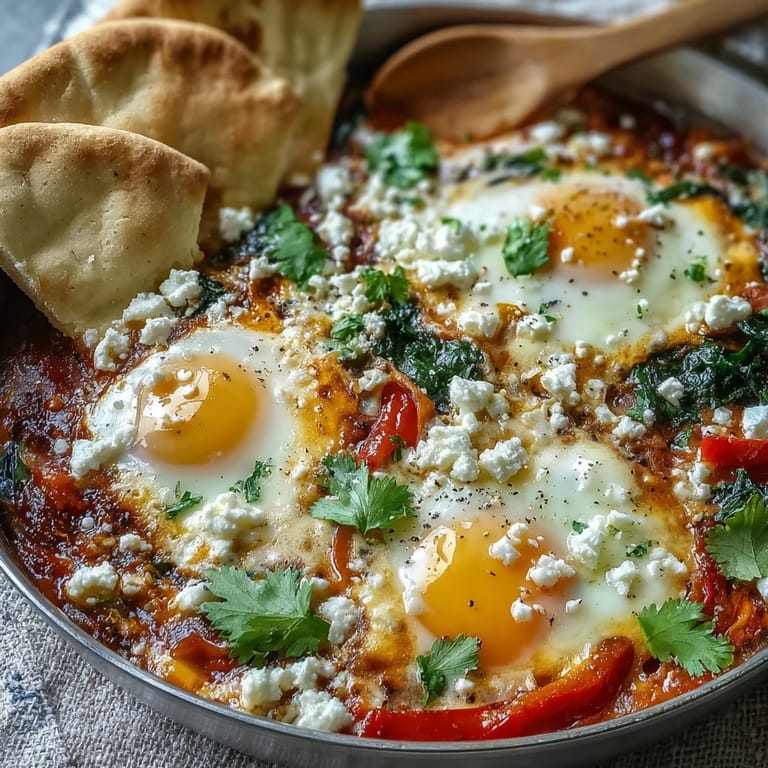
 There's something about the smell of cumin and paprika hitting hot olive oil that makes me stop whatever I'm doing. One Sunday morning, I was scrolling through my phone half-awake when my roommate started making shakshuka in our tiny kitchen, and suddenly the apartment smelled like a spice market. By the time those eggs were nestled into the bubbling tomato sauce, I'd abandoned my coffee and pulled up a stool. That's when I understood why this dish has survived centuries across the Middle East—it's not just food, it's an experience that demands your full attention.
I made this for my parents on a random Thursday, and my dad—who usually eats his food like he's racing—actually slowed down to appreciate what was happening on his plate. He kept dipping torn pieces of pita into that orange-red sauce, trying to catch the soft yolk, and there was this quiet contentment around the table that felt rare. That's when I realized shakshuka isn't about being fancy or complicated; it's about creating a moment where people naturally gather closer.
Ingredients
- Onion, finely chopped: This is your flavor foundation, and taking time to chop it small means it dissolves into sweetness rather than staying chunky.
- Red and yellow bell peppers, diced: The colors matter here not just for beauty but because they add different sweetness levels—red is deeper, yellow is brighter.
- Garlic cloves, minced: Don't skip this step by using jarred; fresh garlic becomes almost sweet and mellow when it blooms in the hot oil.
- Baby spinach: Optional but it wilts into nothing and adds earthiness without making the dish feel heavy.
- Jalapeño, seeded and finely chopped: The seeds are where the real heat lives, so remove them unless you want this dish to fight back.
- Olive oil: Use something decent here because it's one of the few ingredients that tastes exactly like itself.
- Ground cumin, paprika, coriander, and cayenne: This spice quartet is what transforms tomato sauce into something that tastes like it traveled from Istanbul.
- Crushed tomatoes: A 28-ounce can of quality tomatoes will never disappoint you the way fresh ones can.
- Sugar: This is the secret that nobody talks about—it balances acidity and makes the sauce taste less canned.
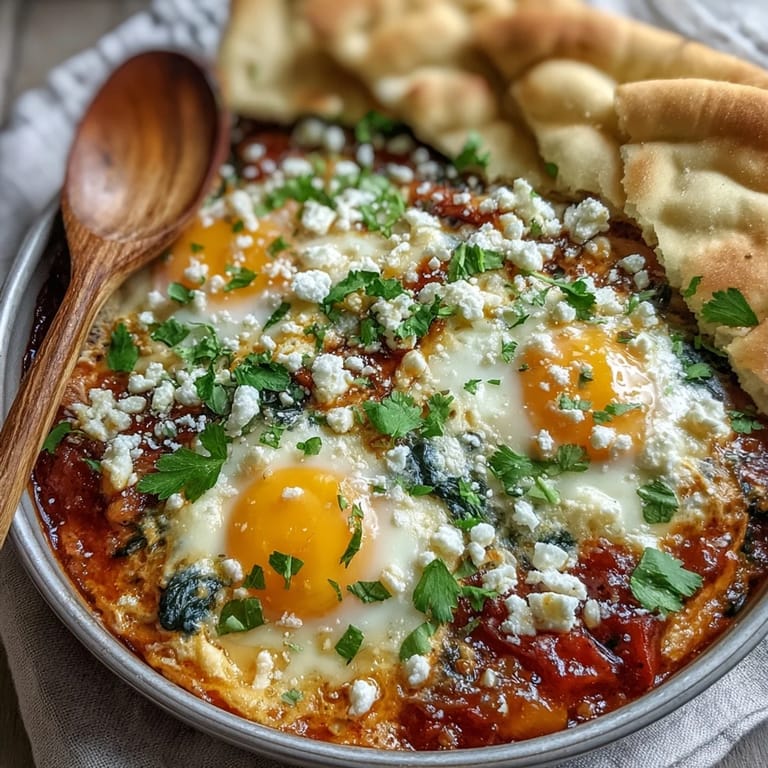
- Eggs: Use the largest eggs you can find because those yolks are the whole point, and they need to be visible and generous.
- Fresh cilantro or parsley: This is your brightness at the end, the thing that makes people notice the dish tastes alive.
- Feta cheese, crumbled: It doesn't melt completely, which means you get little salty pockets that make sense with the runny yolk.
- Pita bread, warmed: Warm pita tastes like it was just made; cold pita tastes like regret.
Tired of Takeout? 🥡
Get 10 meals you can make faster than delivery arrives. Seriously.
One email. No spam. Unsubscribe anytime.
Instructions
- Build your flavor base:
- Heat that olive oil until it shimmers slightly, then add your chopped onion. Listen for the gentle sizzle and watch for the onion to turn translucent at the edges—this takes about three minutes and you're really just waking up the pan.
- Add color and texture:
- Throw in both bell peppers and your jalapeño if using, and let them soften for five minutes. You want them tender enough to almost disappear into the sauce but still with a little presence.
- Bloom those spices:
- Stir in the garlic, cumin, paprika, coriander, and cayenne, and cook for just one minute. This is the moment the kitchen smells incredible and you know something good is about to happen.
- Create the sauce:
- Pour in the crushed tomatoes and add your sugar, salt, and pepper. Simmer uncovered for ten to twelve minutes, stirring occasionally, until the sauce reduces slightly and becomes deeper in color—this is when you know it's concentrating its flavors.
- Wilt the greens:
- If you're using spinach, add it now and watch it collapse into the sauce in about two minutes. It sounds like it might get lost, but it actually adds a subtle earthiness that balances the acidity of the tomatoes.
- Create egg pockets:
- Using the back of a spoon, make four to six small wells in the sauce, pushing down gently so each egg has its own little nest. This prevents them from rolling around and helps them cook evenly.
- Nestle the eggs:
- Crack each egg carefully into a well, trying to keep the yolk intact. This is where you slow down and be gentle, because rushing here means broken yolks and a dish that looks messy instead of intentional.
- Cook covered and low:
- Cover the skillet and reduce heat to medium-low, cooking for six to eight minutes until the egg whites are set but the yolks still jiggle slightly when you move the pan. Peek after six minutes to check your progress.
- Finish with brightness:
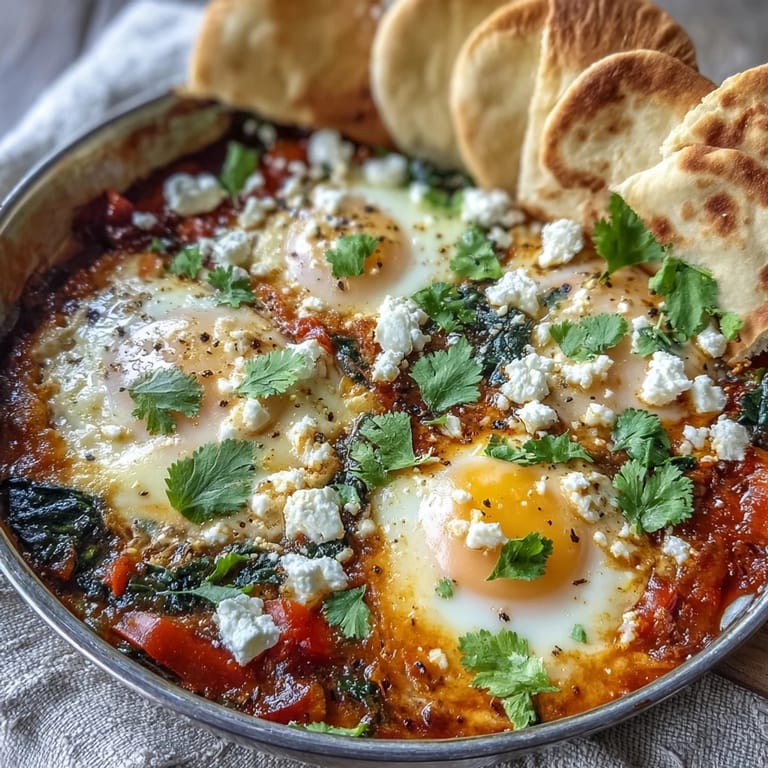
- Remove from heat, sprinkle with fresh cilantro or parsley and crumbled feta if using. The heat of the sauce will just slightly warm the cheese and herbs, releasing their flavors without cooking them away.
- Serve immediately:
- Transfer to a serving dish or eat straight from the skillet if you're in that kind of mood. Tear your warm pita and dip it into the sauce, letting the yolk break and mingle with the tomatoes.
 Pin It
 I once made this for someone on their first morning after moving to the city, and they sat at my kitchen counter with that skillet between us, dipping pita like they'd been eating this their whole life. It wasn't about the food itself, really—it was about how simple things done right can feel like home, even when you're far from it.
When to Make This Dish
Shakshuka works for breakfast when you want something substantial that doesn't feel heavy, for lunch when you're tired of sandwiches, and for dinner when you want to keep things light but satisfying. I've made it on lazy Sunday mornings, on busy weeknights when I needed something faster than ordering out, and even as a light dinner after a long day when I didn't want to commit to anything complicated. It's also incredibly forgiving if you're cooking for a mix of people with different dietary needs—you can make the base and let people customize their own eggs and toppings.
Making It Your Own
The beauty of shakshuka is that it's a framework rather than a rigid recipe, which means you can build it according to what's in your refrigerator and what your taste buds want that day. I've made versions with roasted red peppers, added chickpeas for extra protein without eggs, stirred in labneh for richness, and even added a splash of pomegranate molasses when I wanted something tart and complicated. The spice blend can lean toward warming cinnamon and cloves if you want to go Moroccan, or stay bright and hot if you prefer the Turkish approach. Think of this as permission to experiment rather than a rulebook to follow.
Serving Suggestions and Sides
Warm pita is non-negotiable, but beyond that, this dish plays well with yogurt or labneh on the side for cooling richness, a simple green salad to balance the warmth of the sauce, or even fresh cucumber slices for crunch. Some people like a drizzle of hot sauce on top, others want a squeeze of fresh lemon over the yolk just before eating. The eggs are honestly the star here, so don't overcomplicate the accompaniments—let the shakshuka shine and keep everything else simple.
- Serve with extra warm pita for double-dipping if you're feeding people who love bread like I do.
- A bowl of labneh or Greek yogurt on the side gives people the option to cool down their sauce without diluting it.
- Fresh lemon wedges deserve their own spot on the table because that brightness is the final gift the dish needs.
 Pin It
 This is the kind of dish that tastes like you've been cooking it for years, even if you're making it for the first time. Share it with someone you care about, because that's when shakshuka becomes more than just breakfast.
Recipe FAQs
- → What is shakshuka?
Shakshuka is a popular Middle Eastern and North African dish of eggs poached in a sauce of tomatoes, olive oil, peppers, onion, and garlic. Commonly spiced with cumin, paprika, and cayenne, it's typically served straight from the pan with bread for dipping.
- → How do I know when the eggs are done?
The eggs are ready when the whites are completely set and opaque, but the yolks remain slightly runny. This usually takes 6–8 minutes covered. Gently shake the pan to check—the whites shouldn't jiggle, but yolks should still feel loose.
- → Can I make shakshuka ahead of time?
The sauce base reheats beautifully and can be made up to 2 days ahead. Store it in the refrigerator and reheat gently before adding fresh eggs to poach. However, it's best enjoyed immediately after cooking for the best egg texture.
- → How can I adjust the spice level?
Control the heat by adjusting the amount of jalapeño and cayenne pepper. For mild flavor, omit both entirely. For medium spice, use just the jalapeño. For extra heat, include both the jalapeño and full amount of cayenne as called for in the ingredients.
- → Is shakshuka suitable for meal prep?
While best enjoyed fresh, you can prepare the sauce in advance and store it for up to 2 days. When ready to eat, reheat the sauce and crack in fresh eggs to poach. Avoid fully cooking eggs ahead as they don't reheat well and may become rubbery.