 Pin It
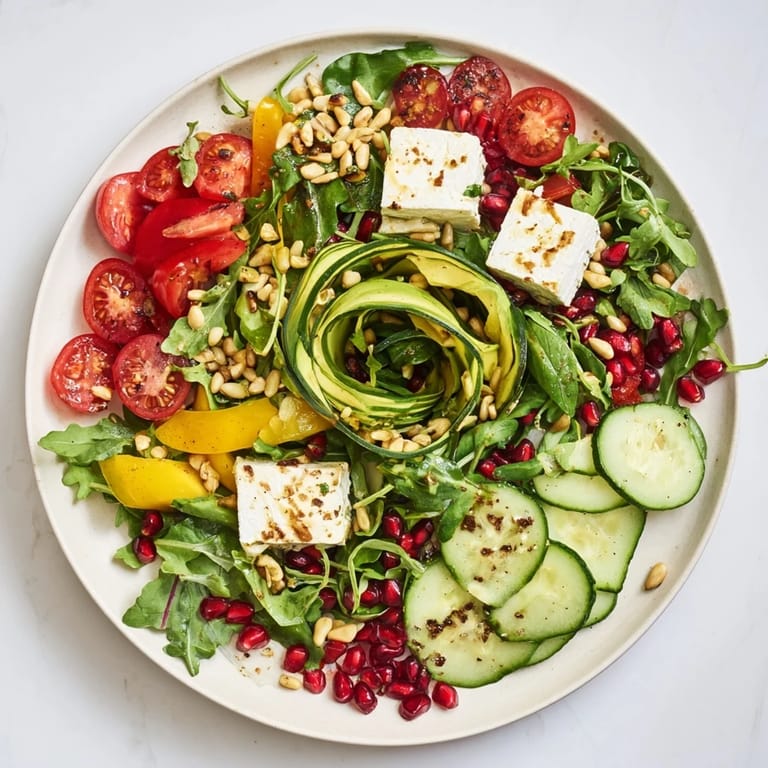
 I discovered the magic of this salad on a lazy Sunday afternoon when I was trying to impress someone who claimed they didn't like salads. I'd been reading about the Fibonacci spiral and golden ratio in design, and something clicked—what if I applied that same mathematical beauty to a plate? The moment I arranged those pomegranate seeds and avocado slices in a gentle curve, the whole thing transformed from a bowl of vegetables into something that made people pause before eating it.
The first time I made this for my book club, I was so focused on getting the spiral right that I nearly forgot the dressing entirely. One of my friends caught me mid-panic and said, 'The vegetables are already perfect—the dressing is just the cherry on top.' That comment stuck with me, and it's true: this salad is fundamentally about balance and restraint, letting quality ingredients speak for themselves.
Ingredients
- Mixed baby greens (arugula, spinach, watercress): The tender leaves form your canvas and should be as fresh as possible—any wilting shows immediately against the brighter elements.
- Cherry tomatoes: Halving them reveals their jewel-toned interiors and gives you perfect building blocks for the spiral arrangement.
- Ripe avocado: The creaminess anchors the salad and provides that luxurious mouthfeel that makes people reach for seconds.
- Yellow bell pepper: The bright hue adds visual warmth and a subtle sweetness that balances the peppery greens.
- Cucumber: Thin slices keep things refreshing and give you delicate rounds that fit naturally into the curved pattern.
- Pomegranate seeds: These little rubies are your secret weapon—they add tartness, texture, and an undeniable visual pop.
- Feta cheese: Crumble it by hand for irregular pieces that catch light differently than uniform chunks.
- Toasted pine nuts: Toasting them yourself brings out their buttery warmth and prevents them from tasting stale.
- Extra-virgin olive oil: This is worth spending a bit more on, as it becomes the salad's voice in the dressing.
- Lemon juice: Always fresh—bottled juice tastes flat compared to the brightness of a freshly squeezed lemon.
- Honey: Just a teaspoon adds roundness to the dressing and helps it emulsify smoothly.
- Dijon mustard: The emulsifier that holds everything together while adding subtle depth.
Tired of Takeout? 🥡
Get 10 meals you can make faster than delivery arrives. Seriously.
One email. No spam. Unsubscribe anytime.
Instructions
- Create your canvas:
- Spread the mixed greens across a large platter with a light hand, creating gentle ripples that will guide your eye toward the center. Think of it less as filling a plate and more as sketching the foundation.
- Begin the spiral:
- Start placing your larger elements—the avocado slices and tomato halves—in a soft curve that spirals inward. Don't overthink the mathematics; let your eye guide you toward balance and rhythm.
- Layer with intention:
- Add the bell pepper strips and cucumber slices, nestling them into the gaps and continuing your curve. The pattern should feel organic, like a nautilus shell rather than a perfectly measured diagram.
- Jewel the arrangement:
- Scatter the pomegranate seeds along the spiral, concentrating a few more at the focal point where the eye naturally lands. They'll glimmer and draw people into the composition.
- Finish with texture:
- Sprinkle feta and pine nuts across the entire salad, with a gentle concentration toward the center. This adds pockets of richness and keeps the eye moving across the plate.
- Emulsify the dressing:
- In a small bowl, whisk the oil and lemon juice slowly while incorporating the honey and mustard. You'll feel it come together—that's when you know it's properly emulsified.
- Final flourish:
- Drizzle the dressing just before serving, using a light hand so the arrangement stays visible and the vegetables stay crisp. Serve immediately for maximum visual impact and texture contrast.
 Pin It
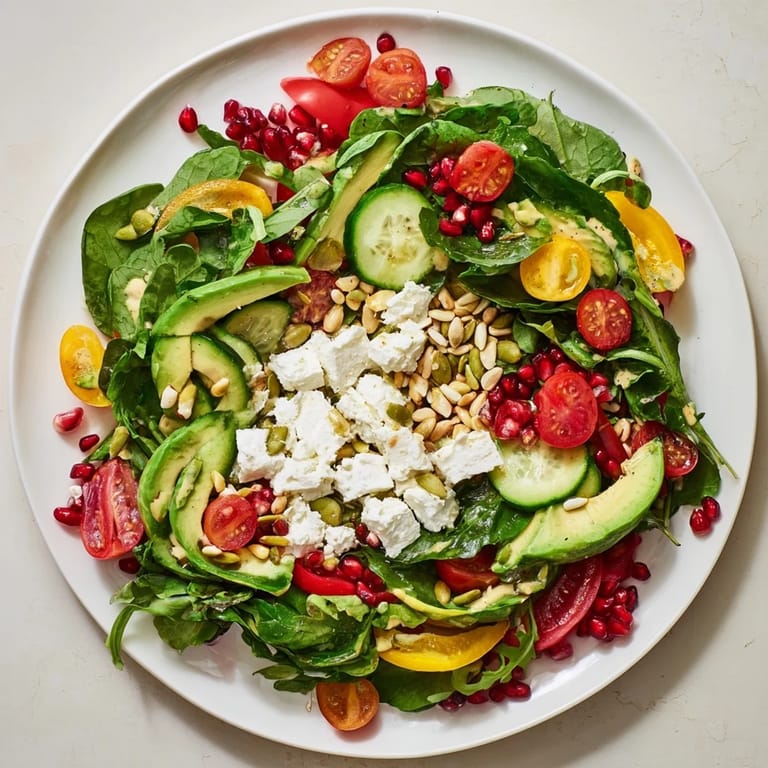
 I'll never forget when my mother saw this salad for the first time and just sat quietly for a moment before asking if she could photograph it. That's when I realized that food arranged with care becomes a small act of love—it says to the people you're feeding that they're worth a few extra minutes of attention.
The Arrangement is Everything
What makes this salad special isn't any single ingredient—it's the way everything comes together on the platter. I learned this by accident when a friend swooped in and rearranged my work because she thought she was helping, and the whole thing fell flat. That's when I realized the spiral isn't just pretty; it's functional, guiding your fork and ensuring each bite has a mixture of textures and flavors. The color distribution matters too—when the reds, greens, and yellows are balanced across the plate, it feels abundant even though you're using modest portions.
Why Fresh Ingredients Feel Different
The first time I made this with produce from the farmer's market instead of the grocery store, I was struck by how much more vivid everything looked. The greens didn't wilt within twenty minutes, the avocado stayed creamy for longer, and even the tomatoes tasted like tomatoes rather than polite approximations. This isn't a fancy salad—it's a humble one that demands quality ingredients because there's nowhere for them to hide.
Adapting Without Losing the Magic
One evening I was short on pomegranate seeds and tossed in some thinly sliced radishes instead, expecting a compromise. Turns out the peppery crunch of the radish fit perfectly into the composition and added a different kind of brightness. This taught me that the golden ratio salad is really about principles rather than rigid requirements—balance color, vary texture, include something crisp and something creamy, and add that pop of tartness. You could swap in goat cheese for the feta, roasted chickpeas for the pine nuts, or even add grilled chicken breast if you want more protein without disrupting the visual flow.
- Let the seasons guide your swaps: spring peas and fresh herbs, summer stone fruit, fall roasted squash, winter pomegranate and citrus.
- Keep the dressing consistent—it's the anchor that ties any variation together.
- Taste as you build; this salad rewards tasting the progression of flavors.
 Pin It
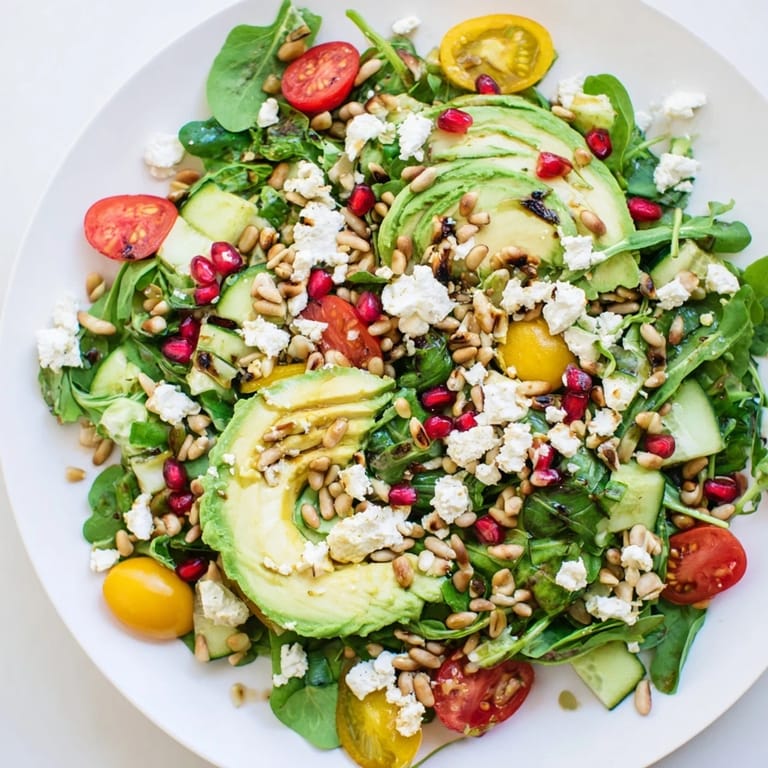
 This salad taught me that presentation isn't pretentious when it comes from genuine care. Make it when you want to slow down, when you want to feed people something they'll actually remember.
Recipe FAQs
- → What greens work best for this salad?
Mixed baby greens like arugula, spinach, and watercress provide a peppery, fresh base that complements the salad's other vibrant ingredients.
- → How does the golden ratio influence the salad arrangement?
The ingredients are layered in a spiral pattern following golden ratio proportions to create visual balance and enhance presentation appeal.
- → Can I substitute the feta cheese?
Yes, goat cheese works well as a creamy alternative and pairs nicely with the other flavors in the salad.
- → What dressing is used for this salad?
A simple dressing of extra-virgin olive oil, freshly squeezed lemon juice, honey, Dijon mustard, salt, and pepper adds brightness and ties the flavors together.
- → Are there suggested pairings with this salad?
This salad pairs beautifully with crisp white wines such as Sauvignon Blanc or a light sparkling wine to complement its fresh flavors.
- → How can I add protein to this salad?
For extra protein, grilled chicken or chickpeas can be added without overpowering the salad's light and fresh character.