 Pin It
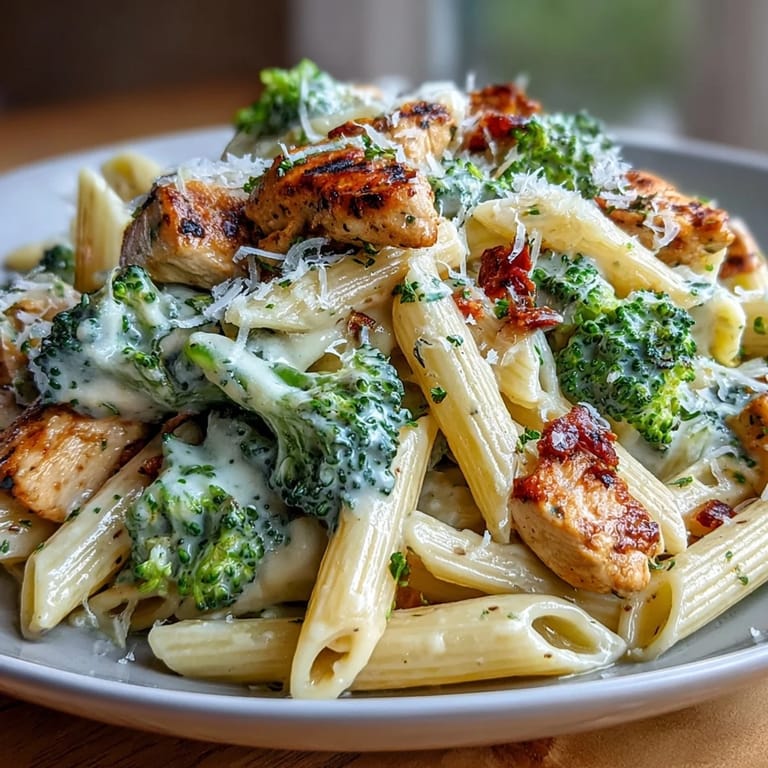
 There's a particular Thursday evening when my roommate came home completely wiped out from work, and I had exactly thirty minutes to create something that felt like comfort in a bowl. I opened the fridge, spotted chicken breasts and broccoli, and remembered how a creamy garlic soup we'd shared months earlier had this magical way of making everything taste like home. That's when it clicked—what if I turned that soup into a pasta dish, one that came together in a single skillet without fussy timing or multiple pans? This became our go-to when someone needs feeding and love needs to happen quickly.
I made this for my partner during their first week of a new job, when their confidence was shaky and they needed proof that someone believed in their success. We sat at the kitchen counter eating straight from the skillet, passing it back and forth, and they told me about the people they'd met. The warm, creamy pasta somehow made space for vulnerability in a way fancy plating never could.
Ingredients
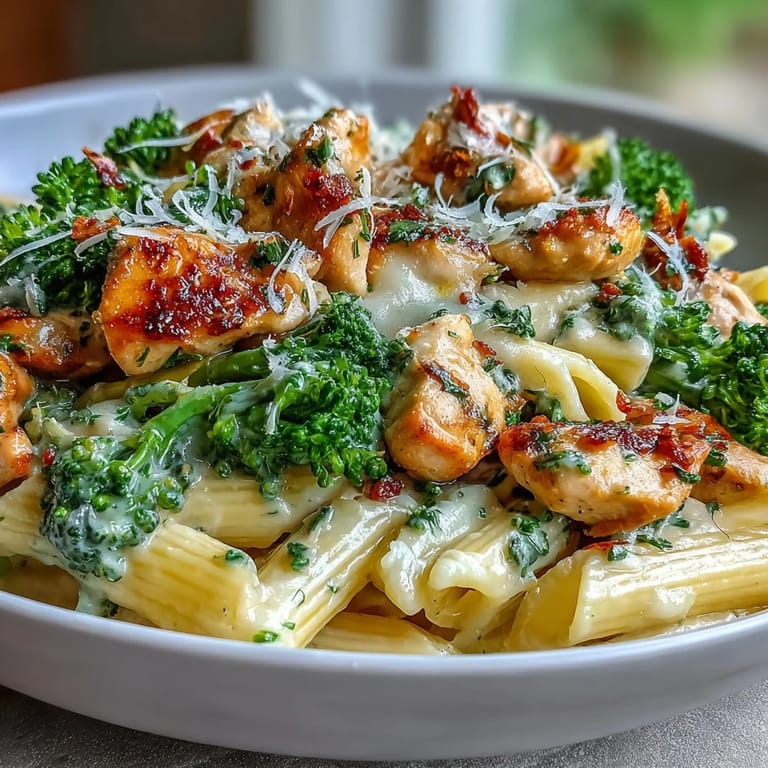
- Chicken breasts: Cut into bite-size pieces so they cook quickly and integrate into every forkful rather than dominating the plate.
- Penne, rigatoni, or rotini: Short shapes hold onto the creamy sauce better than long noodles ever could.
- Broccoli florets: Keep them small so they become tender at the same pace as the pasta.
- Garlic: Mince it finely and let it soften in butter first—this is where the whole dish gets its quiet depth.
- Onion: Chopped small, it disappears into the background but builds flavor from the very beginning.
- Heavy cream and milk: The combination creates a sauce that's rich without being heavy, smooth without being one-note.
- Parmesan cheese: Freshly grated makes all the difference; pre-grated cheese has additives that prevent melting smoothly.
- Butter: Unsalted so you control the salt level and the butter flavor shines without competing.
- Chicken broth: Low-sodium lets you season to your own taste rather than fighting against saltiness.
- Italian herbs and red pepper flakes: Optional but they add complexity—the herbs whisper tradition, the flakes introduce a subtle wake-up call.
Tired of Takeout? 🥡
Get 10 meals you can make faster than delivery arrives. Seriously.
One email. No spam. Unsubscribe anytime.
Instructions
- Sear the chicken until it's golden at the edges:
- Melt butter over medium heat and let it foam slightly before adding chicken pieces. They should sizzle immediately when they hit the pan, telling you the temperature is right. Cook until the outside has color, about four to five minutes, then set them aside on a plate—they'll finish cooking later in the creamy sauce.
- Build the flavor base with aromatics:
- In that same skillet with all the browned bits still clinging to the bottom, add chopped onion and minced garlic. The onion will start soft and translucent while the garlic releases its perfume, usually within two minutes, and you'll know it's ready when the kitchen smells like something worth waiting for.
- Pour in the liquid and bring it to life:
- Add chicken broth, milk, and heavy cream, stirring gently to combine everything and loosen those fond bits from the pan. Bring it to a gentle simmer—not a rolling boil, which can make the cream separate and turn grainy. You're aiming for small bubbles breaking the surface, steady and calm.
- Cook the pasta and broccoli together:
- Add uncooked pasta and small broccoli florets directly to the simmering liquid, stirring well so nothing sticks to the bottom. Cover the skillet and reduce heat to medium-low, then let it cook for ten to twelve minutes, stirring every few minutes. The pasta absorbs the liquid as it cooks, creating a cohesive dish rather than pasta swimming in separate sauce.
- Bring the chicken back and finish with cheese:
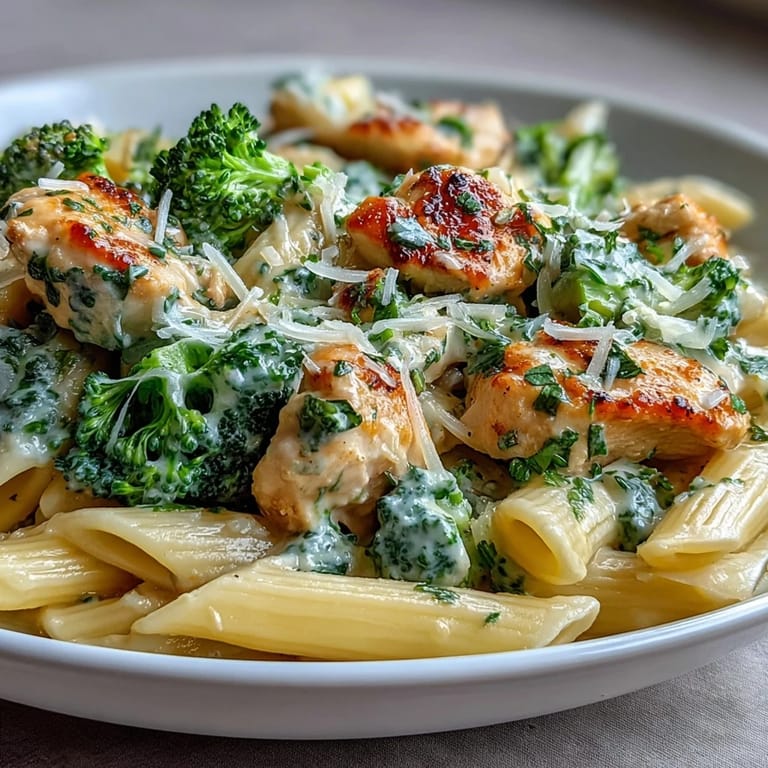
- Return the cooked chicken to the skillet and add the freshly grated Parmesan, Italian herbs if you're using them, and red pepper flakes for a subtle heat. Stir constantly for about a minute until the cheese melts completely and the sauce becomes silky. If it looks too thick, add a splash of broth or water to loosen it.
- Taste and adjust before serving:
- This is the moment to decide if it needs more salt, pepper, or even a tiny squeeze of fresh lemon juice to brighten everything. Every stove cooks differently, so trust your palate over the recipe.
 Pin It
 Years later, I made this dish for someone who'd lost their apartment and was staying with us temporarily, and it became the meal they asked for every few days. Food can do remarkable things—it can say I see you, I'm glad you're here, everything will work out, all without a single word spoken.
Why One Skillet Changes Everything
There's something psychologically calming about cooking in one vessel, something that transforms the experience from task into ritual. You're not juggling pots or timing different components, so your hands and mind settle into the work itself. My best cooking happens when I'm not thinking about technique but rather listening to the sauce bubble, watching the broccoli transform from bright to tender, feeling the warmth of the skillet. That presence, that attention, is what makes the food taste better than it should.
Building Flavor Without Fussiness
This dish proves that you don't need complicated techniques or rare ingredients to taste something special. The magic happens in layers—butter and chicken creating fond, garlic and onion building depth, broth and cream creating foundation, pasta releasing starch to thicken everything, cheese adding richness. Each element does its job without drama, and together they become something greater than the sum. It's how I learned that cooking, at its heart, is about patience and proportion, not performance.
Variations and Times You'll Make This
This recipe adapts beautifully to whatever you have available or whatever mood you're in, which is why it's stayed in my regular rotation for so long. Rotisserie chicken shaves ten minutes off your time if you're exhausted, whole-wheat pasta works if you're thinking about nutrition, and vegetable broth creates an equally satisfying vegetarian version for friends with different diets. The structure is strong enough to hold variations without losing itself, which is the mark of a recipe worth keeping.
- Add a squeeze of fresh lemon juice just before serving to brighten the richness and add a subtle brightness that makes people ask what your secret is.
- Stir in fresh spinach or kale during the last minute of cooking if you want to sneak in greens without changing the dish's essential character.
- Use a combination of white and whole-wheat pasta for a nuttier flavor and better texture than either one alone.
 Pin It
 This is the kind of dish that becomes part of your life, the one you make when you want to say I'm thinking of you without words, or when you just need to feed yourself something warm and real. It reminds me that the best recipes aren't about impressing anyone—they're about connection, comfort, and the quiet miracle of food bringing people together.
Recipe FAQs
- → Can I use rotisserie chicken instead?
Absolutely. Shredded rotisserie chicken works perfectly and reduces prep time significantly. Just skip the initial chicken cooking step and add the shredded chicken when you return the meat to the skillet in step 5.
- → What pasta shapes work best?
Penne, rigatoni, and rotini are ideal because their ridges and curves hold the creamy sauce beautifully. Short pasta with texture helps capture every bit of the Parmesan coating.
- → Can I make this vegetarian?
Yes. Simply omit the chicken and swap chicken broth for vegetable broth. You might want to add more broccoli or include other vegetables like bell peppers or zucchini to maintain substance.
- → Why cook pasta in the skillet?
Cooking pasta directly in the creamy broth allows the noodles to absorb flavor while releasing starch into the liquid. This natural starch thickens the sauce beautifully without needing additional thickeners.
- → How do I store leftovers?
Store in an airtight container in the refrigerator for up to 3 days. Reheat gently with a splash of milk or broth to restore the creamy consistency, as the sauce thickens when chilled.
- → Can I use different vegetables?
Certainly. Spinach, peas, asparagus, or cauliflower florets work well. Adjust cooking times accordingly—add quicker-cooking vegetables like spinach in the last few minutes.