 Pin It
 There's something almost magical about the way caramelized onions transform—how they go from sharp and raw to silky sweet over the course of an hour. I discovered this dish on a particularly grey afternoon when I had potatoes and onions on hand and wondered if I could borrow the soul of French onion soup without the broth. The result was golden, bubbling, and somehow tasted like comfort wrapped in melted cheese.
I remember serving this to my neighbor who'd brought over fresh thyme from her garden, and she nearly cried at the table—not because anything was wrong, but because it tasted like Paris and home all at once. That's when I knew this recipe had legs.
Ingredients
- Yukon Gold potatoes: These waxy potatoes hold their shape beautifully when roasted and have a natural buttery flavor that plays perfectly with cheese.
- Unsalted butter and olive oil: The combination creates a richer, deeper caramelization than either alone—butter for taste, oil for stability.
- Yellow onions: They're sweeter than red onions and turn an almost mahogany color when patience does its work.
- Sugar: Just a pinch to nudge the onions toward caramelization without tasting sweet; it's about chemistry, not flavor.
- Fresh thyme: This herb has a subtle earthiness that anchors everything and keeps the dish from feeling one-note.
- Gruyère cheese: It melts into those crevices and browns beautifully; the nuttiness is non-negotiable here.
Tired of Takeout? 🥡
Get 10 meals you can make faster than delivery arrives. Seriously.
One email. No spam. Unsubscribe anytime.
Instructions
- Get your potatoes ready:
- Toss your potato slices with olive oil and seasoning, then lay them out on parchment paper like you're arranging them for a portrait. They need space to breathe and turn golden.
- Roast until tender:
- Twenty-five to thirty minutes, flipping halfway through so every edge gets a chance at the heat. You're looking for that moment when the edges are crispy and the centers yield to a fork.
- Start the long caramel:
- While potatoes do their thing, melt butter with oil in a skillet and add your onions with a pinch of salt. They'll release their moisture first, then slowly turn golden—this takes patience, but it's where all the magic lives.
- Deepen the color:
- After about ten minutes of softening, add sugar and thyme, then keep stirring gently until they're deep brown and smell like captured autumn. Twenty to twenty-five minutes more of this step is worth every second.
- Layer it up:
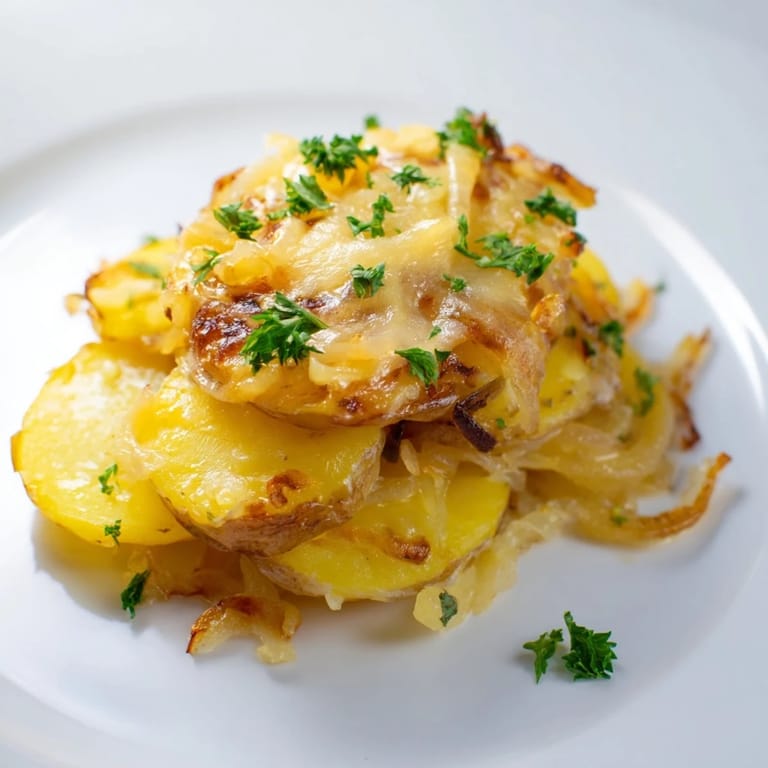
- Once potatoes are golden, transfer them to a baking dish slightly overlapping, then blanket them evenly with those glossy, dark onions. You're creating a landscape of flavors.
- Crown with cheese:
- Scatter Gruyère generously over the top—don't be shy, this is where the whole dish comes together into something warm and indulgent.
- Final bake and broil:
- Return to the oven for ten to twelve minutes until the cheese bubbles at the edges. If you want extra browning and a slight char on top, a quick broil does the trick.
 Pin It
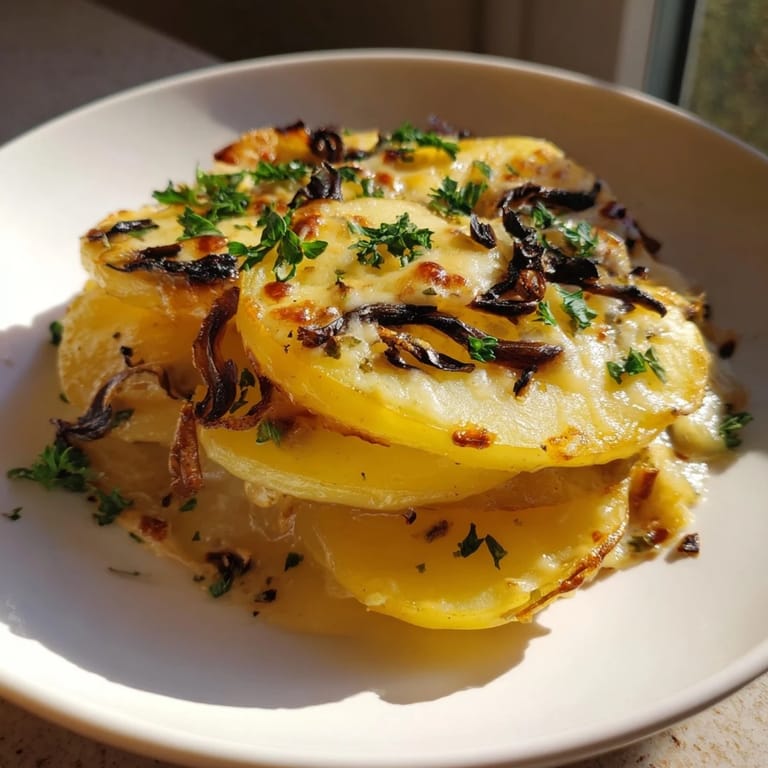
 There's a moment when you pull this from the oven and the cheese is still bubbling at the edges while wisps of steam rise through the layers—that's when you know you've made something worth the wait. It's a side dish that doesn't know its place and honestly deserves to be the main event.
Building Layers of Flavor
The genius of this dish is that you're not simply combining ingredients; you're building complexity. Each element spends time developing its own character—the potatoes crisping, the onions deepening—before they meet under a blanket of cheese. It's the opposite of throwing things together, and it shows.
Timing the Two-Stage Roast
I learned early on that roasting the potatoes first, then baking the whole thing together, gives you the best of both worlds: potatoes that are tender inside with edges that stay crispy even after the cheese bakes on top. Some people layer everything raw and bake it all at once, but you lose that contrast and end up with softer sides. Two separate bakes mean you control each element.
Variations and Adaptations
Once you understand how this works, you can play with it. A splash of dry white wine stirred into the onions during those final minutes adds a subtle sophistication that's hard to name but impossible to forget. You can swap Gruyère for Swiss or Emmental if that's what you have, though each cheese brings its own personality to the finish.
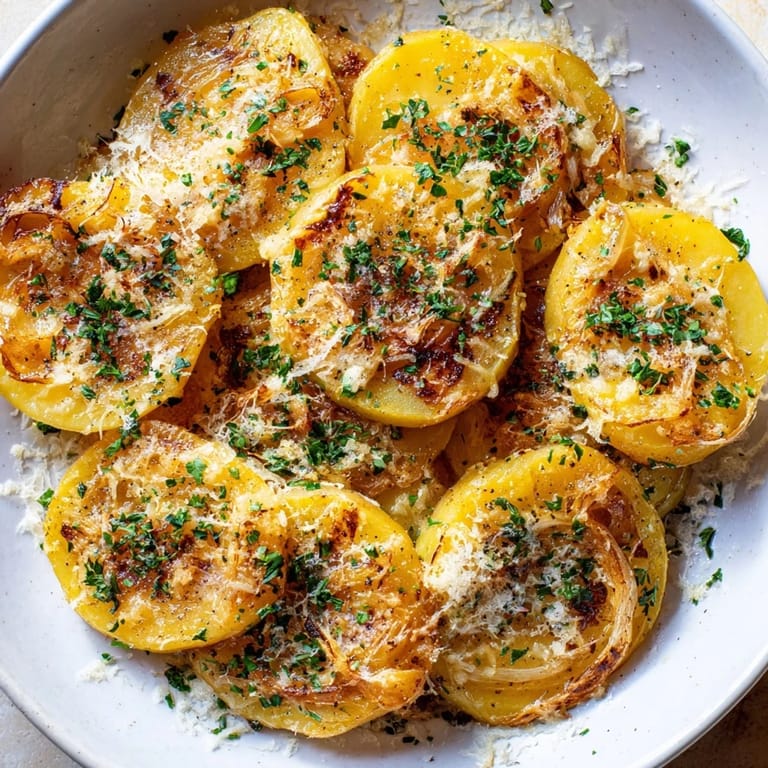
- A light broil at the very end gives you that restaurant-quality golden crust on the cheese.
- Fresh parsley scattered on top right before serving adds a brightness that cuts through all that richness perfectly.
- Serve it alongside roast chicken or steak, or make it the centerpiece with a simple green salad on the side.
 Pin It
 This dish has a way of making people slow down and actually taste what's in front of them, which feels rare these days. Make it once and it'll become the side you're known for.
Recipe FAQs
- → What type of potatoes work best for this dish?
Yukon Gold potatoes are ideal due to their creamy texture and ability to roast evenly, offering a golden crisp edge while staying tender inside.
- → How do I caramelize the onions properly?
Cook sliced onions slowly over medium-low heat with butter and olive oil, occasionally stirring, until they turn a deep golden brown and develop rich sweetness, which takes about 30-35 minutes.
- → Can I substitute Gruyère cheese?
Yes, Swiss or Emmental cheeses work well as alternatives, providing a similar melt and mild nutty flavor.
- → Is it necessary to broil the dish at the end?
Broiling adds an extra golden crust to the cheese topping, but it’s optional. Baking until melted is sufficient for a flavorful finish.
- → How should this dish be served?
Serve warm as a savory side to roasted meats or as a vegetarian option accompanied by a fresh salad. Garnishing with chopped parsley brightens the flavors.
- → Can this dish be prepared ahead of time?
You can prepare the potatoes and caramelized onions in advance, assembling and baking just before serving to maintain freshness and warmth.