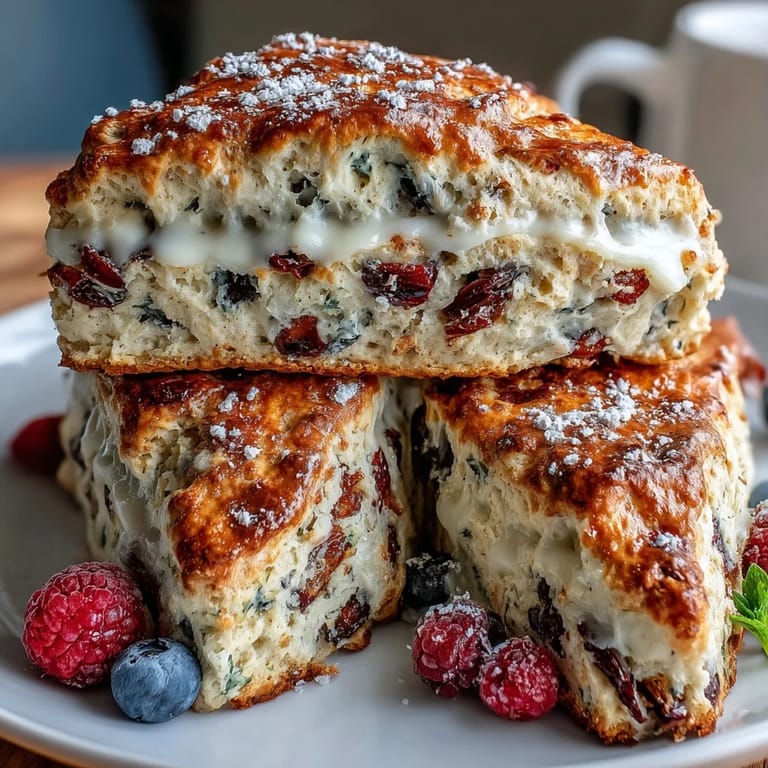
 Pin It
 My neighbor showed up one Saturday morning with a container of sourdough starter she'd been feeding for months, insisting I find something to do with it before it took over her fridge. That's how these blueberry lemon scones came about—born from necessity and a friend's gentle nudge toward creativity. The first batch came out golden and tender, studded with berries that kept their shape, and the tangy sourdough undertone made everything taste a little more interesting than expected. Now whenever spring rolls around and the farmers market has those plump local blueberries, I find myself making these again.
I brought a batch to a casual brunch once and watched someone eat three without realizing it—they just kept reaching for one more, saying something about how the lemon wasn't overpowering but somehow made everything taste cleaner and brighter. That moment taught me that the best recipes don't need fanfare; they just need to be genuinely good.
Ingredients
- All-purpose flour (2 1/4 cups): The base that gives scones their structure; don't sift unless your flour is really compacted, since overmixing is already the enemy here.
- Granulated sugar (1/4 cup): Just enough sweetness to balance the tartness without making these taste like dessert.
- Baking powder and baking soda (1 tablespoon and 1/2 teaspoon): These two work together to lift the scones and the baking soda helps neutralize the tang from the sourdough.
- Fine sea salt (1/2 teaspoon): Enhances every flavor and grounds the sweetness.
- Lemon zest (from 1 large lemon): Microplane it fresh and use it immediately so the oils stay bright and fragrant.
- Unsalted butter (1/2 cup, cold and cubed): Cold butter creates those tender flakes; if it's soft, your scones will be dense, so really keep it chilled.
- Sourdough discard (1 cup, room temperature): The heart of what makes these scones distinctive; it adds moisture and that pleasant sourdough note without requiring any starter maintenance.
- Heavy cream (1/4 cup plus more for brushing): Creates a tender crumb and adds richness that buttermilk can substitute if you're out.
- Egg (1 large): Binds everything together and helps the tops turn golden.
- Pure vanilla extract (1 teaspoon): A small amount that deepens the overall flavor without announcing itself.
- Freshly squeezed lemon juice (2 tablespoons): Use fresh lemons because bottled juice tastes a little flat in comparison and misses the point.
- Fresh blueberries (1 cup): Frozen works fine straight from the freezer, and they won't bleed into the dough like thawed berries do.
- Coarse sugar (2 tablespoons for topping, optional): Adds a subtle sparkle and a little textural contrast without much sweetness.
Tired of Takeout? 🥡
Get 10 meals you can make faster than delivery arrives. Seriously.
One email. No spam. Unsubscribe anytime.
Instructions
- Set your oven and prep:
- Preheat to 400°F and line a baking sheet with parchment paper so your scones won't stick and you won't have to fuss with a hot pan.
- Mix the dry ingredients:
- Whisk together the flour, sugar, baking powder, baking soda, salt, and lemon zest in a large bowl until the zest is evenly distributed and everything looks uniform.
- Cut in the cold butter:
- Add the cubed cold butter and use a pastry blender or your fingertips to work it in until the mixture looks like coarse crumbs with pea-sized pieces of butter visible; this is crucial for those tender, flaky layers.
- Combine the wet ingredients:
- In another bowl, whisk together the sourdough discard, cream, egg, vanilla, and lemon juice until completely smooth with no lumps.
- Bring it together gently:
- Pour the wet mixture into the dry ingredients and stir with a fork or wooden spoon just until everything is barely combined; the dough will look slightly shaggy and that's exactly right, because overmixing makes tough scones.
- Fold in the blueberries:
- Add the blueberries gently, folding them in with as few strokes as possible so they stay whole and don't stain the crumb.
- Shape the dough:
- Turn the dough onto a lightly floured surface and pat it into a circle about 1 inch thick and 7 inches across; don't knead or work it too hard.
- Cut and arrange:
- Cut the circle into 8 wedges like a pie and transfer each one to the prepared baking sheet, leaving a couple of inches between them so heat circulates evenly.
- Add the finishing touches:
- Brush the tops lightly with additional cream and sprinkle with coarse sugar if you're using it; this gives them that beautiful golden sparkle.
- Bake until golden:
- Bake for 18 to 22 minutes, until the tops are deep golden and a skewer inserted into the center comes out clean or with just a crumb or two clinging to it.
- Cool slightly:
- Let them rest on the baking sheet for 5 minutes so they can set slightly, then transfer to a wire rack; they're best eaten warm or at room temperature.
 Pin It
 There's something quietly satisfying about pulling a pan of scones from the oven and watching someone's face light up when they taste one fresh and still slightly warm. These aren't fussy or pretentious; they're just honest and straightforward, the kind of thing you'd want to make again and again.
Why Sourdough Discard Works Here
Using sourdough discard instead of just milk or buttermilk adds a gentle tartness that wakes up the lemon without making the scones taste sour. The fermented flour also breaks down some of the gluten naturally, which actually helps keep them tender if you're not perfectly careful with your mixing. This is one of those happy accidents where a baker's solution to a kitchen problem turns into something genuinely better.
The Blueberry Question
Fresh blueberries are ideal when you can get them, but frozen ones straight from the freezer actually have an advantage—they won't bleed purple juice into your dough the way thawed berries do. This might seem like a small thing until you're looking at a batter streaked with purple when you were hoping for a clean crumb with surprise pockets of fruit. Either way works, but understanding the difference lets you choose what matters more to you in that moment.
Storage and Serving Ideas
These scones are best eaten the same day while they still have that tender, crumbly texture and the berries taste fresh. They'll keep in an airtight container for up to two days, but honestly, if you're making them for company, they'll disappear before you need to worry about storage.
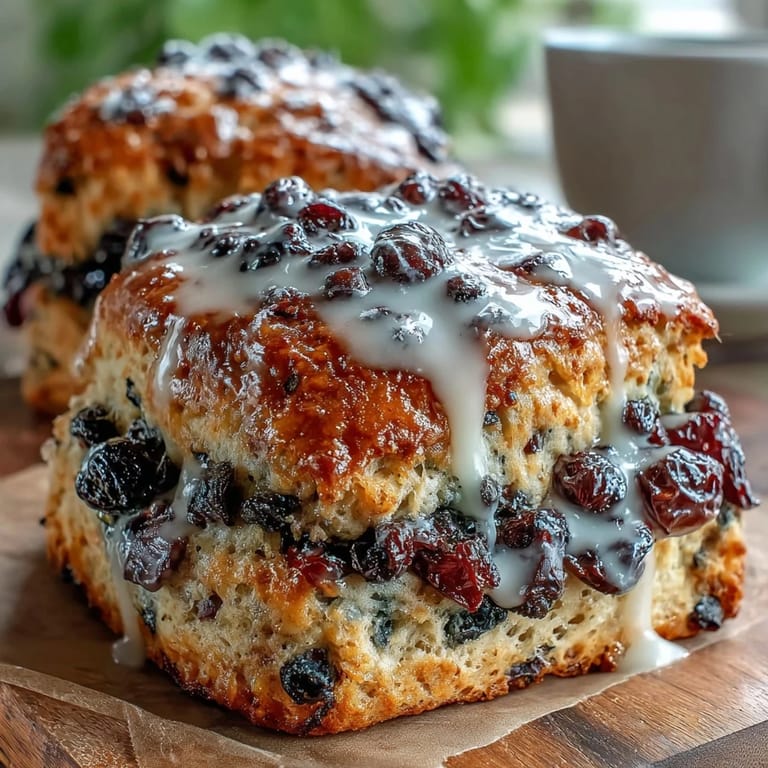
- A simple glaze of powdered sugar and fresh lemon juice drizzled over the cooled scones adds brightness and a hint of elegance if you're serving them at a brunch.
- Eat them plain with good butter and jam, or skip the topping entirely if you want to taste the sourdough and lemon without anything else competing.
- They pair beautifully with tea or a good cup of coffee, especially in the morning when everything tastes a little better anyway.
 Pin It
 These scones taste like spring tastes—bright, a little tangy, full of fresh berries and lemon light. Make them once and you'll understand why someone would beg you to find a use for sourdough starter.
Recipe FAQs
- → Can frozen blueberries be used directly?
Yes, fold frozen blueberries into the dough without thawing to prevent color bleeding and maintain texture.
- → What is the role of sourdough discard?
Sourdough discard adds a natural tang and depth of flavor, enhancing the scones’ texture and aroma.
- → How can I enhance the lemon flavor?
Adding a simple lemon glaze made from powdered sugar and lemon juice after baking intensifies citrus notes.
- → What makes the scones tender and flaky?
Cold cubed butter cut into the flour creates flaky layers while cream adds moisture and richness.
- → Can buttermilk replace heavy cream?
Yes, buttermilk can be used instead of cream for a slightly tangier, tender crumb.