 Pin It
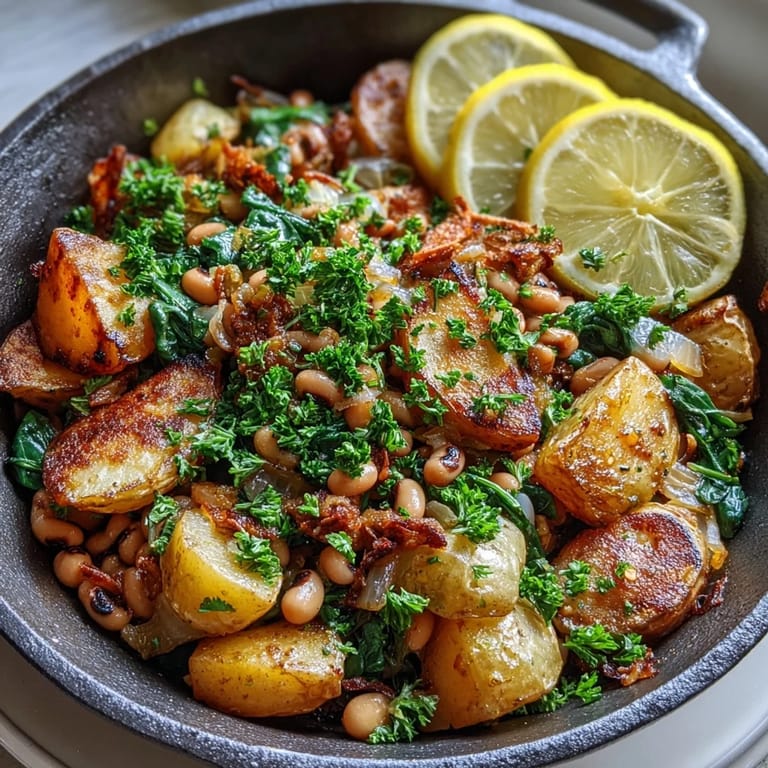
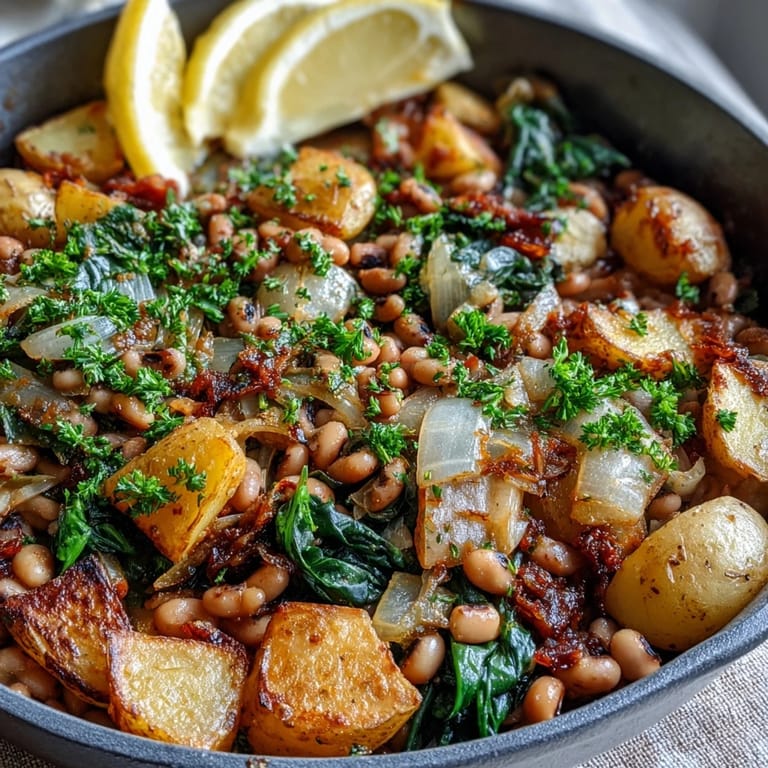
 There's something about the sound of onions hitting hot oil in cast iron that signals the start of something good. My neighbor knocked on my door one chilly evening, mentioning she'd picked up too many vegetables at the farmers market, and within twenty minutes we'd thrown together this black-eyed pea skillet without a second thought. What started as improvisation became the meal we made every other week after that, each time tweaking it slightly based on whatever was in the crisper drawer.
I made this on a Tuesday when I was exhausted and had promised myself not to order takeout, even though the kitchen felt like the last place I wanted to be. By the time the spinach wilted into that golden-brown skillet, my whole mood had shifted. There's genuine magic in how quickly a cast iron pan can turn humble ingredients into something that feels like you spent hours cooking.
Ingredients
- Olive oil: Two tablespoons is just enough to coat the pan and carry all those flavors without making the dish heavy or greasy.
- Yellow onion: Slicing it thin means it softens quickly and nearly dissolves into sweetness, becoming the flavor foundation for everything else.
- Yukon Gold potatoes: Their natural buttery quality means you don't need cream or extra fat, and they hold their shape even when fully cooked.
- Fresh spinach: Added at the very end so it stays bright and tender rather than turning into dark, mushy submission.
- Black-eyed peas: Whether canned or cooked from scratch, they bring earthiness and protein that makes this a complete meal on its own.
- Garlic: Three minced cloves scattered in just before the broth prevent them from burning while letting their flavor bloom into the surrounding ingredients.
- Smoked paprika: This is what separates a plain vegetable dish from something memorable, adding a whisper of campfire and depth.
- Dried thyme: A half teaspoon is restrained but present, grounding everything with an herbaceous note that feels traditional and right.
- Crushed red pepper flakes: Optional but worth keeping nearby, especially if someone wants to add their own kick at the table.
- Vegetable broth: Low-sodium lets you control the salt level and ensures the natural flavors of the vegetables stay front and center.
- Fresh parsley: Not just decoration—those bright green flakes add a final freshness that cuts through the warm spices.
- Lemon wedges: A squeeze of citrus at the end lifts everything and makes you taste each component more clearly.
Tired of Takeout? 🥡
Get 10 meals you can make faster than delivery arrives. Seriously.
One email. No spam. Unsubscribe anytime.
Instructions
- Get your skillet warm and ready:
- Heat the olive oil in your cast iron skillet over medium heat until it shimmers and moves easily across the surface. You'll know it's ready when a thin sliver of onion sizzles immediately upon contact.
- Build your flavor base with onions:
- Add your sliced yellow onion and let it cook for three to four minutes, stirring occasionally, until the edges turn translucent and it softens into golden sweetness. Don't rush this step—this foundation matters.
- Add potatoes and let them get golden:
- Stir in your diced potatoes and cook for ten to twelve minutes, stirring every couple of minutes, until they develop golden edges and a fork slides through them with just slight resistance. This is where patience rewards you with texture.
- Wake up the spices:
- Add your minced garlic, smoked paprika, thyme, and red pepper flakes, stirring constantly for about one minute until the kitchen fills with that toasted, fragrant aroma. You'll smell when it's exactly right.
- Bring everything together with broth and beans:
- Pour in your vegetable broth and add the black-eyed peas, stirring well to distribute everything evenly. Cover the skillet and let it simmer for eight to ten minutes, until the potatoes are completely tender and most of the liquid has been absorbed into the ingredients.
- Finish with greens:
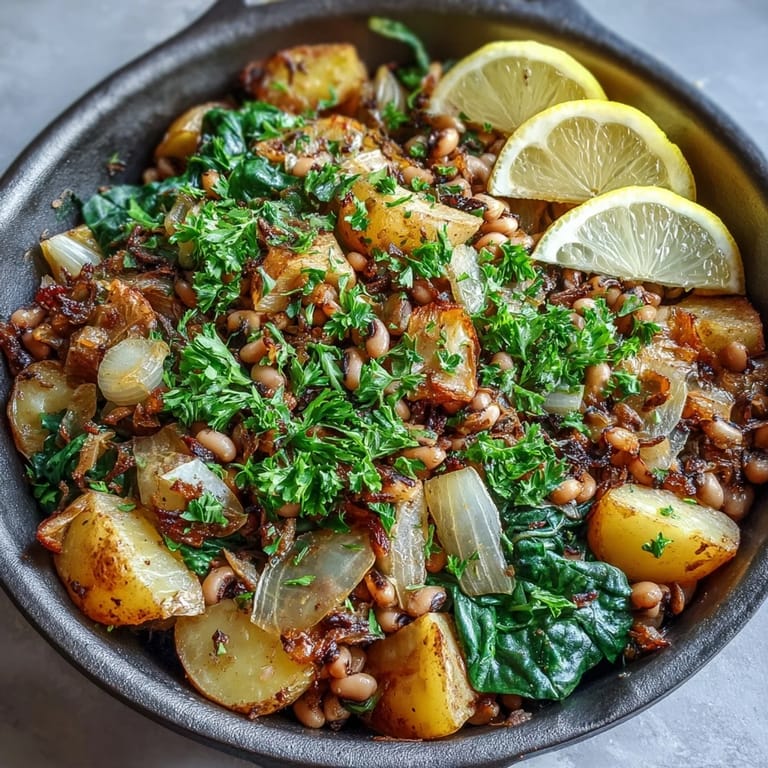
- Uncover the skillet, scatter your chopped spinach across the top, and stir gently for two to three minutes until it transforms from raw green to silky and dark. The residual heat does most of the work here.
- Taste and season to your preference:
- Add salt and freshly ground black pepper to taste, adjusting as you go because every palate is different. Finish with fresh parsley and serve with lemon wedges on the side for people to squeeze over as they please.
 Pin It
 One evening my daughter watched me make this and asked why the spinach changed color so dramatically, and we ended up having this whole conversation about how heat transforms foods while we stood there together waiting for it to wilt. Food became a teaching moment without any effort on my part, just the natural consequence of cooking something simple and real.
Cast Iron is Your Friend Here
There's a reason I specify cast iron and not just any skillet—it holds heat evenly and builds up those beautiful golden edges on the potatoes that you simply can't achieve in a non-stick pan. The weight of it means you can actually sauté without things steaming, and it keeps everything warm all the way through cooking. Over time, the seasoning on your pan actually adds its own subtle richness to anything you cook in it.
Making This Your Own
The beauty of this recipe is that it's genuinely flexible without becoming unrecognizable. I've made it with kale when spinach was expensive, added diced bell peppers when I had them, and even stirred in some smoked tofu once for my friend who wanted extra protein. The core combination is strong enough to handle variations without falling apart.
Serving and Storage Wisdom
Serve this skillet hot, straight from the stove, with cornbread for soaking up any juices or rice if you want it more filling. It tastes equally good the next day reheated gently on the stovetop, though the spinach will have softened further into the dish.
- Leftovers keep refrigerated for up to four days and reheat beautifully in the skillet over low heat with a splash of water if needed.
- You can make this ahead through the simmering step, then finish with spinach and seasoning just before serving for maximum freshness.
- If you're cooking for one, this recipe halves perfectly and still feels like a real dinner, not a sad single-serving situation.
 Pin It
 This skillet dinner has become my answer to the question of what to cook when I want something nourishing but don't want to think too hard about it. Every time I make it, it tastes like home and possibility in the same spoonful.
Recipe FAQs
- → Can I use dried black-eyed peas instead of canned?
Yes, soak and cook dried black-eyed peas according to package directions before adding to the skillet. You'll need approximately 1 cup dried peas to yield 2 cups cooked.
- → What other greens work in this dish?
Kale, Swiss chard, or collard greens make excellent substitutes. Just adjust cooking time—heartier greens like kale may need 2-3 extra minutes to wilt completely.
- → How do I store leftovers?
Store cooled leftovers in an airtight container in the refrigerator for up to 4 days. Reheat gently in a skillet with a splash of water or broth to prevent sticking.
- → Can I make this dish spicier?
Increase red pepper flakes to 1/2 teaspoon, add a diced jalapeño with the onions, or incorporate a dash of hot sauce when serving.
- → What sides pair well with this skillet?
Cornbread, warm crusty bread, or fluffy rice complement this dish beautifully. A simple side salad or roasted vegetables also rounds out the meal nicely.