 Pin It
 I'll never forget the Christmas Eve my grandmother unveiled her "Twelve Days of Cheese" board at our family gathering. She'd spent the afternoon arranging twelve distinct cheese varieties, each paired with a different accompaniment, turning our holiday table into an edible calendar of flavors. As everyone gathered around, I watched grown-ups light up like children discovering something magical—this wasn't just food, it was an experience unfolding course by course. That moment taught me that the most memorable meals aren't always the most complicated; sometimes they're the ones that invite exploration and conversation.
I remember my first attempt at this board for a dinner party where I'd invited neighbors I was nervous about getting to know. As they arrived and saw those twelve distinct cheese sections, something shifted in the room. People naturally lingered, tried things they wouldn't normally order, and started sharing stories about cheese they'd discovered in travels. By the end of the evening, those strangers felt like friends. The board had done the work that small talk struggles with.
Ingredients
- Brie: The creamy, approachable gateway cheese that everyone loves. Choose one at room temperature for that perfect melt-in-your-mouth quality that makes people close their eyes.
- Aged Cheddar: Sharp, crystalline, and satisfying—this is the cheese that teaches your palate about depth. The older, the more complex it becomes.
- Manchego: A Spanish sheep's milk cheese with a subtle nuttiness that tastes like sunshine and grasslands. It's the elegant one on your board.
- Roquefort or Blue Cheese: The bold choice that separates adventurous eaters from the cautious. Its veining isn't just decoration; it's layers of flavor built into the structure.
- Goat Cheese: Tangy and bright, this one cuts through richness and makes your mouth wake up. Fresh is better than aged for this pairing scheme.
- Gruyère: Nutty and complex, this Swiss treasure has a crystalline bite that pairs beautifully with mustard. It's the sophisticated choice.
- Camembert: Softer and earthier than Brie, this French classic has a personality all its own. Look for the rind to be slightly yielding when pressed.
- Gouda: The approachable, slightly sweet option that bridges the gap between cheddar lovers and cheese explorers. It's forgiving and delicious.
- Comté: A French Alpine cheese with caramel notes and a smooth texture. It's the cheese that makes people say, 'I didn't know cheese could taste like this.'
- Pecorino: Sharp, salty, and unapologetically Italian. This sheep's milk cheese has a crystalline bite that demands attention.
- Havarti: Danish and buttery, almost creamy despite being semi-hard. It's the cheese that makes you feel sophisticated.
- Smoked Cheese: The wild card that adds intrigue and depth. Choose smoked provolone or any smoked variety that speaks to you—it's your board's personality showing through.
- Artisanal bread or assorted crackers: These are the vehicles, but they matter tremendously. Choose quality crackers that won't overwhelm delicate cheeses and sturdy bread for bolder varieties.
- Honey: Liquid gold that transforms creamy cheeses into something transcendent. Warm, floral honey speaks louder than darker varieties.
- Fig jam: This is the bridge between savory and sweet. It whispers sophistication and pairs with almost anything.
- Whole grain mustard: Grainy and assertive, this cuts through richness and wakes up your palate between bites.
- Fresh and dried fruits: Grapes provide juiciness, apricots add chewiness and tang, pears offer delicate sweetness, and apple slices bring crisp contrast. These aren't afterthoughts; they're essential flavor partners.
- Nuts: Walnuts bring earthiness, almonds add delicate sweetness and crunch. They're texture agents that make every bite more interesting.
- Dark chocolate: Yes, really. The bitterness plays beautifully against cheese's richness, especially with Gouda and smoked varieties.
- Cornichons: Tiny pickled cucumbers that provide acidic relief. They're the palate cleansers that let you taste the next cheese with fresh interest.
- Fresh herbs: Thyme and rosemary aren't just garnish; they're scent and flavor that frames the entire board. They tell the story that this is intentional and thoughtful.
Tired of Takeout? 🥡
Get 10 meals you can make faster than delivery arrives. Seriously.
One email. No spam. Unsubscribe anytime.
Instructions
- Plan your canvas:
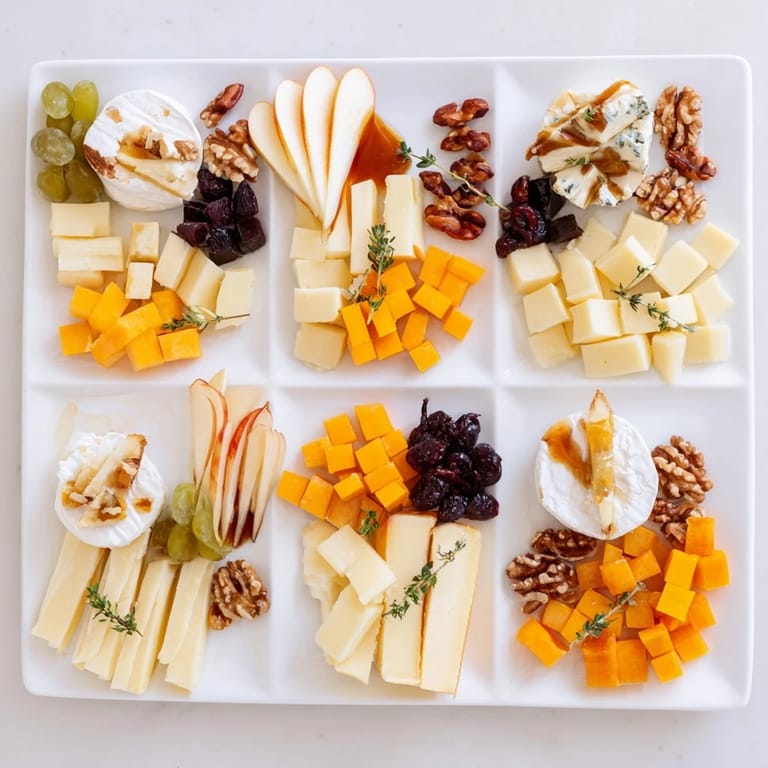
- Imagine your large board or platter divided like a clock face with twelve sections, or however twelve distinct areas reveal themselves to you. Some boards naturally have curves and edges that suggest divisions; work with the board's personality, not against it. If you have small bowls or ramekins, place them first—they'll act as anchors for your design.
- Arrange the cheeses:
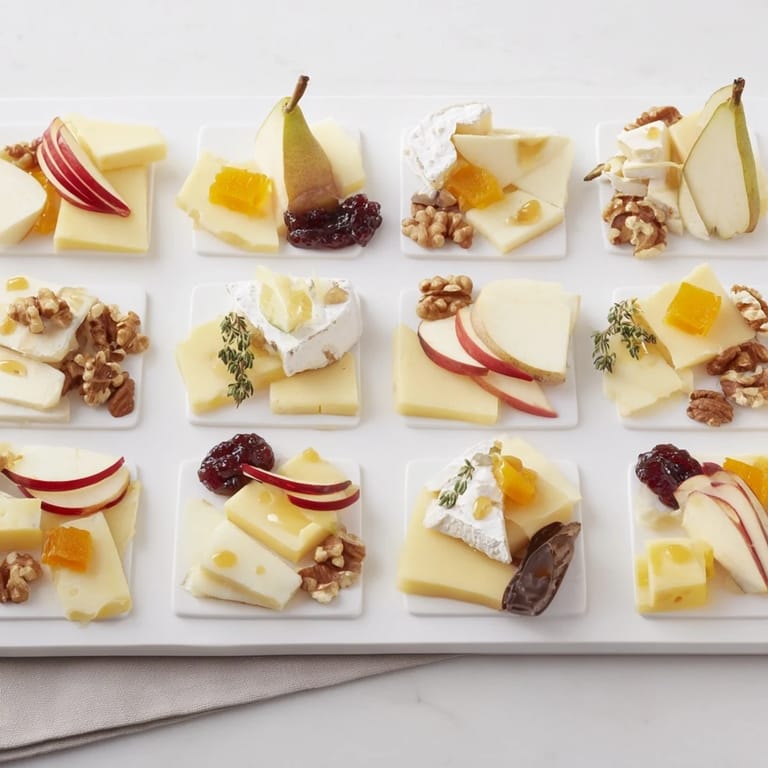
- Place one cheese variety in each section, cutting them into bite-sized pieces so people can taste without committing to a large wedge. For softer cheeses like Brie and Camembert, leave them slightly larger so the creamy interior is visible. For harder cheeses like Manchego and Comté, cut modest cubes or slices. Notice how the colors start to form a palette—creamy white, aged gold, crumbly blue, earthy goat cheese. Your board is becoming a painting.
- Marry cheese with pairing:
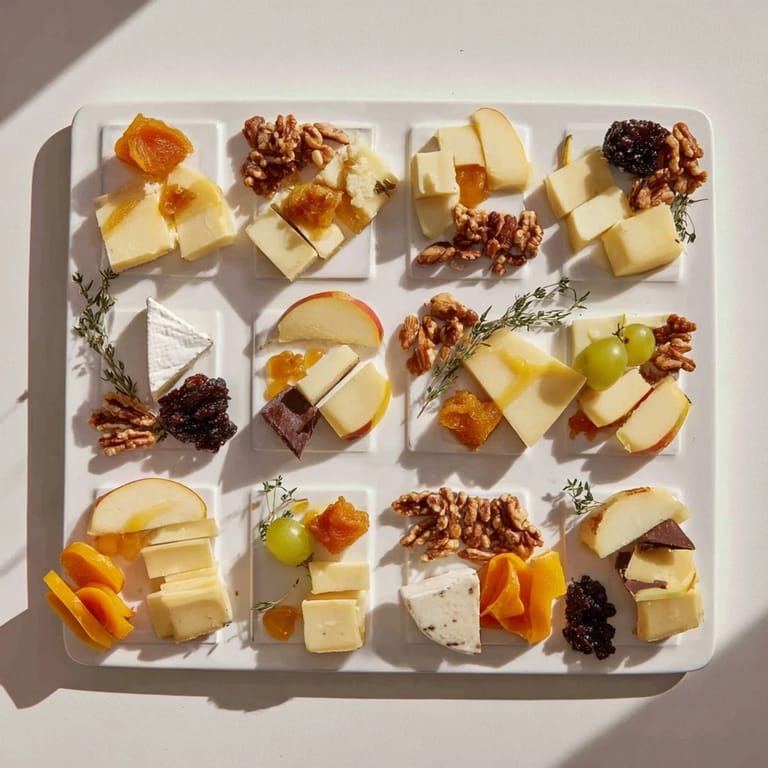
- This is where intuition meets intention. For each cheese, place its unique pairing in the same section: Brie gets honey and a paper-thin apple slice, creating a yin-yang of creamy and crisp. Aged Cheddar teams with fig jam and a walnut for sweet earthiness. Manchego meets quince paste and an almond for Spanish elegance. Roquefort pairs with pear and walnut—the sweetness gentles the cheese's boldness. Goat Cheese nestles with fresh thyme and a grape for bright, herbal simplicity. Gruyère gets whole grain mustard and a cornichon for sharp, assertive company. Camembert pairs with apple and almond for rustic comfort. Gouda meets dried apricot and a piece of dark chocolate—trust me on this pairing. Comté gets grapes and walnuts for sophisticated simplicity. Pecorino teams with pear and a drizzle of honey. Havarti gets fig jam and an almond. Smoked Cheese goes with cornichon and dark chocolate for smoky intrigue. As you place each pairing, you're telling a story about flavor combinations.
- Frame with bread and crackers:
- Arrange your bread slices and crackers around the entire board's perimeter, positioning them so people can access every cheese easily. Think of them as the border that holds your artwork together and makes the painting complete. You should have enough that each person can have at least one cracker per cheese variety without anyone feeling rushed.
- Add the finishing touches:
- Scatter fresh herbs—sprigs of thyme and rosemary—across the board. They don't need to be perfectly placed; a little casual artistry here makes everything look intentional and festive. The herbs add color contrast and, when someone brushes them while reaching for cheese, they release their aromatics into the air. This sensory layer matters more than you'd think.
- Serve with presence:
- Let your board sit at room temperature for at least fifteen minutes before serving. This allows the cheeses to express their true flavors and personalities. When you set it down, step back and let it breathe. The best cheese boards are the ones that invite people to explore slowly, not rush through.
 Pin It
 Years later, I still think about that dinner party and how a thoughtfully arranged cheese board created permission for people to slow down, taste carefully, and connect with each other. In a world of rushed meals and quick bites, this board says: take time, explore, enjoy the small sensations.
The Art of Pairing
Cheese pairing isn't a rule book; it's a conversation between flavors. The principle I've learned is balance: soft cheeses pair beautifully with bright acidity like apple or pear, sharp cheeses need sweetness to round them out, and bold cheeses deserve bold accompaniments. But the magic happens at the edges, where you find unexpected combinations that somehow work. A guest once paired the Roquefort with dark chocolate and cornichon, and I watched their eyes light up. That's when I understood that a cheese board isn't about being 'correct'—it's about creating a space where people discover what they love.
Making It Your Own
The beauty of this board is its flexibility. Traveling through France? Choose French cheeses and French pairings. Obsessed with Spanish food? Build an entire board around Manchego, Idiazabal, and Cabrales. I once made this board with entirely local cheeses from farmers markets within fifty miles of my home, and it became a love letter to my region. The framework stays the same, but the personality is entirely yours. Choose cheeses that excite you, pairings that make sense to your palate, and don't worry about the 'rules.' Your enthusiasm is contagious.
Timing and Presentation Secrets
Here's what I've discovered in the kitchen: the presentation of a cheese board is half the experience. When guests see a thoughtfully composed arrangement, they approach it with reverence and curiosity instead of hunger-driven grabbing. Spend a few extra minutes thinking about color balance, making sure creamy whites, aged golds, and blue veining are distributed across the board rather than clustered. Leave a little breathing room around each cheese—overcrowding makes it feel rushed and chaotic. And remember, you're not competing with anyone; you're creating a moment.
- If you're serving this at a holiday party, set it out thirty minutes after guests arrive, not the moment they walk in. This creates a reason for people to gather again mid-party and re-engage with each other.
- Provide small cheese knives or spreads for creamier varieties, but let people use their fingers for fruit and nuts. There's something more convivial about hands-on eating.
- Keep a small extra plate of crackers in the kitchen for refilling. It shows thoughtfulness and keeps the board looking abundant and fresh throughout the evening.
 Pin It
 Every time I make this board, I'm reminded that the best entertaining isn't about complexity—it's about thoughtfulness. You're saying to your guests: I spent time thinking about what would make you happy. That gesture, more than any perfectly paired cheese, is what people remember.
Recipe FAQs
- → What kinds of cheeses are ideal for this board?
Select a variety of cheeses with different textures and flavors such as Brie, Aged Cheddar, Manchego, Roquefort, and Gruyère to create a balanced tasting experience.
- → How should the cheese be prepared for serving?
Cut cheeses into bite-sized pieces or slices to encourage easy sampling and neat presentation on the board.
- → What pairings complement the cheeses best?
Pair cheeses with items like honey, fig jam, assorted nuts, fresh and dried fruits, mustard, and dark chocolate to enhance their flavors.
- → Can this board accommodate dietary restrictions?
Yes, by choosing vegetarian or plant-based cheeses and substituting gluten-free crackers, this spread can be adapted for diverse diets.
- → How should the board be served for optimal flavor?
Serve the board at room temperature to allow the cheeses and accompaniments to develop their full flavor profiles.
- → What tools are recommended for assembling the board?
A large serving board, small bowls or ramekins, cheese knives, and small spoons for spreads will make assembly easy and tidy.