 Pin It
 There's something about a grazing board that transforms an ordinary gathering into theater. I discovered this a few years ago when a friend casually mentioned she'd built one for her dinner party, and guests spent the entire evening orbiting it like it was the main attraction. What struck me wasn't just the abundance of cheese and fruit, but how she'd let things spill dramatically over the edge of the board. I tried recreating that cascade effect at home, and suddenly I understood the magic: it wasn't fussy or formal, it was more like sculpting with food. The velvet curtain inspiration came later, when I realized the way prosciutto drapes and cheese tumbles can actually mimic those flowing stage curtains I'd always admired. Now I build these boards not just to feed people, but to give them permission to linger, to explore, to enjoy.
I'll never forget the first time I served one of these at a small dinner party last spring. My daughter watched as her grandmother reached past the obvious cheese to discover the pomegranate seeds tucked beneath, and suddenly there was this genuine delight on her face. She called it "treasure hunting on a board," and that stuck with me. From that night on, I realized these boards work because they invite curiosity instead of demanding it. Everyone finds their own path through the arrangement, their own combination of flavors. It turned what could have been a silent appetizer course into a conversation.
Ingredients
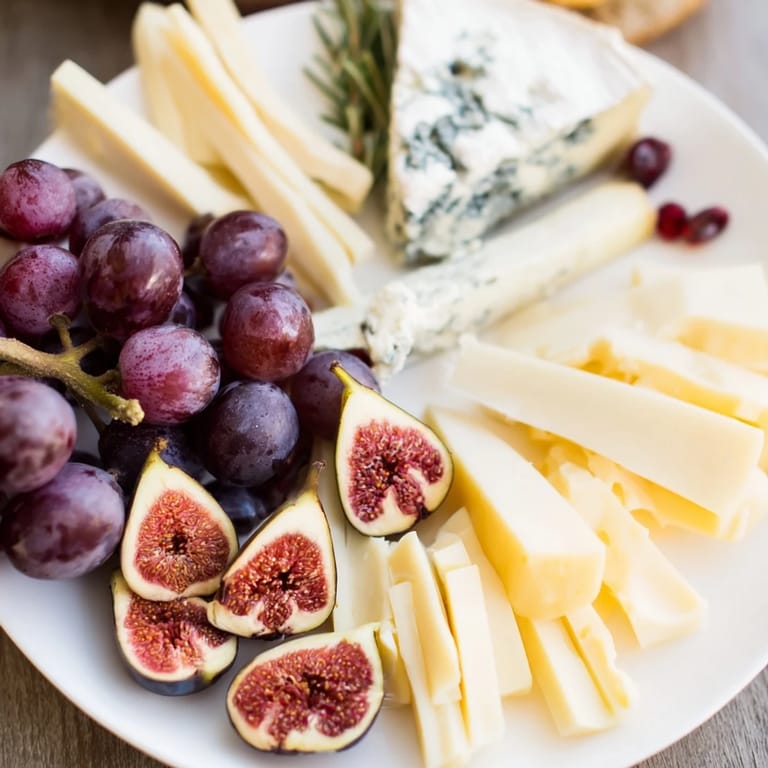
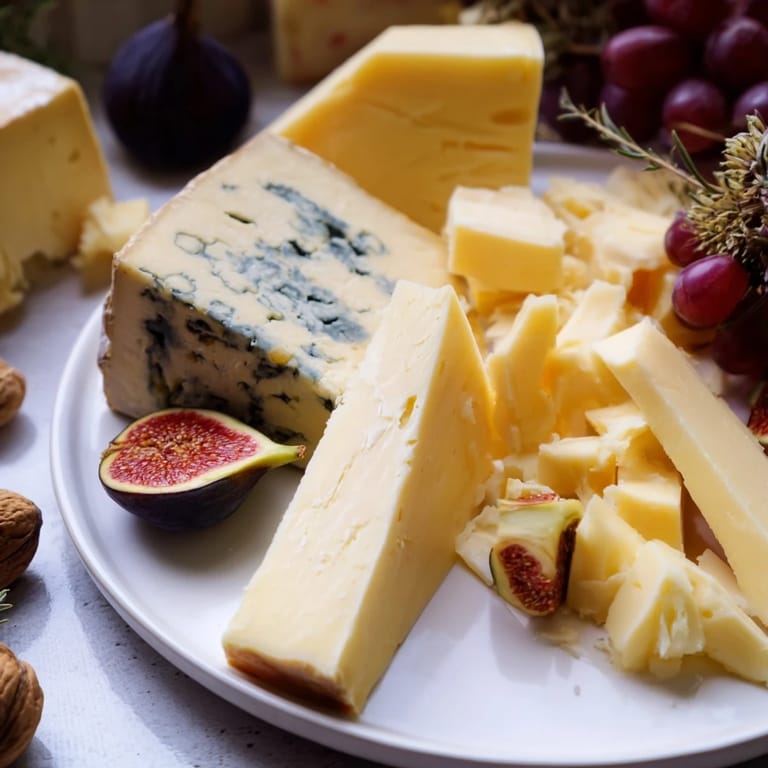
- Brie, wedged: The creamy anchor that feels luxurious even though it's doing zero work. Let it soften just slightly at room temperature so it's almost melting at the edges.
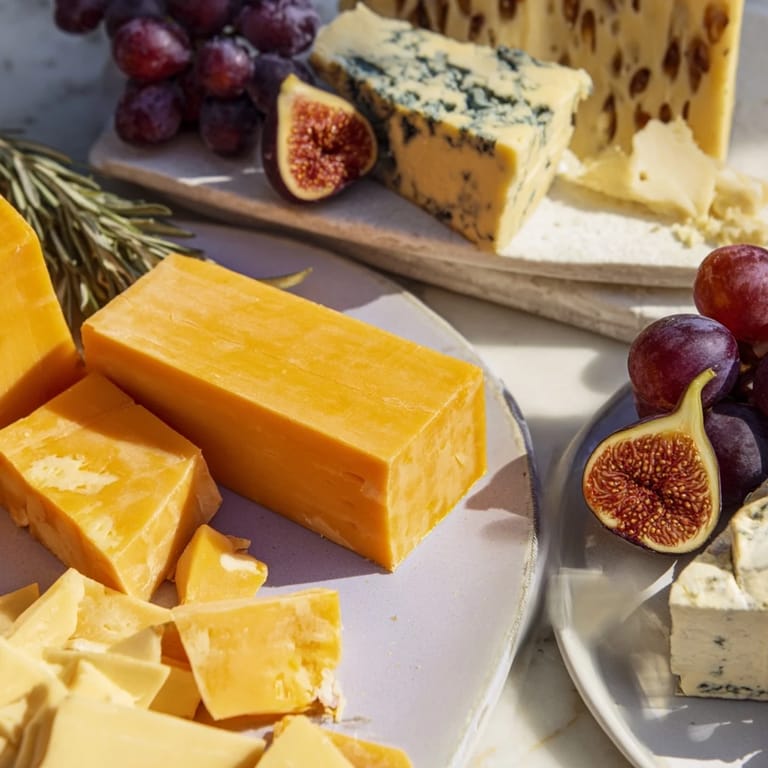
- Aged Cheddar, cut into sticks: The sharp counterpoint that keeps things from feeling one-note. I always cut mine thick enough that they don't disappear into the crowd of other ingredients.
- Blue Cheese, in chunks: Here for the bold move, for people who appreciate a little intensity in their bite. Don't crumble it too fine or it loses that dramatic presence.
- Prosciutto, loosely draped: The fabric of this whole design. Lay it so it catches the light, the folds creating actual shadows on your board.
- Soppressata, folded: Where prosciutto is whisper-thin, this brings weight and punch. Fold it so pieces stand up slightly instead of lying flat.
- Red Grapes, on the stem: They roll and collect in the folds, creating little pockets of sweetness. Keeping them on the stem makes them feel intentional, not afterthought.
- Fresh Figs, halved: Halve them just before serving so they stay jewel-like and don't oxidize. They're your luxury statement piece.
- Strawberries, halved: The brightness that stops the board from feeling too decadent. Their tartness is the argument against all that richness.
- Pomegranate seeds: These are pure visual drama and little bursts of tart-sweet when you least expect them.
- Baguette, sliced: Toast these lightly if you want them to stay crisp, or leave them soft if your guests prefer. Either way, slice on an angle so they lean gracefully.
- Seeded Crackers: A textural anchor that doesn't compete with the other flavors. Something substantial to carry the softer components.
- Fig Jam: The sweet-savory bridge that makes everything suddenly make sense together. A spoonful changes everything.
- Honey, drizzled: Don't overthink this. A small bowl, maybe a wooden dipper if you have one, and let people make their own decisions.
- Marcona Almonds: Roasted and salty, these are your textural contrast and guilty pleasure in the same handful.
- Olives, pitted: A briny moment that cuts through the richness and reminds your palate you're eating real food, not just a flavor fantasy.
- Fresh herbs, for garnish: Rosemary and thyme aren't just pretty. They release that herbal scent that makes the whole board feel alive. Tuck them in like you're arranging flowers.
Tired of Takeout? 🥡
Get 10 meals you can make faster than delivery arrives. Seriously.
One email. No spam. Unsubscribe anytime.
Instructions
- Choose your stage:
- Find a large wooden or marble board that feels substantial. This isn't timidity—position it so at least one edge hangs just over the table's edge, creating actual space for your cascade. The board itself becomes part of the drama.
- Anchor with cheese:
- Arrange your three cheeses so wedges and sticks point outward and some pieces actually tumble slightly over the edge. Think less "organized" and more "intentional abundance." Let the colors separate and speak to each other.
- Layer the draped elements:
- Fold prosciutto and soppressata so they create vertical elements that catch light. Don't flatten them—let them have dimension and movement, cascading down the sides like fabric.
- Nest the fruits:
- Tuck grapes, halved figs, strawberries, and pomegranate seeds into the spaces between cheeses and charcuterie. Some should pile slightly together for color clusters, and some should trail over the edge. This is where it starts looking like actual theater.
- Position breads and crackers:
- Fan slices so they lean slightly, allowing a few to overhang. Crackers should fill gaps but never look crammed. This is orchestration, not packing.
- Add the small luxuries:
- Place small bowls of fig jam, honey, olives, and almonds in the gaps you've created. Nestle them so they feel like they belong, not added as an afterthought. A small wooden spoon for jam makes people feel invited to actually use it.
- Finish with herbs:
- Tuck fresh rosemary and thyme sprigs between ingredients like you're arranging a bouquet. This is your signature moment—let it feel deliberate.
- Serve with intention:
- Bring it to the table immediately. The goal is for people to see it before they taste anything, to feel that moment of visual awe. Everything else follows from there.
 Pin It
 The turning point for me came when someone at a party asked if I'd "learned this from somewhere fancy." I realized in that moment that I hadn't—I'd just given myself permission to play. The board became a place where rules didn't apply, where abundance was the whole point, where the imperfect drape of a cheese wedge was better than a perfect lineup. That's when grazing boards stopped feeling like a task and started feeling like a conversation with every person who reached for something.
Building Your Board Like You Mean It
The secret I've learned is that a successful grazing board isn't about having the fanciest ingredients—it's about creating a landscape. Think of the board as topography: high points and valleys, textural variety, places to discover. Color clustering (grouping reds together, then whites, then purples) makes it feel intentional without being rigid. The ingredients should feel both abundant and navigable, like there's enough to explore without being overwhelming. I always leave small intentional gaps between ingredient groups. It slows people down slightly, makes them choose their path rather than just reaching for whatever's closest.
The Art of Timing and Temperature
Timing this board is more psychology than logistics. Assemble everything about fifteen minutes before guests arrive, but keep it uncovered in a cool part of your kitchen. Bring it to the table with a slight flourish—that moment of visual impact is when people shift from conversation mode to exploration mode. The cheeses will be at their best after a few minutes at room temperature, the fruits will look most jewel-like when they haven't sat too long, and the crackers will hold their crispness. I learned the hard way that building these thirty minutes early means your figs start looking tired and your cheese hardens back up. Closer to service is always better.
Variations and Flourishes
Once you understand the bones of this board, you can improvise endlessly while keeping that dramatic cascade at its heart. Seasonal variations are your friend: stone fruits and burrata in summer, roasted grapes and aged goudas in fall, persimmons and pecans in winter. For a vegan version, seek out excellent plant-based cheeses and just lean harder into the fruits and nuts—they become the stars instead of supporting players. If you're cooking for people with specific preferences, the beauty of a grazing board is that it accommodates without announcing it. Your guests simply build their own perfect plate.
- Edible flowers (pansies, nasturtiums) add theatrical color without adding much flavor—they're pure visual drama.
- A bottle of good rosé or sparkling wine positioned nearby signals to people that this is a celebration, not a snack.
- If you have fresh honeycomb instead of plain honey, use it—the visual impact and the unexpected textural moment will be remembered.
 Pin It
 This board has become my favorite way to gather people because it removes the pressure of plating while creating something that feels genuinely special. There's no right way to eat it, only the way that brings you joy.
Recipe FAQs
- → What cheeses work best for this board?
Brie, aged cheddar, and blue cheese create a balanced range of creamy, sharp, and tangy flavors that complement the fresh and savory elements.
- → Can this be adapted for vegetarians?
Yes, simply omit the prosciutto and soppressata, and consider plant-based cheese alternatives to maintain variety.
- → How should the board be arranged for visual impact?
Arrange cheeses and charcuterie so some pieces spill over the edge, mimic cascading curtains, and tuck in fruits and nuts to create layers and flow.
- → What breads pair well with the ingredients?
Sliced baguette and seeded crackers provide a crunchy texture that complements the creamy cheeses and fresh produce.
- → Are there suggested beverage pairings?
Crisp rosé or sparkling wine perfectly balance the rich cheeses and fruity notes for a festive touch.