 Pin It
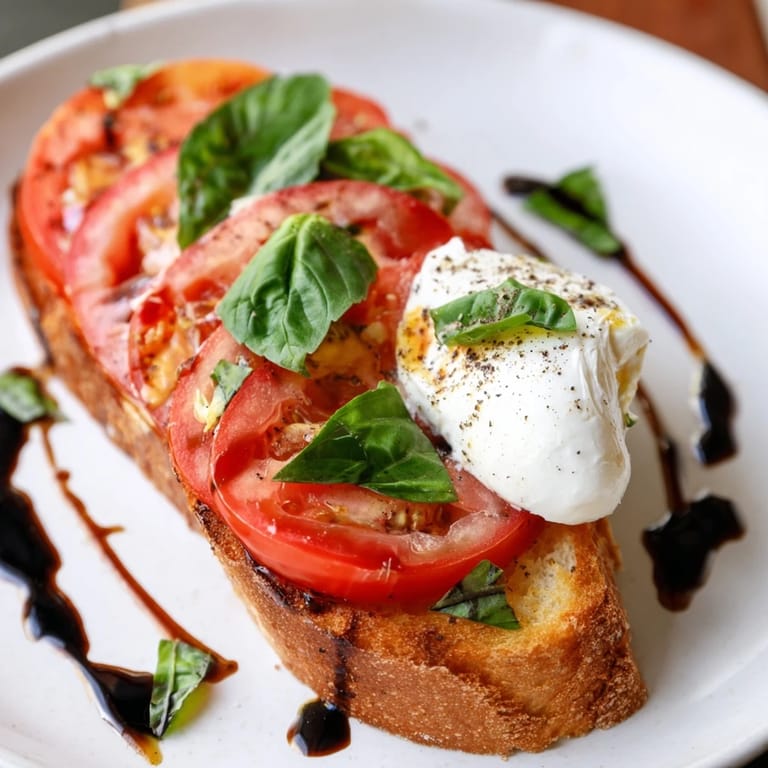
 I was juggling three things at once on a Saturday morning—wet hair, an empty fridge, and a friend texting they were ten minutes away—when I spotted a ball of burrata hiding in the back of my cheese drawer and two tomatoes that had finally ripened. Twenty minutes later, my friend walked in to a kitchen that smelled like toasted sourdough and garlic, and we sat down to these toasts that somehow made everything feel intentional. That's when I realized the simplest combinations often taste the most memorable.
My neighbor brought me burrata once because she'd made too much, and I spent an embarrassing amount of time figuring out what to do with something so delicate and precious. Then I made this toast and understood why she'd been so generous—it's the kind of dish that makes people actually pause and taste, not just eat. Now I keep burrata in my fridge specifically for mornings when I want breakfast to feel like an occasion.
Ingredients
- Sourdough bread, 2 large slices: The tanginess cuts through the richness of the burrata, and the crust gives you that satisfying crunch that lasts through each bite.
- Fresh burrata cheese, 1 ball (125g): This is the star—those creamy curds inside are worth seeking out at a proper cheese counter, though fresh mozzarella works if you're in a pinch.
- Ripe tomatoes, 2 medium: Choose ones that smell like tomato when you pick them up; that's your sign they'll actually taste like something.
- Extra virgin olive oil, 2 tbsp: Use one you actually like drinking, not the one hiding in the back of your cabinet.
- Garlic clove, 1, halved: The warmth of the toast releases the garlic's sweetness in a way that raw garlic never could.
- Flaky sea salt and freshly ground black pepper: Don't skip this step—the salt wakes up every other flavor on the plate.
- Fresh basil leaves, 6–8, torn: Tearing by hand instead of chopping keeps the leaves from bruising and turning dark.
- Balsamic glaze, 1 tsp (optional): Just a whisper of it adds complexity without overpowering the fresh flavors.
Tired of Takeout? 🥡
Get 10 meals you can make faster than delivery arrives. Seriously.
One email. No spam. Unsubscribe anytime.
Instructions
- Toast until golden and crisp:
- Get your bread to that perfect moment where it's crunchy on the outside but still has some give in the middle. Whether you use a toaster or a hot pan, watch it closely—sourdough can go from golden to bitter in about ten seconds.
- Rub with warm garlic:
- Do this while the bread is still hot; the warmth helps the garlic release its flavor into the bread itself. You're creating a subtle garlicky base that ties everything together.
- Add a good glug of olive oil:
- This isn't the place to be shy—the oil carries flavor and keeps the bread from drying out. Let it soak in while the toast is still warm.
- Layer the tomatoes:
- Overlap them slightly like you're creating something intentional, then season generously. The salt draws out the tomato's natural sweetness.
- Tear and spoon the burrata:
- Gently does it—you want those creamy curds to stay intact and visible. Let them pool slightly on the warm bread.
- Finish with basil and glaze:
- The basil brings freshness at the last second, and if you're using the balsamic, just a drizzle is enough. Serve immediately while everything's still warm and the cheese is at its creamiest.
 Pin It
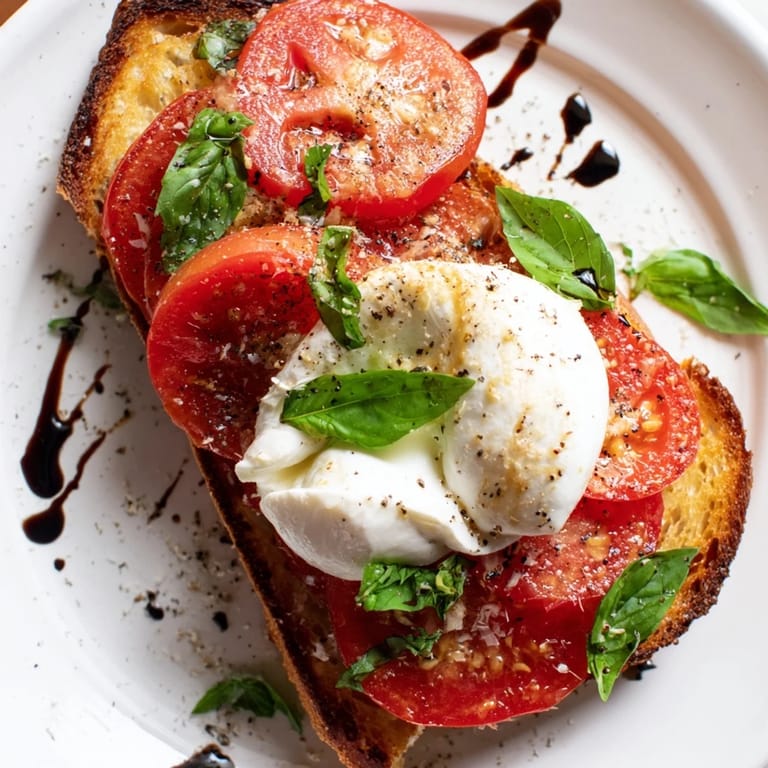
 There's a moment that happens when you take that first bite—when the warmth from the toast and the cool creaminess of the burrata meet with the brightness of the tomato—where you realize food doesn't have to be complicated to be extraordinary. That's the whole reason this toast exists.
Choosing Your Tomatoes
The tomato makes or breaks this dish, so it's worth being picky about. Heirloom varieties have more flavor and personality than your standard supermarket round, and they slice beautifully too. If you can only find mediocre tomatoes, honestly consider waiting until they ripen properly or save this recipe for when good ones show up at the market—a compromised tomato will drag down everything else on the plate.
About Your Bread
Sourdough's tang is what makes this recipe work, but good quality matters more than strict authenticity. A rustic, crusty bread with some chew will hold up to the olive oil and toppings without becoming soggy. If you're using day-old bread, toast it a bit longer to bring back some life and crispness.
Make It Your Own
This toast is a canvas, and once you've made it once, you'll start seeing variations everywhere. Some mornings I add a pinch of chili flakes for heat, other times I'll use whichever fresh herb is thriving on my windowsill. The structure stays the same—warm bread, good cheese, great tomato, olive oil—but the details are yours to play with.
- Experiment with red pepper flakes, dried oregano, or fresh arugula to shift the flavor.
- A drizzle of honey or hot honey creates an entirely different mood than balsamic.
- If burrata is out of reach, creamy fresh mozzarella or even ricotta can stand in beautifully.
 Pin It
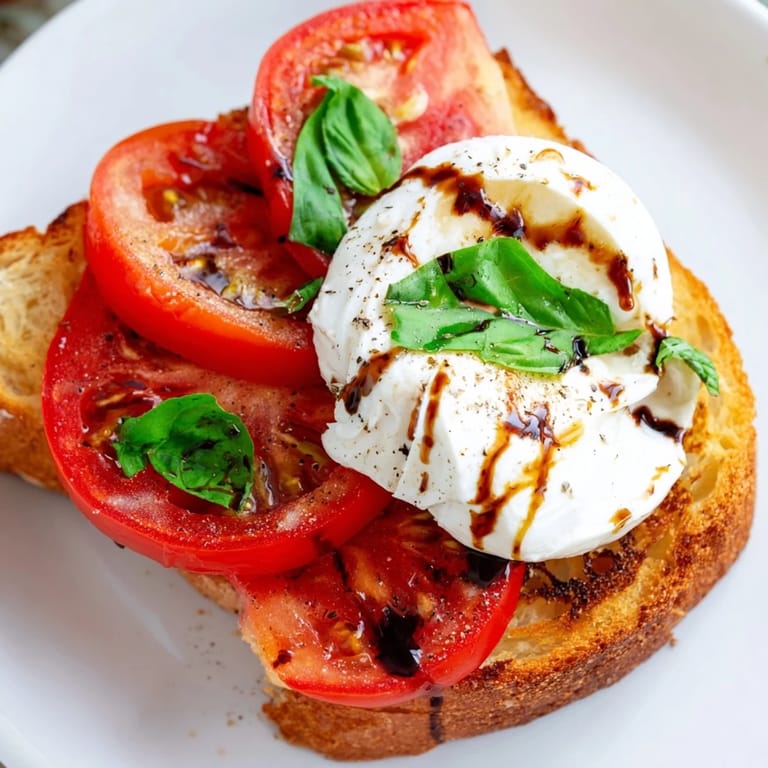
 This is the kind of recipe that reminds you why you love cooking—because in fifteen minutes, you can create something that tastes like care. Make it for yourself on a quiet morning, or make it for someone you want to impress.
Recipe FAQs
- → What type of bread works best?
Sourdough bread is ideal for its crispy texture and slight tang, but any crusty bread can be used.
- → Can I substitute burrata?
Fresh mozzarella is a good alternative if burrata is unavailable, though the creaminess varies.
- → How to enhance the flavor further?
Adding chili flakes or using heirloom tomatoes can boost the dish’s depth and freshness.
- → Is balsamic glaze necessary?
It’s optional but adds a subtle sweetness and acidity that balances the creamy cheese and tomatoes.
- → How should I serve this dish?
Serve immediately while the toast is warm and the burrata remains creamy for the best flavor and texture.