 Pin It
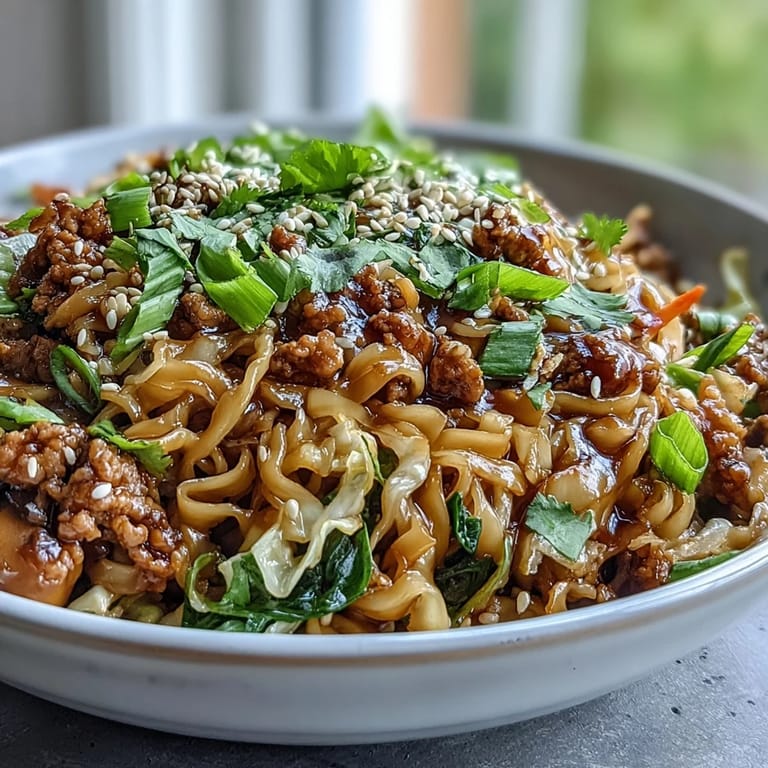
 The first time I made potstickers from scratch, I spent three hours folding pleats that refused to behave. By the time they hit the pan, I was exhausted and my kitchen looked like a flour explosion. That's when I realized all those flavors I loved could happen in a bowl instead.
My sister called me mid-prep last week, asking what smelled so incredible. When I explained it was basically deconstructed potstickers, she showed up with chopsticks in hand. We ate standing up because nobody wanted to wait for the table to be set.
Ingredients
- 8 oz dried rice noodles or lo mein noodles: Rice noodles give that authentic springy texture, but wheat noodles hold onto sauce beautifully
- 1 lb ground pork or chicken: Pork has that traditional potsticker richness, but chicken works perfectly if that's what you have
- 1 tbsp soy sauce, 1 tsp toasted sesame oil, 1 tsp cornstarch, 1/4 tsp white pepper, 1/2 tsp sugar, 1/2 tsp kosher salt: This mixture transforms plain meat into the seasoned filling you find inside dumplings
- 2 tbsp neutral oil, divided: You need one for browning the meat until it gets those crispy edges, another for blooming the aromatics
- 3 cloves garlic, minced: Fresh garlic makes all the difference here
- 1 tbsp fresh ginger, finely grated: Grate it against the grain for maximum flavor
- 4 green onions, thinly sliced: Keep the whites and greens separate, they cook differently
- 2 cups finely shredded green cabbage: The shreds should be thin so they cook quickly but stay crisp
- 1 cup shredded carrots: Matchstick carrots work great if you want to skip the cutting
- 1 cup sliced shiitake or cremini mushrooms: They add that earthy umami depth
- 1 cup bean sprouts: Optional but I love the fresh crunch they add at the end
- 1/2 cup fresh cilantro leaves, 2 tsp toasted sesame seeds, lime wedges: These toppings make the bowl feel complete and restaurant-worthy
- 1/3 cup low-sodium soy sauce: Low sodium gives you control over the salt level
- 2 tbsp rice vinegar: This brightens up the whole sauce
- 1 tbsp oyster sauce or hoisin sauce: Oyster sauce is traditional, hoisin makes it sweeter
- 1 tbsp chili-garlic sauce or sambal oelek: Adjust this based on your heat tolerance
- 2 tsp toasted sesame oil: Toasted matters here, raw sesame oil doesn't have the same depth
- 1 tbsp brown sugar or honey: Brown sugar gives a molasses note, honey is cleaner and brighter
- 1/2 cup chicken broth or water: This thins the sauce just enough to coat every strand of noodle
Tired of Takeout? 🥡
Get 10 meals you can make faster than delivery arrives. Seriously.
One email. No spam. Unsubscribe anytime.
Instructions
- Get your noodles ready first:
- Boil them according to the package, drain, rinse with cold water, and toss with a few drops of oil so they don't turn into a sticky clump
- Season the meat like dumpling filling:
- Mix the soy sauce, sesame oil, cornstarch, pepper, sugar, and salt into the pork until it feels slightly sticky, then let it hang out for a few minutes
- Whisk together the potsticker sauce:
- Combine the soy sauce, rice vinegar, oyster sauce, chili-garlic sauce, sesame oil, brown sugar, and chicken broth until the sugar disappears
- Prep all your vegetables while the meat marinates:
- Shred the cabbage and carrots, slice the mushrooms, and slice those green onions, keeping white and green parts in separate piles
- Crisp the meat in a hot pan:
- Heat one tablespoon of oil in a large skillet over medium-high heat, spread the meat in an even layer, and let it brown undisturbed before breaking it up
- Wake up the aromatics:
- Push the meat to the side, add the remaining oil to the empty space, and cook the garlic, ginger, and green onion whites until fragrant
- Add vegetables in stages:
- Start with mushrooms until they soften, then add cabbage and carrots until they're wilted but still have some bite
- Bring it all together with sauce:
- Pour that potsticker sauce over everything, toss until coated, and let it simmer until the sauce clings to the meat and vegetables
- Add the noodles and finish strong:
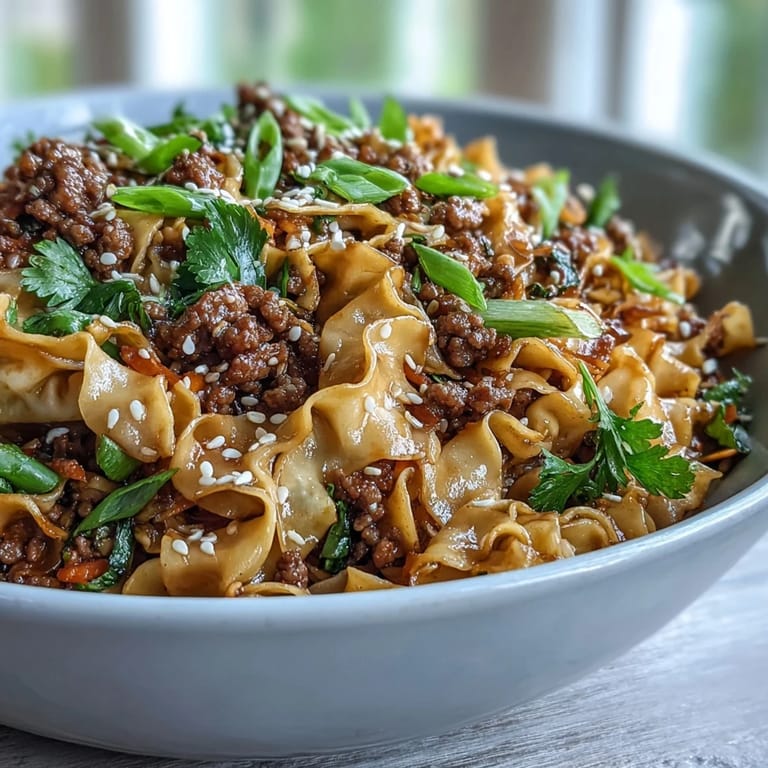
- Toss in the cooked noodles, add bean sprouts in the last minute if you're using them, and top with the remaining green onions, cilantro, and sesame seeds
 Pin It
 Last Tuesday, I made this for dinner and my husband actually paused Netflix between episodes to tell me it was better than our usual takeout spot. High praise from someone who orders delivery twice a week.
Make It Your Own
Ground turkey or beef works beautifully here. I've even made it with plant-based meat when my vegetarian sister came over, and nobody missed the pork. Baby bok choy or kale can stand in for cabbage, just adjust cooking time so they don't disappear completely.
Sauce Wisdom
Taste your sauce before adding it to the pan. Some chili-garlic sauces pack way more heat than others. I keep extra lime wedges on the table because that acid brightens up rich leftovers the next day.
Leftover Magic
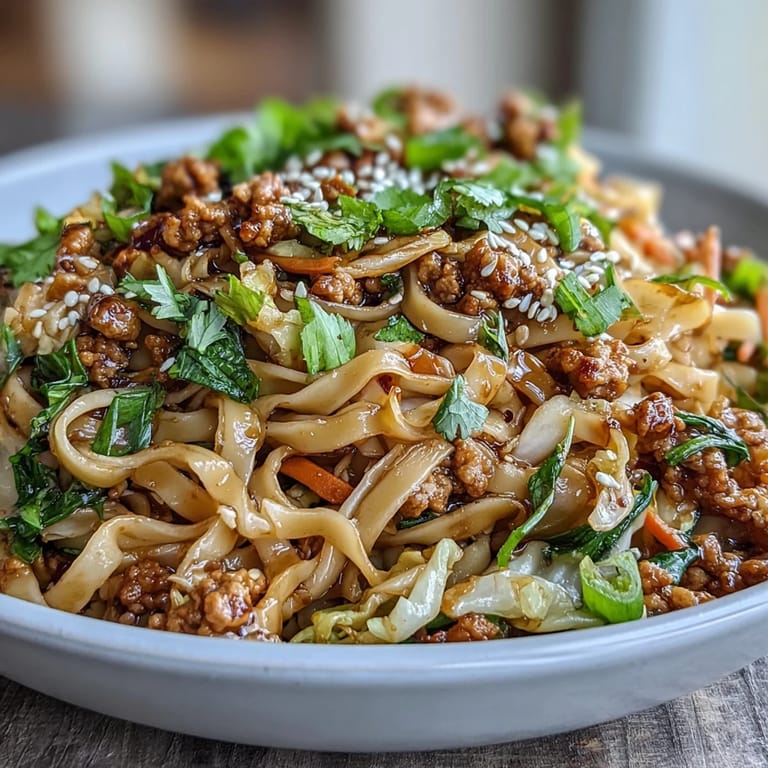
This actually keeps for three days in the fridge and the flavors meld together beautifully. Add a splash of water or broth when reheating because the noodles will have soaked up all that sauce.
- Fry an egg and plop it on top for lunch
- Top with crushed peanuts for extra crunch
- Drizzle with extra chili oil if you like it hot
 Pin It
 I hope this brings potsticker flavors to your table without the three-hour folding marathon. Sometimes the deconstructed versions taste even better.
Recipe FAQs
- → Can I use different proteins?
Ground chicken, turkey, beef, or plant-based meat work beautifully. Season the same way for consistent flavor.
- → What noodles work best?
Rice noodles, lo mein, or wheat-based noodles all perform well. Rice noodles keep this dairy-free and gluten-free with proper sauce substitutions.
- → How do I store leftovers?
Refrigerate up to three days in airtight containers. Reheat gently with a splash of water or broth to refresh the sauce and noodles.
- → Can I make this gluten-free?
Use gluten-free tamari instead of soy sauce, rice noodles, and gluten-free oyster sauce to accommodate dietary needs.
- → What vegetables can I substitute?
Napa cabbage, baby bok choy, or kale replace green cabbage well. Snow peas, bell peppers, or snap beans add crunch and color.
- → How spicy is this dish?
The chili-garlic sauce amount is adjustable. Start with less, taste, and add more gradually to reach your preferred heat level.