 Pin It
 I'll never forget the holiday party where I watched my cousin arrange a simple platter of red and white ingredients, and suddenly the whole table fell silent. Everyone stopped mid-conversation to photograph it. That's when I realized that a peppermint stripe platter isn't just food—it's edible art that tells the story of the season. Since that moment, I've made this stunning creation for every holiday gathering, and it's become the one thing guests ask about before they even arrive.
I made this for a small family gathering on a snowy December afternoon, and what started as appetizers became the whole conversation. My eight-year-old niece pointed at it and said, 'It looks like peppermint stripes,' and suddenly everyone understood why I'd spent those extra minutes arranging things with intention. That comment taught me that food arranged with thought and care speaks a language all its own.
Ingredients
- Fresh mozzarella balls (ciliegine or bocconcini), 200 g: These delicate white spheres are the foundation of your platter's elegance. Their creamy texture contrasts beautifully with crisp vegetables, and because they're pre-portioned, they make arranging in neat rows almost effortless. If you can't find them, fresh mozzarella slices work just as well—just cut them into uniform rounds.
- White cheddar cheese, sliced, 200 g: Choose a good quality aged white cheddar for deeper flavor and firmer texture that holds up beautifully on a platter. Avoid the pre-sliced stuff from the grocery store when possible—slice it yourself from a block for a more sophisticated presentation and better taste.
- Havarti cheese, sliced, 200 g: This Danish cheese has a subtle sweetness and creamy melting quality that makes it one of my favorite additions. Its pale color bridges the gap between pure white and pale yellow, adding visual depth without competing with the red elements.
- Sliced strawberries, 150 g: These should be the star of your red elements—choose berries that are ripe but still firm enough to hold their shape. Slice them right before assembly to keep them vibrant and fresh. I've learned the hard way that over-ripe berries weep and create wet patches that ruin the aesthetic.
- Raspberries, 150 g: Their delicate structure makes them a stunning garnish, but handle them with care. I like to scatter these in clusters rather than individual rows—they catch light beautifully and add an organic quality to the precision of everything else.
- Cherry or grape tomatoes, halved, 100 g: These add a savory note that balances the sweetness of the berries. Halving them creates little pools of ruby-red color and gives you more surface area to work with when building your stripes.
- Roasted red bell peppers, sliced, 100 g: Whether you roast these yourself or buy them jarred, they're a game-changer. Their silky texture and deep red color create elegant stripes that feel more sophisticated than raw peppers. If using jarred, pat them dry to prevent the platter from looking wet.
- Thinly sliced salami, 150 g: This is optional but adds a savory depth that guests love. The key is slicing it paper-thin—ask your deli counter to do this for you. Rolling the slices into little roses feels fancy but takes just seconds, and it adds height and texture to your design.
- Prosciutto, 100 g: Like the salami, this is purely optional but adds elegance. Its delicate, salty nature complements the fresh cheeses and fruits in a way that feels intentional and special.
- Water crackers, 150 g: Choose a neutral, high-quality cracker that won't overpower the other flavors. These create wonderful texture breaks in your color stripes and give people something substantial to build bites with.
- Baguette slices, 100 g: Toast these lightly if you like them crisp, or leave them as-is for a softer option. Slightly stale baguette actually works better here—it won't get soggy as quickly and holds up beautifully on a platter.
- Fresh mint leaves, for decoration: This is essential to the peppermint theme. Choose bright green leaves, and add them at the last possible moment so they stay perky and fragrant. A few scattered between stripes, and your guests immediately understand the inspiration.
- Microgreens or edible flowers, optional: If you have access to these, they're the final flourish that makes people gasp. A delicate scatter of peppery microgreens or pastel edible flowers elevates this from pretty to utterly Instagram-worthy.
Tired of Takeout? 🥡
Get 10 meals you can make faster than delivery arrives. Seriously.
One email. No spam. Unsubscribe anytime.
Instructions
- Start with your canvas:
- Choose your platter—I prefer a large rectangular white ceramic board because the contrast makes the colors pop, but a round platter works beautifully too. Make sure it's clean and dry. This is your stage, so treat it with respect.
- Create your first white stripe:
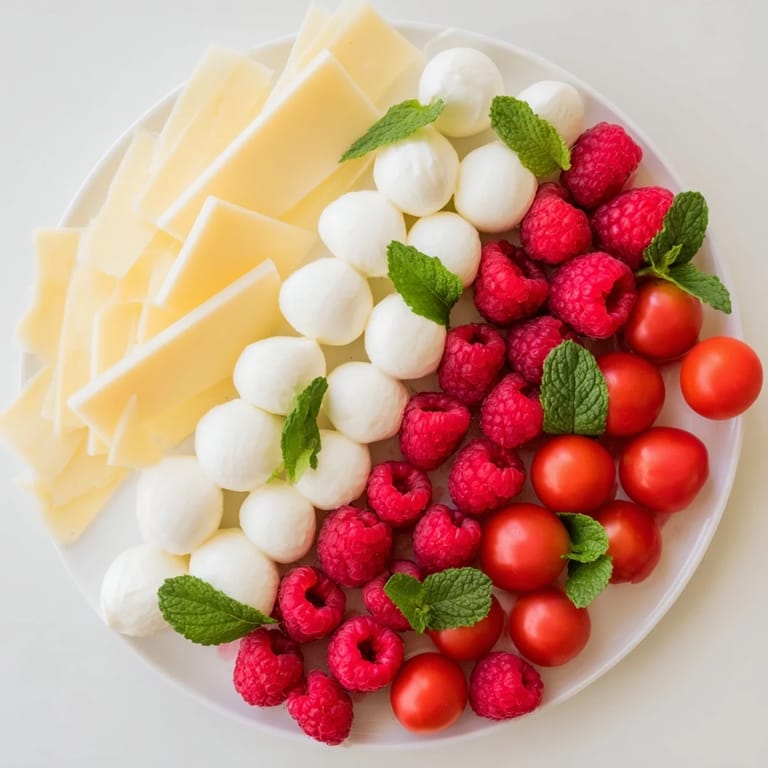
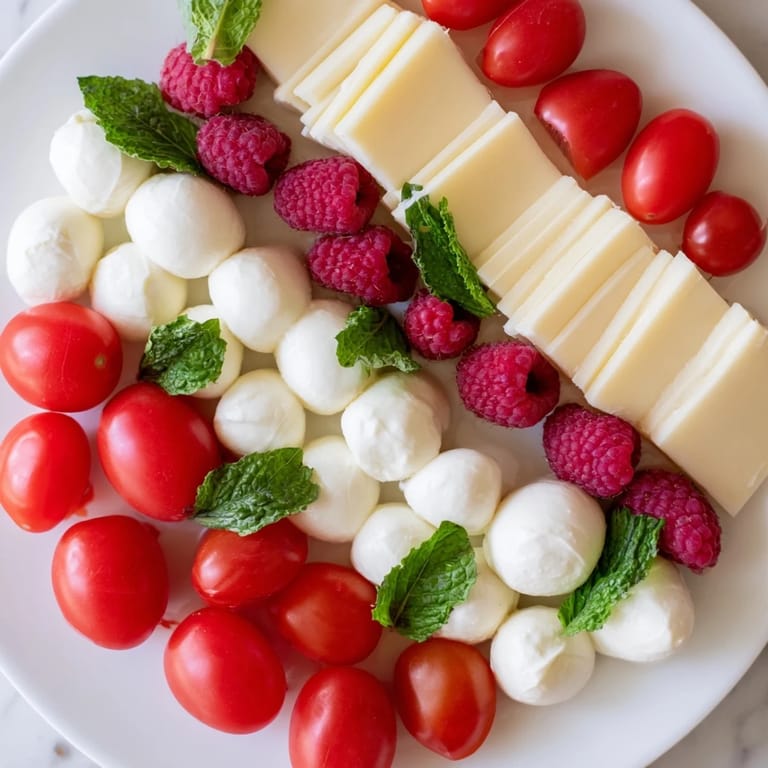
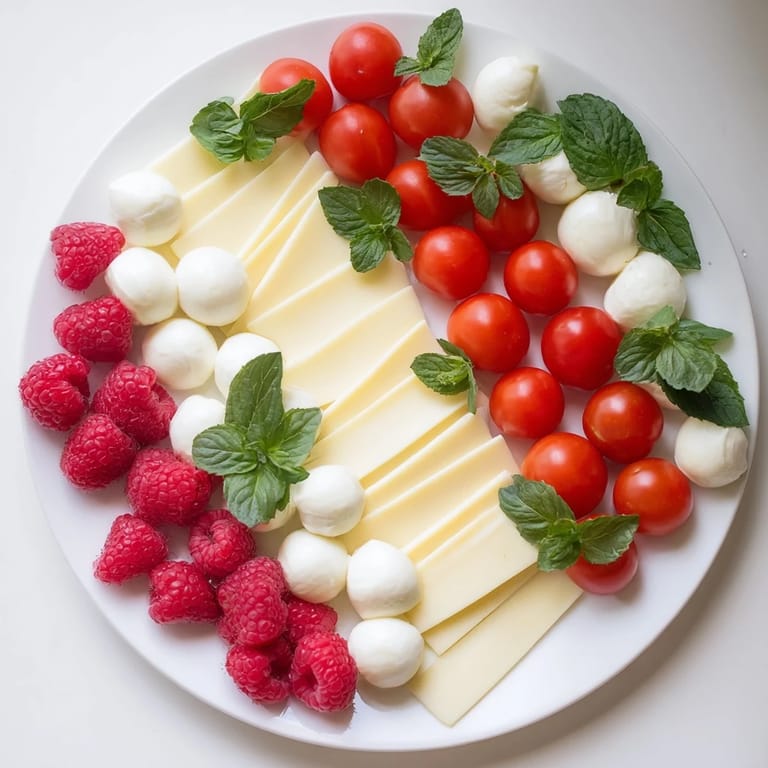
- Starting at one edge, lay down your first row of white cheese. I usually use the mozzarella balls here, arranging them in a line that touches but doesn't overlap. They should sit like little pearls, catching the light. If you choose cheddar slices instead, overlap them slightly, like roof shingles, for visual interest.
- Add your first burst of red:
- Right next to your white stripe, create a line of red. I often use strawberries here because their color is absolutely uncompromising—bold and bright. Space them so you can see just a hint of the platter between them, creating a clean line rather than a solid mass.
- Continue the rhythm:
- Now you're building a pattern—white, red, white, red. Alternate between your white cheeses and your red elements. The beauty of this platter is that there's no single right way. Use the other white cheese for the next white stripe, then perhaps roasted red peppers for your next red stripe. Raspberries, then Havarti, then tomatoes. The variation in texture and shade creates visual rhythm.
- Introduce texture and savory notes:
- Every third stripe or so, introduce crackers or thinly sliced meats. A row of overlapping water crackers catches light in a completely different way and gives the platter dimension. If you're using salami, this is where you can roll it into little roses—it takes 10 seconds per piece and adds height that makes people smile.
- Shape and flow:
- Step back occasionally and look at what you're creating. Are the stripes even? Do the colors feel balanced? There's no judgment here—this is intuitive. If one side feels too heavy with fruit, add more cheese to the other side. Cook the way you breathe: naturally and without overthinking it.
- The finishing touch:
- Once all your stripes are complete and you step back and feel satisfied, scatter fresh mint leaves across the platter. Tuck them between stripes, rest them on top of berries, let a few cascade down one side. This is the moment when people lean in and say, 'Oh, peppermint stripes.' You've told the story with your hands and your choices.
- Serve with intention:
- You can serve this immediately, or cover it loosely with plastic wrap and refrigerate for up to 2 hours. I find that a platter made an hour before serving actually looks even more elegant—everything settles slightly, the colors seem more saturated. Just pull it from the fridge 15 minutes before serving so the cheeses soften slightly and release their full flavor.
 Pin It
 My most vivid memory of this platter happened at a holiday party when my grandmother, who'd lived through decades of entertaining, stood in front of it in complete silence for nearly a minute. Then she turned to me and said, 'This is how you remember people—by the care you take with what you put in front of them.' That comment changed how I think about cooking. It's not about being fancy or impressive. It's about intention.
Customizing Your Stripes
The beauty of this platter is that it's endlessly customizable based on what you have on hand, what your guests prefer, and what speaks to you in that moment. For a vegetarian celebration, simply omit the meats and add marinated artichoke hearts, roasted red pepper hummus, or crumbled white cheddar mixed with fresh herbs. I once made this with pomegranate seeds instead of strawberries and raspberries, and the jewel-like quality elevated the whole thing. Red grapes work beautifully too—they're less delicate than berries and hold up longer on the platter. The point isn't to follow my exact choices but to understand the principle: white elements, red elements, arranged with intention. Once you understand the rhythm, you can play with it endlessly.
Pairing and Serving
This platter isn't just beautiful standing alone—it comes alive when you pair it with the right beverages and context. I serve this with a crisp sparkling wine or a light cranberry spritz, which echoes the peppermint theme while adding festive sparkle. The combination of fresh fruit, creamy cheese, and savory meats creates a flavor story that demands something light and celebratory to drink. Position the platter at eye level, perhaps on a small stand or elevated surface, so people see it as they walk in. This simple act of elevation transforms it from a side dish into a statement piece that says you thought about your guests' experience before they even arrived.
A Dessert Variation Worth Exploring
If you fall in love with the visual concept but want to take it in a sweeter direction, transform this into a dessert platter by replacing the savory elements with sweet ones. Keep the basic stripe concept but swap cheeses for marshmallows, meats for red licorice, and berries for red and white candies. Add white chocolate pieces, red gumdrops, and white chocolate-dipped pretzel sticks for texture. The same thoughtful arrangement principle applies—you're still building stripes with intention, still creating visual rhythm, still telling a story. I've made this version for smaller, more intimate holiday gatherings, and it never fails to bring joy to everyone who sees it. It's like edible nostalgia, as if you've handed people their childhood in stripe form.
- For the dessert version, keep it refrigerated and assemble no more than 1 hour before serving, as chocolate can soften in warm rooms
- Use good quality candies and chocolates—this is where quality matters even more than in the savory version
- A light dusting of powdered sugar over white elements adds an extra layer of sophistication and snowy charm
 Pin It
 Every time I make this platter, I'm reminded that the most memorable meals aren't about complexity or exotic ingredients—they're about showing up with care. This is your invitation to do exactly that.
Recipe FAQs
- → What cheeses are best for the peppermint stripe platter?
Fresh mozzarella balls, white cheddar, and Havarti slices offer creamy textures and mild flavors that balance the red fruits beautifully.
- → Can I make this platter vegetarian?
Yes, simply omit the meats and add extra cheeses, marinated tofu, or red bell pepper hummus to maintain the color and flavor variety.
- → How should I arrange the ingredients on the platter?
Alternate rows of white cheeses and red items like strawberries, raspberries, tomatoes, and roasted peppers to create distinct peppermint-like stripes.
- → Are there any suggested garnishes to complete the look?
Fresh mint leaves add a refreshing aroma and reinforce the peppermint theme, while microgreens or edible flowers can enhance presentation.
- → What are good beverage pairings with this platter?
Light sparkling wines or cranberry spritz cocktails complement the fresh, tangy elements and keep the holiday spirit bright.
- → Can the platter be assembled ahead of time?
Yes, it can be covered and refrigerated for up to 2 hours before serving to maintain freshness and ease of preparation.