 Pin It
 The first time I tried making Korean BBQ Beef Lettuce Wraps, my kitchen filled with the intoxicating aroma of sesame oil and sizzling beef—so much so that my neighbor popped by, curious about what could possibly smell that good. The playful crackle from the pan and a quick burst of gochujang in the air got my adrenaline going almost as much as the prospect of assembling each tiny wrap. It felt daring to set out an array of toppings, letting everyone experiment with their own combinations. By the time we sat down, our hands were tinged with the faint spice of kimchi and each bite was a perfect balance of warm umami and fresh crunch. Moments like these have cemented this dish as a go-to when I want to impress—without spending all night in the kitchen.
One chilly evening, I invited friends over after work and set up a DIY lettuce wrap bar on my kitchen island. The laughter kicked up a notch after someone tried adding a mountain of kimchi to their wrap, and kimchi juice almost dripped onto the floor. We ended up standing around the counter, snacking, swapping stories, and daring each other to pile the beef higher and higher. Somehow the wraps made the night lighter and broke up the midweek monotony like nothing else had in ages.
Ingredients
- Ribeye or sirloin steak (500 g / 1.1 lbs): Choose well-marbled steak and freeze for 30 minutes to make slicing easier.
- Soy sauce (3 tbsp): The backbone of the marinade—if you like it less salty, go for low sodium.
- Brown sugar (2 tbsp): Trust me, this touch of sweetness helps the beef caramelize in the pan.
- Sesame oil (1 tbsp): Just a little goes a long way; too much and it overwhelms the marinade.
- Garlic (2 cloves, minced): Smash extra-finely for better flavor infusion.
- Fresh ginger (1 tbsp, grated): Use the edge of a spoon to peel ginger quickly and avoid stringy bits.
- Rice vinegar (1 tbsp): Gives everything a peppy brightness.
- Gochujang (2 tsp, optional): For a spicy kick, and totally worth tracking down at any Asian market.
- Toasted sesame seeds (1 tbsp): Toast right before using if you want that nutty aroma to ring out.
- Spring onions (2, finely sliced): Sprinkle some in your marinade and save a little for brighter garnish later.
- Black pepper, to taste: Freshly ground for maximum depth.
- Butter lettuce or romaine (1 head): Leaves should be dry and sturdy enough to cradle filling without tearing.
- Kimchi (1 cup, chopped): Fermented tang balances the richness of the beef, and spiciness is up to you.
- Cucumber (1 small, julienned): A must for crisp, cool crunch.
- Carrot (1, julienned): Adds color and a subtle autumn sweetness.
- Fresh cilantro leaves (2 tbsp, optional): For a herbal note if you’re a fan.
- Extra sesame seeds, green onions, and lime wedges (for garnish): Finish with these for a restaurant-style look and pop.
Tired of Takeout? 🥡
Get 10 meals you can make faster than delivery arrives. Seriously.
One email. No spam. Unsubscribe anytime.
Instructions
- Make the Marinade:
- Grab a large mixing bowl and whisk together soy sauce, brown sugar, sesame oil, garlic, ginger, rice vinegar, gochujang (if using), sesame seeds, spring onions, and black pepper. Slip in the beef slices and massage the marinade in with your hands so every strand is glossy—then cover and chill for at least 20 minutes.
- Grill the Beef:
- Crank your grill pan or skillet to high heat. Sizzle the marinated steak in batches for 1-2 minutes per side, letting the edges caramelize and the kitchen fill with toasty smells—don’t crowd the pan, or the beef will steam.
- Prep the Wraps:
- Lay out dry lettuce leaves on a large plate (pat them again if needed). Line up bowls of chopped kimchi, cucumber, carrot, and cilantro so everyone can build their own wrap adventure.
- Assemble Your Wraps:
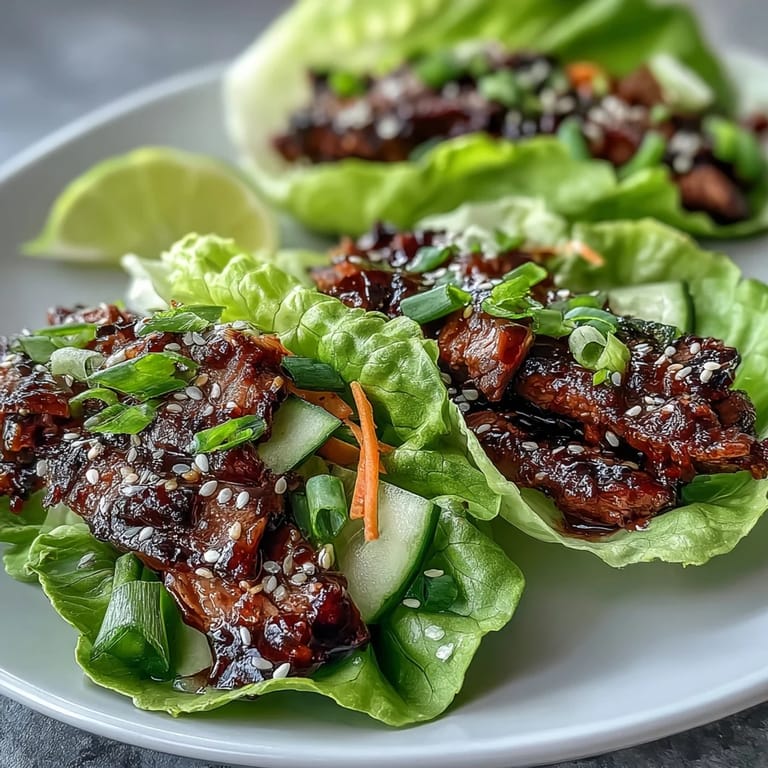
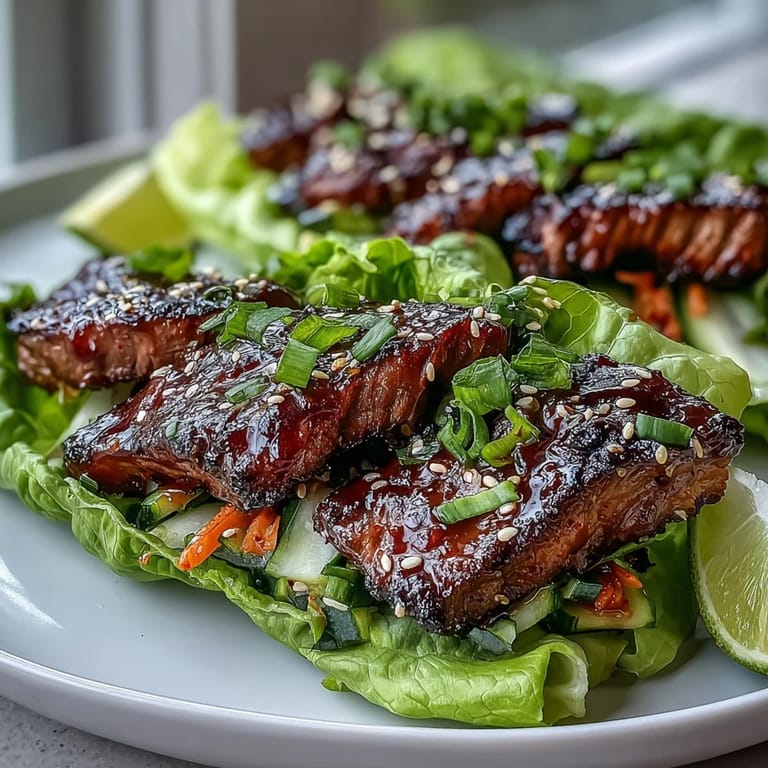
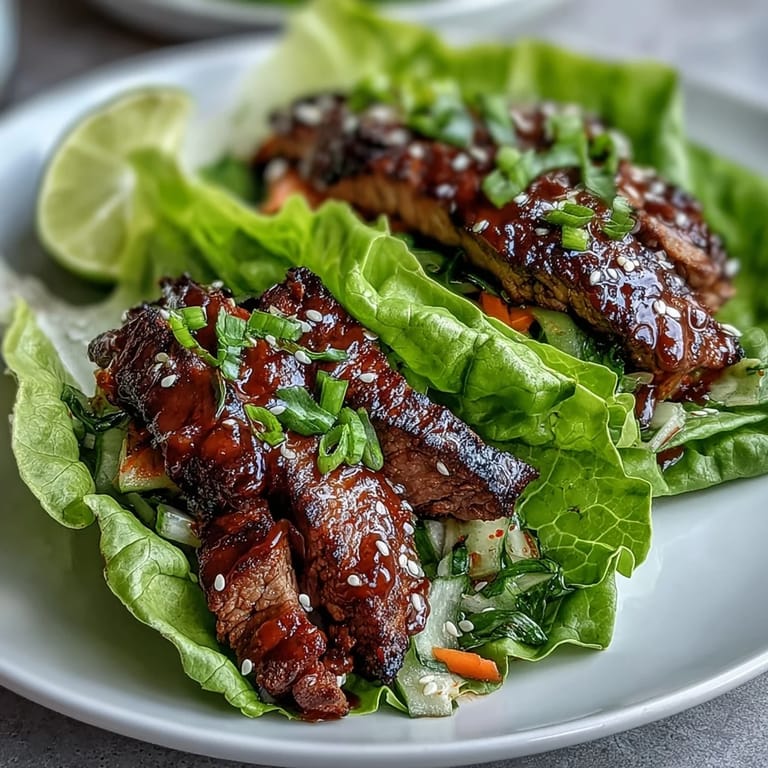
- Layer a few slices of beef into each lettuce leaf, add a generous spoonful of kimchi, scatter cucumber and carrot, and sprinkle with cilantro if you like. Top with extra sesame seeds and green onions, and set out lime wedges to squeeze over for a surprise brightness.
- Eat & Enjoy:
- Fold the lettuce up and around the fillings, then dig in right away—the juicy beef and cool veggies are best while still warm and fresh.
 Pin It
 I still remember my usually-reserved brother grinning with kimchi on his chin, reaching for seconds—no one spoke for a good five minutes because we were too busy eating. It was the first time a meal I'd made cut through the awkwardness and made us all just enjoy the food and company.
The Case for Fresh Ingredients
Nothing beats fresh, crunchy lettuce as a vehicle for savory beef and tangy kimchi. Even the best marinade can’t save limp lettuce or wilted herbs, so I always take a few extra minutes at the produce section to pick out crisp heads and bright vegetables.
Making It Work on a Weeknight
When you’re short on time, slicing everything ahead or letting the beef marinate in the fridge during the day is a lifesaver. Sometimes I set out everything in little bowls before my kids are even home, and everyone just assembles as they like for a no-fuss dinner.
Playing with Flavor and Texture
I love experimenting by tucking in a few shreds of pickled radish or using sriracha for added heat when I don’t have gochujang handy. My vegetarian friends have raved after I swapped in grilled tofu, so don’t be afraid to riff based on what’s in your kitchen.
- Don’t skip the extra sesame seeds for crunch—they really make it pop.
- If you have leftover beef, pile it onto rice for an easy lunch the next day.
- Always taste your kimchi before you add it; some batches are spicier than others!
 Pin It
 Honestly, these lettuce wraps have become my go-to for making weeknights feel special or breaking the ice at gatherings. I hope they bring a little mess, a lot of flavor, and maybe even a few happy, quiet-mouthful moments to your table too.
Recipe FAQs
- → How long should the beef marinate for best flavor?
For a noticeable flavor, marinate at least 20 minutes; 1–2 hours yields deeper caramelization and more infused savory-sweet notes. Avoid overly long times for thin slices to prevent texture change.
- → What cut of beef works best for quick searing?
Ribeye or sirloin are ideal—well-marbled ribeye gives richness, while sirloin is leaner. Slice very thin across the grain for tender bites and quick, high-heat searing.
- → Can I make this gluten-free?
Yes. Replace soy sauce with tamari and check that gochujang and kimchi are labeled gluten-free. Also verify any packaged sesame or condiments for hidden gluten.
- → How spicy will it be with gochujang added?
Gochujang adds a warm, fermented heat and a touch of sweetness. Use 1–2 teaspoons to start; omit or reduce for milder palates and add kimchi judiciously if you prefer less heat.
- → What are good serving and garnish suggestions?
Serve on butter lettuce or romaine leaves with lime wedges, extra toasted sesame seeds and sliced green onions. A side of chilled soju or a light lager complements the bold flavors.
- → How can I adapt this for vegetarian or other proteins?
Substitute thinly sliced tofu, tempeh or thin chicken strips. Press tofu to remove moisture and sear until golden; marinate briefly to absorb the same savory-sweet profile.