 Pin It
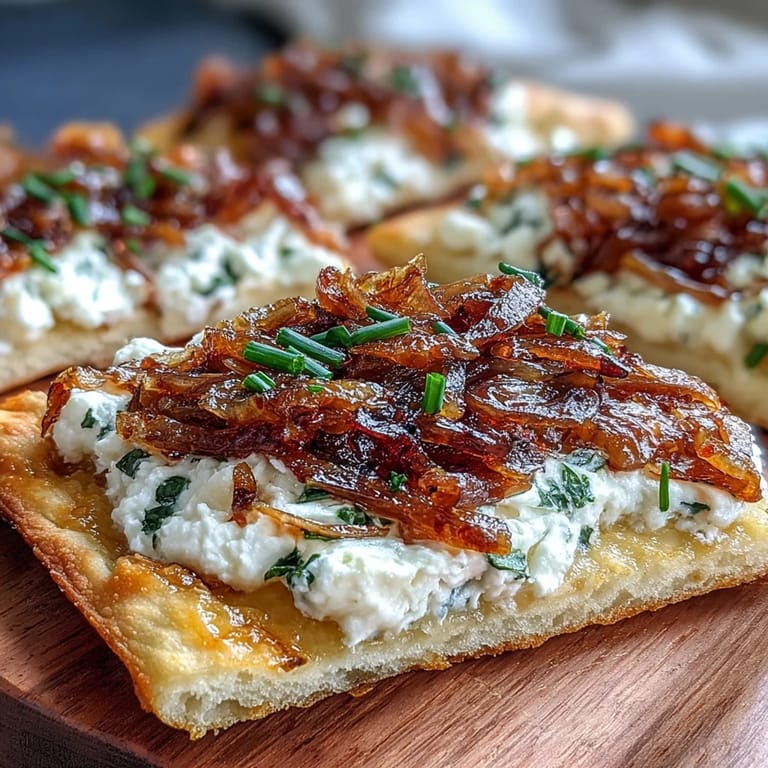
 There's something about the smell of onions turning golden in a hot skillet that makes you forget you're cooking something simple. My neighbor stopped by one evening while I was caramelizing a batch, and she lingered in the doorway just breathing it in, waiting to see what I'd do with them. That flatbread emerged from the oven looking like something from a fancy restaurant, but it took maybe forty minutes total, start to finish. It's become one of those dishes I reach for when I want to impress without the stress, or when I'm just feeding myself and want something that feels a bit luxurious.
I made this for a small dinner party last spring, and my friend who claims to hate goat cheese came back for seconds without realizing what she was eating. The honey drizzle caught the light when I pulled it from the oven, and watching everyone's faces when they took that first bite felt like the small victory it was.
Ingredients
- Flatbread or thin pizza crust (250 g): Store-bought saves time without any shame, though homemade adds a personal touch if you have dough ready.
- Soft goat cheese (200 g): Let it sit on the counter for fifteen minutes before mixing so it spreads like butter, not concrete.
- Cream cheese (2 tbsp, optional): This is your secret weapon for extra creaminess without losing the goat cheese tang.
- Fresh chives (1 tbsp, finely chopped): Don't skip this, the mild onion flavor adds dimension that feels intentional.
- Salt and black pepper: Season the cheese mixture generously, it's where most people hold back too much.
- Yellow onions (2 large, thinly sliced): Slice them thin and consistent so they caramelize evenly without dried edges.
- Olive oil (2 tbsp): Good olive oil matters here since it's doing the heavy lifting on flavor.
- Sugar (1 tsp) and salt (1/4 tsp): The sugar isn't about sweetness, it's about coaxing out the onions' natural sugars faster.
- Balsamic vinegar (1 tsp): This brings everything into focus at the last second, a lesson I learned by forgetting it once.
- Honey (2 tbsp): The final drizzle before baking creates little pockets of caramel flavor.
- Chili flakes (1/2 tsp): Start with less than you think, heat can sneak up on you with this one.
- Fresh thyme leaves: Scatter these on top after baking so they stay bright green and fragrant.
Tired of Takeout? 🥡
Get 10 meals you can make faster than delivery arrives. Seriously.
One email. No spam. Unsubscribe anytime.
Instructions
- Heat your oven and prep your workspace:
- Set the oven to 220°C (425°F) and line your baking sheet with parchment paper while you work on everything else. This takes thirty seconds and saves the cleanup moment later.
- Start the onions low and slow:
- Warm olive oil in a large skillet over medium-low heat, add your sliced onions with salt, and let them soften for about fifteen minutes, stirring now and then so they cook evenly. You're not rushing this, the slower pace is what makes them golden instead of brown.
- Deepen the caramel color:
- Once the onions are soft and translucent, add the sugar and keep cooking for five to ten more minutes until they turn that deep amber color. Stir in the balsamic vinegar for one minute, then take them off the heat and set aside.
- Make the cheese spread creamy:
- In a small bowl, mix your room-temperature goat cheese with cream cheese if you're using it, fold in the chopped chives, then season with salt and pepper to taste. You want it to spread easily, so don't be shy with the mixing.
- Spread the base layer:
- Place your flatbread on the parchment-lined baking sheet and spread the goat cheese mixture evenly across the surface, leaving a small border so the edges can crisp up. This feels like you're frosting a cake, just with savory ingredients.
- Layer on the caramelized onions:
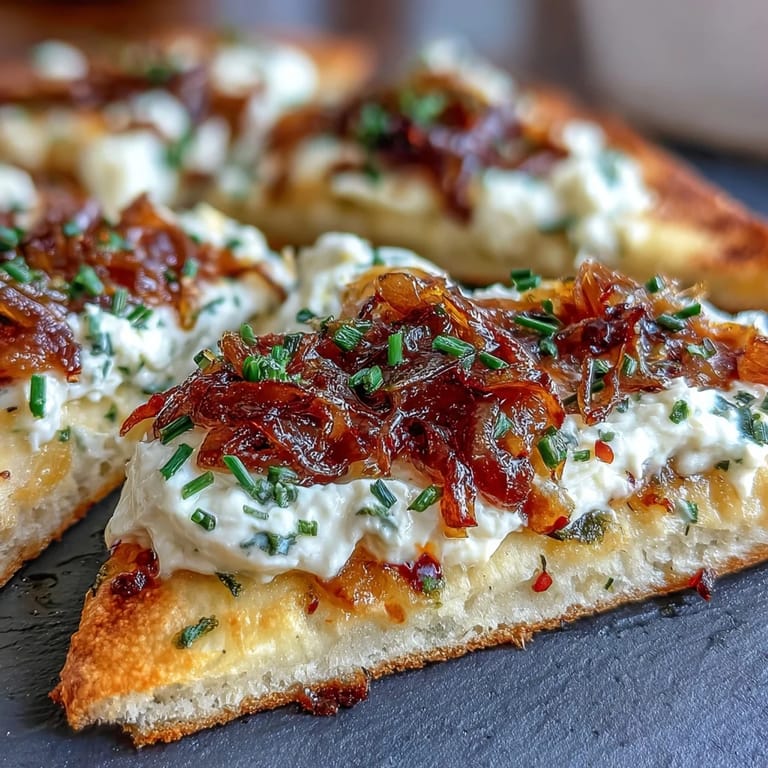
- Distribute the cooled onions evenly over the cheese, they should cover most of the surface but not overlap too much. Clumpy uneven coverage actually looks homemade and intentional.
- Add the finishing touches:
- Drizzle the honey across the top in a light pattern, then sprinkle chili flakes to your preference. Two tablespoons of honey sounds like a lot, but it mellows as it bakes.
- Bake until crisp and warm:
- Slide the baking sheet into the preheated oven for ten to twelve minutes, watching for the edges to turn golden and the cheese to warm through but not brown. The center should look slightly bubbly and smell incredible.
- Finish and serve:
- Pull it out of the oven, scatter fresh thyme leaves on top while it's still warm, slice it into pieces, and serve while the contrast between warm and cool components is still happening. Timing here matters because it tastes different the moment it cools completely.
 Pin It
 There was a moment during that dinner party when the conversation paused and everyone was just eating, completely absorbed. That quiet moment when food disappears because it's working, that's when you know it's right.
Making Caramelized Onions That Actually Taste Like Caramel
The mistake I made for years was cranking up the heat because I thought caramelizing meant charring. Low to medium-low heat and patience are the actual secrets, it takes longer but the flavor develops instead of burning off. The sugar and salt help draw out the onions' natural moisture so they cook in their own steam before browning, that's the alchemy.
Why Goat Cheese Works Better Than You'd Expect
Goat cheese has this tangy brightness that should clash with honey and chili, but instead it balances them into something harmonious. The creaminess spreads easily, doesn't separate when heated, and doesn't become rubbery like some cheeses do, it just gets warm and welcoming. If someone tells you they don't like goat cheese, this is the recipe to change their mind.
Variations and Moments of Creative Freedom
This flatbread is forgiving in ways that matter, you can swap ricotta for a milder taste or add toasted walnuts for texture and nuttiness. I've thrown on arugula after baking before, or drizzled aged balsamic instead of honey when I had leftover and wanted something less sweet. The structure stays solid, it's the filling and toppings that become your playground.
- Toasted walnuts add crunch and a subtle bitterness that grounds all the sweetness.
- A handful of fresh arugula tossed on top right after baking brings peppery freshness that cuts through richness.
- If you have fig jam instead of honey, use that drizzle, it changes the whole mood into something more autumnal.
 Pin It
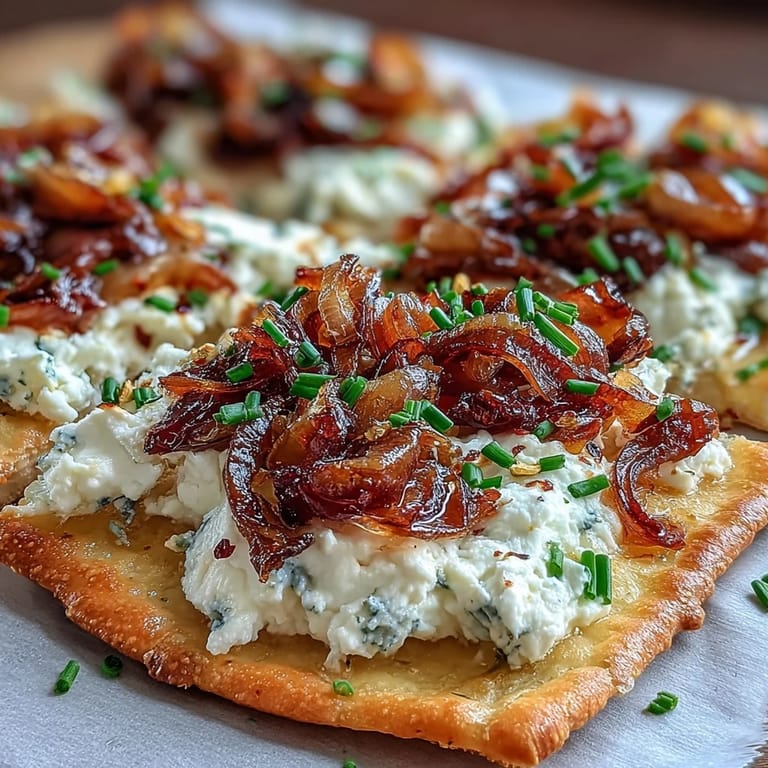
 This dish has a way of making ordinary evenings feel like celebrations. Serve it warm, slice it generously, and watch what happens when people taste it.
Recipe FAQs
- → Can I make the caramelized onions ahead of time?
Yes, caramelized onions can be prepared up to 3 days in advance and stored in an airtight container in the refrigerator. They actually develop deeper flavor when made ahead. Reheat gently before spreading on the flatbread.
- → What can I substitute for goat cheese?
Ricotta cheese offers a milder, creamier alternative. For similar tanginess, try feta (though it's saltier) or a blend of cream cheese with lemon zest and herbs. Vegan goat cheese alternatives also work well.
- → How do I achieve perfectly caramelized onions?
Cook sliced onions slowly over medium-low heat with olive oil and salt. Don't rush—this takes 20-25 minutes. Stir occasionally to prevent sticking. The addition of sugar helps browning, and balsamic vinegar adds depth at the end.
- → Can I use store-bought pizza dough instead of flatbread?
Absolutely. Roll store-bought pizza dough thinly for a crispy base. Pre-bake for 3-4 minutes before adding toppings to ensure the center cooks through completely. Naan bread also makes an excellent quick alternative.
- → Is the honey drizzle essential?
The honey creates a crucial balance between tangy goat cheese and savory onions. If unavailable, maple syrup works as a substitute. For a savory variation, omit honey and increase fresh herbs or add balsamic glaze after baking.
- → How do I prevent the flatbread from getting soggy?
Ensure onions are well caramelized with most moisture evaporated. Don't overload with cheese mixture. Bake at high temperature (220°C/425°F) for crisp edges. Serve immediately after baking for best texture.