 Pin It
 My neighbor Maria taught me that lasagna isn't really about following a recipe perfectly—it's about building layers of flavor with your hands and tasting as you go. Years ago, she'd let me stand at her kitchen counter while she browned the meat, and I'd watch how she'd taste the sauce, add a pinch of sugar when the tomatoes felt too sharp, then nod with satisfaction. That lesson stuck with me more than any cooking school could have.
I made this for my sister's first dinner party in her new house, and watching her pull it from the oven with that golden, bubbling cheese on top—she got tears in her eyes. Not because it was fancy, but because it filled her whole apartment with this warm, unmistakable smell of home. That's when I realized lasagna isn't just food; it's permission to gather people you love and feed them something that says you care.
Ingredients
- Ground beef: The backbone of your sauce—use something with a little fat content so the flavor doesn't get thin.
- Italian sausage: This is the secret that makes people ask what you did differently; it adds a subtle spice and richness that beef alone can't deliver.
- Onion and garlic: Take your time softening the onion first, letting it turn translucent and sweet before the garlic joins.
- Crushed tomatoes and tomato sauce: The two-tomato approach keeps the sauce from tasting one-dimensional—use good quality cans if you can.
- Tomato paste: A small amount concentrates the tomato flavor and gives the sauce body.
- Oregano and basil: Dried herbs work fine here, but don't skip them thinking fresh is always better—these dried ones bloom beautifully in the heat.
- Sugar: Just a half teaspoon cuts through acidity and makes the sauce taste fuller and rounder.
- Ricotta cheese: Creamy, mild, and forgiving—this is what makes the texture luxurious between layers.
- Egg: Binds everything together so the ricotta layer doesn't slide around when you slice.
- Parmesan cheese: Adds a sharp, salty note that balances the richness of the mozzarella.
- Mozzarella cheese: The shredded kind melts faster and more evenly than blocks; don't use pre-shredded if you can help it, as it contains anti-caking agents.
- Lasagna noodles: No-boil noodles save time, but traditional noodles give you a slightly better texture if you have the patience.
Tired of Takeout? 🥡
Get 10 meals you can make faster than delivery arrives. Seriously.
One email. No spam. Unsubscribe anytime.
Instructions
- Set your stage:
- Preheat the oven to 375°F and grease your baking dish with a light hand—you want it prepared but not swimming in oil. If you're using regular noodles, get them boiling now so they'll be ready when you need them.
- Build the base flavor:
- Heat that olive oil in your skillet and let the onion soften slowly over medium heat, listening for the gentle sizzle. When it turns translucent and smells sweet, add the garlic and let it wake up for just a minute before things get crowded.
- Brown the meat:
- Break up the beef and sausage as they cook, pressing them against the pan so they develop color instead of steaming. You'll know they're done when there's no pink left and the whole skillet smells unmistakably savory.
- Build your sauce:
- Stir in all your tomatoes, paste, and seasonings, then let it simmer uncovered for 15 to 20 minutes—this is when the magic happens and everything melds into something greater than its parts. Taste it and adjust; if it feels acidic, that tiny pinch of sugar is your friend.
- Make the ricotta mixture:
- Combine your ricotta, egg, Parmesan, and parsley in a bowl and mix until smooth and lump-free. A little salt and pepper here makes all the difference to the final flavor.
- Assemble with intention:
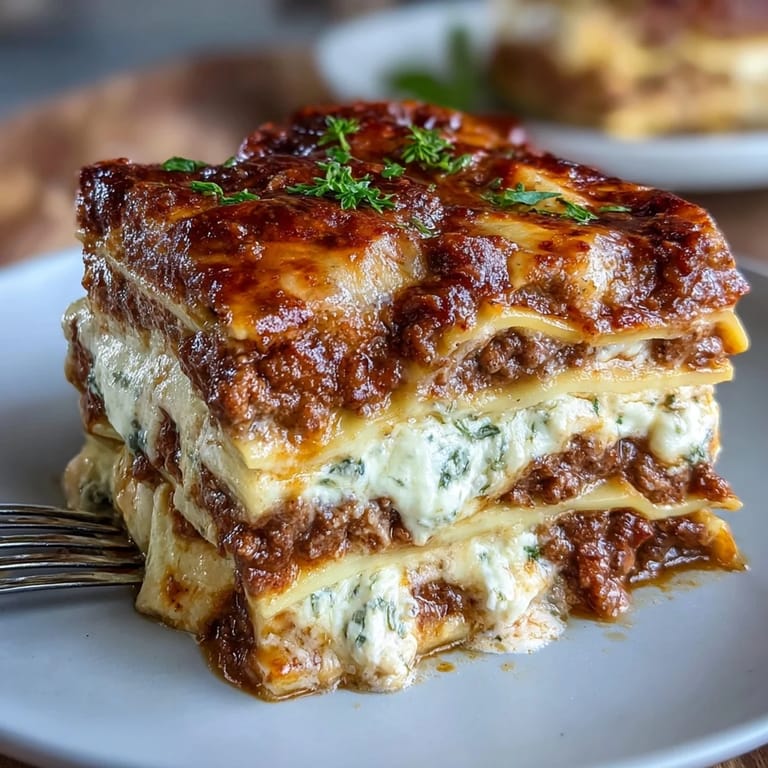
- Spread a cup of meat sauce across the bottom of the baking dish, then layer four noodles so they overlap slightly. Spread a third of your ricotta mixture over them, add another cup of sauce, then sprinkle a cup of mozzarella, and repeat this pattern twice more, finishing with sauce and cheese on top.
- Bake covered, then unveiled:
- Cover tightly with foil and bake for 25 minutes so the noodles soften gently. Remove the foil and bake another 20 minutes until the cheese on top turns golden and bubbly at the edges—that's when you know it's done.
- Let it rest:
- This is hard to do when it smells this good, but waiting 15 minutes lets everything set so your slices won't collapse into a glorious, steaming mess on the plate. Well, it's glorious even if it does collapse.
 Pin It
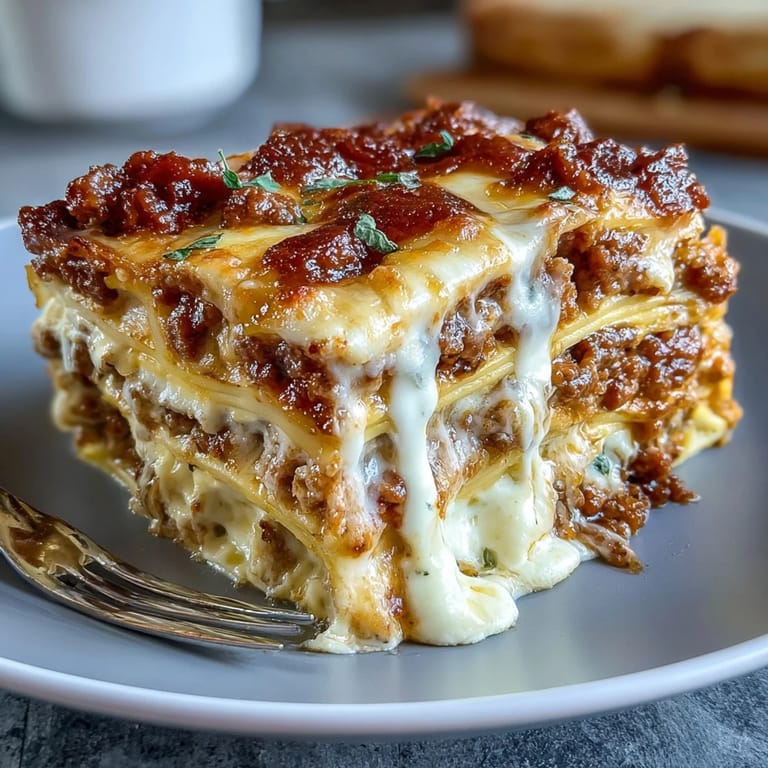
 There's a moment when you pull lasagna from the oven and the cheese is stretching in golden ribbons between the layers—that's the moment you remember why you cook at all. It's not fancy or complicated, but it's honest and it's generous, and somehow that's worth more.
Why Temperature Matters More Than You Think
A lot of home cooks guess at oven temperature, but lasagna is sensitive to it in ways that surprise people. At 375°F, the cheese melts evenly and the noodles soften without the edges turning crispy and brown. If your oven runs hot or cold, you might need to adjust by 25 degrees—trust your eyes more than the timer, because every oven has its own personality.
The Sauce Is Everything
You can have perfect noodles and perfect cheese, but a thin or under-seasoned sauce will betray the whole dish. The 15 to 20 minutes of simmering isn't just about cooking; it's about concentrating flavors and letting the herbs bloom. Taste it a few times during that time and don't be shy about adjusting the seasonings—your palate is smarter than any recipe.
Making It Your Own
This recipe is a template, not a rulebook, so feel free to adjust it to what your kitchen and your life actually look like. Some people add red pepper flakes for heat, others swap in ground turkey for a lighter version, and I've seen beautiful vegetarian versions loaded with spinach and mushrooms.
- Substitute part of the beef with ground turkey or lamb if you want to experiment with new flavors.
- If you have fresh basil at the end of summer, tear it over the top just before serving for a bright note.
- Leftovers freeze beautifully for up to three months if you let them cool completely first.
 Pin It
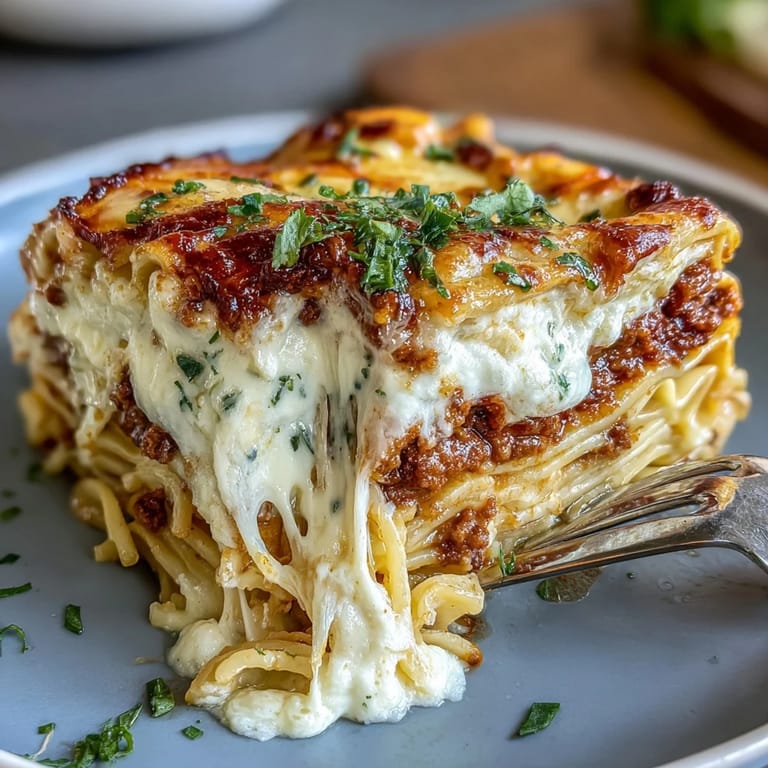
 This lasagna has a way of bringing people together and reminding them why comfort food matters. Make it, feed it to people you care about, and watch what happens.
Recipe FAQs
- → How do I prepare the meat sauce?
Sauté onion and garlic in olive oil until soft, then brown ground beef and sausage. Add crushed tomatoes, tomato sauce, tomato paste, and seasonings. Simmer uncovered for 15-20 minutes to develop flavors.
- → Can I make this with no-boil noodles?
Yes, no-boil lasagna noodles can be used to simplify preparation. If using regular noodles, cook them according to package instructions before assembling.
- → How should I assemble the layers?
Start with a layer of meat sauce, then noodles, followed by the ricotta mixture and mozzarella. Repeat layers two more times, finishing with sauce and mozzarella on top.
- → What are good substitutions for meat?
Ground turkey can replace beef and sausage for a lighter option. For a vegetarian version, omit meat and add sautéed vegetables like spinach, zucchini, and mushrooms.
- → How long should the lasagna rest after baking?
Let the lasagna rest for about 15 minutes after baking. This helps it set, making slicing easier and preserving the layers' integrity.