 Pin It
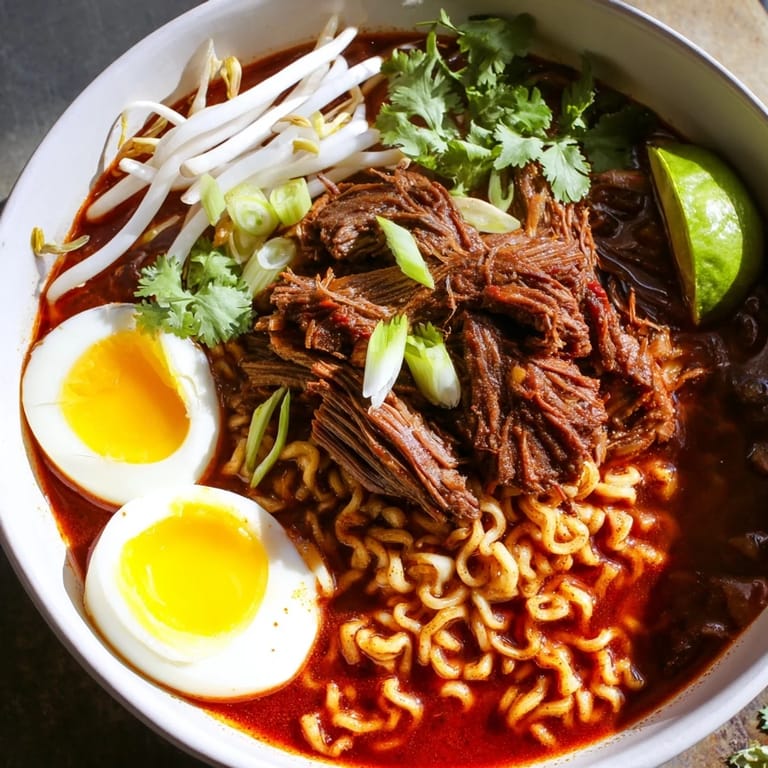
 I discovered this dish by accident on a rainy Tuesday, standing in my kitchen staring at leftover birria beef and a craving for ramen. My neighbor had just made me a pot of traditional birria the weekend before, and I'd been thinking about it all week—those deep, complex spices haunting me in the best way. When I opened the fridge and saw both the rich, spiced broth and some ramen noodles I'd grabbed on a whim, something clicked. What if these two worlds collided? The result was so comforting and unexpectedly perfect that I've made it constantly since, tweaking and refining until it feels like second nature.
I made this for my friend Marcus on his birthday, and he literally went silent for the first few bites—just closing his eyes and eating. When he finally spoke, he said it tasted like comfort and adventure at the same time, which is exactly what I was going for. Now whenever he comes over, he asks if I'm making the birria ramen, and I know I've created a monster.
Ingredients
- Beef chuck roast (2 lbs, cut into chunks): Chuck has just enough fat to become impossibly tender after hours of braising, and it shreds into those perfect, melt-in-your-mouth pieces that make the broth silky.
- Dried guajillo and ancho chilies: These are the backbone of the flavor—guajillos bring gentle sweetness and depth, while anchos add earthiness and a touch of chocolate notes that make people wonder what your secret is.
- Chipotle chili in adobo: This single ingredient adds smokiness and heat that grounds the entire dish, preventing it from feeling one-dimensional.
- Apple cider vinegar: A small splash brightens everything and cuts through the richness so the spices can shine instead of overwhelming.
- Spices (cumin, cinnamon, cloves, oregano): The cinnamon and cloves might sound strange in a savory dish, but they're what make people say this tastes different from any other braise they've had—they add warmth and subtle sweetness.
- Ramen noodles: Fresh is ideal if you can find them at an Asian market, but instant works beautifully too; just discard those seasoning packets and let the broth do the talking.
- Chicken broth: Combined with the birria broth, this tempers the intensity and creates a balanced, drinkable liquid that's the real star.
- Soft-boiled eggs: They're not just garnish—that creamy yolk running into the hot broth is a textural revelation every single time.
- Fresh toppings (scallions, cilantro, bean sprouts): These add brightness and crunch that prevent the bowl from feeling heavy, even though it's deeply satisfying.
Tired of Takeout? 🥡
Get 10 meals you can make faster than delivery arrives. Seriously.
One email. No spam. Unsubscribe anytime.
Instructions
- Toast and soak the chilies:
- Dry-toast the guajillo and ancho chilies in a skillet for just a minute or two—you want them fragrant and slightly darkened, not burnt. Covering them with hot water softens them and makes them blend into a silky sauce that's the entire foundation of this dish.
- Blend the flavor base:
- This is where things get exciting; watch as those soaked chilies transform into a deep crimson paste with the tomatoes, spices, and aromatics. The result should be completely smooth, almost like a mole in texture.
- Brown the beef:
- Don't skip this step—the caramelized crust on the meat adds savory depth. Work in batches if needed so each piece gets golden contact with the hot pan.
- Braise low and slow:
- The slow simmer for 2.5 to 3 hours is non-negotiable; this is when tough muscle fibers break down and the broth absorbs every bit of beefy flavor. You'll know it's done when you can shred the meat with barely any pressure.
- Shred and skim:
- Once the beef is falling apart, remove it and let it rest while you skim fat from the surface of the broth. The shredded beef is your textural anchor in every spoonful.
- Combine broths and season:
- Mixing the intense birria broth with milder chicken broth, soy sauce, and sesame oil creates a balanced, complex liquid that's savory without being overwhelming. Taste and adjust as you go.
- Cook noodles and assemble:
- Follow the package directions for your noodles—they should be tender but still have slight resistance. Pour the hot broth over them while they're still in the bowl so they absorb all those amazing flavors.
- Top and customize:
- Each person should be able to load up their bowl with eggs, greens, and heat level according to their mood. This is where it stops being just dinner and becomes an experience.
 Pin It
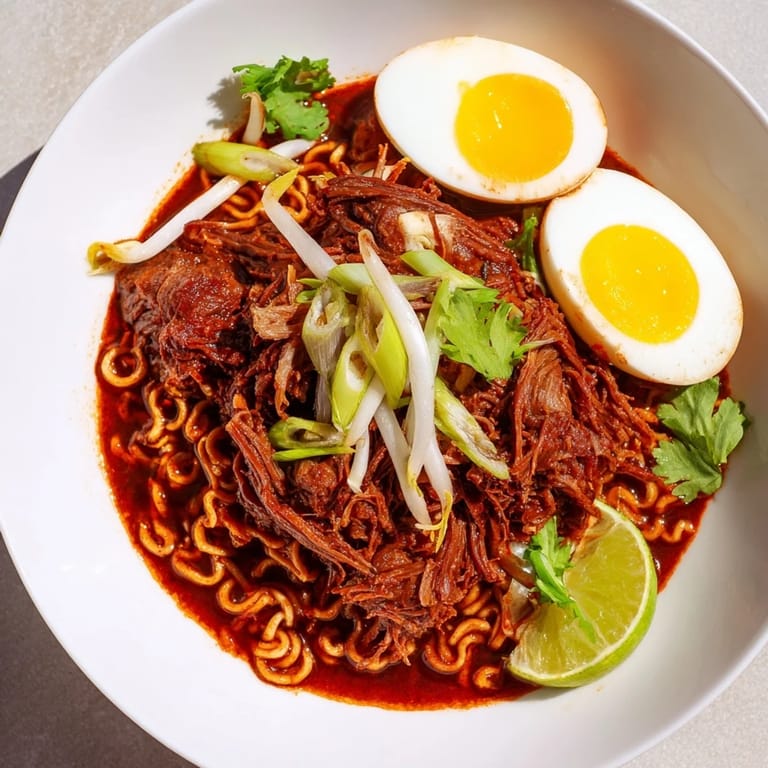
 The first time I served this to a group, I watched people slow down mid-conversation to focus on their bowls, and something shifted in the room—it became less about socializing and more about this moment of shared contentment. That's when I knew this dish had become something special to me, something worth perfecting and sharing.
The Spice Layer Secret
What makes this birria ramen different from standard ramen is how the spices build in layers. The cumin and cinnamon aren't meant to announce themselves loudly; they work together to create a warmth that builds with each sip. I learned this by accident when I tried simplifying the spice list one night and the broth tasted flat and forgettable. Now I never skip them, and I've started toasting whole spices before grinding if I have time, which deepens everything even further. The cloves especially—just a pinch—add this subtle sweetness that catches people off guard and makes them ask what they're tasting.
Make-Ahead and Storage
This is actually better when you make the birria the day before, letting the broth develop even more flavor as it sits overnight in the fridge. The fat will solidify on top, making it easy to remove if you want a lighter version, or you can leave it for richness. Reheat gently on the stove, and it tastes even better than it did fresh. The broth keeps for four days refrigerated and freezes beautifully for up to three months, which means you can have homemade birria ramen ready whenever the craving hits.
Playing with Toppings and Heat
Once you have the base dish down, the fun really begins with customization. I've added crispy shallots, fried wonton strips, and even soft tofu for a lighter version. The heat level is completely adjustable—jalapeños add freshness, while chili oil brings serious kick and richness. The eggs are non-negotiable in my opinion; their creamy yolk creates this luxurious quality that transforms a bowl of noodles into something restaurant-quality. Some people drizzle a bit of crispy fried garlic on top, which adds textural contrast and an almost nutty flavor.
- Make soft-boiled eggs ahead of time and keep them in an ice bath so assembly is quick.
- Toast your sesame seeds in a dry pan right before serving so they're warm and fragrant.
- Set out all toppings in small bowls so everyone can load up their bowl exactly how they like it.
 Pin It
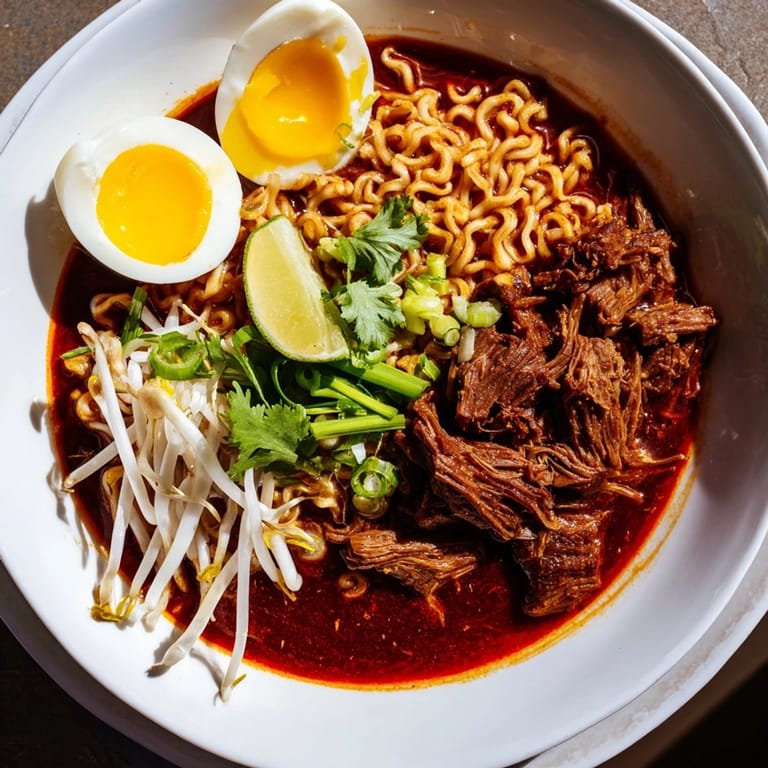
 There's something beautiful about taking two completely different culinary traditions and discovering they were always meant to meet. This dish has become my answer to almost every occasion—comfort for sad days, celebration for good ones, and always a conversation starter.
Recipe FAQs
- → How should I prepare the dried chilies for the broth?
Toast the guajillo and ancho chilies briefly in a dry skillet until fragrant. Then soak them in hot water for about 10 minutes to soften before blending.
- → What cut of beef works best for this dish?
Beef chuck roast is ideal due to its marbling and connective tissue, which break down into tender, flavorful meat after slow simmering.
- → Can I make the broth spicier or milder?
Yes, adjust the number and type of chilies or add chili oil at serving to control the spiciness to your preference.
- → What toppings enhance the flavor and texture?
Fresh scallions, bean sprouts, cilantro, halved soft-boiled eggs, and a squeeze of lime add brightness and texture contrasts.
- → How can I adapt this dish for gluten-free diets?
Use gluten-free noodles and substitute tamari or gluten-free soy sauce to keep it gluten-free without sacrificing flavor.
- → Is there a recommended drink pairing?
Light Mexican lager or a dry rosé complements the rich and spicy profile nicely.