 Pin It
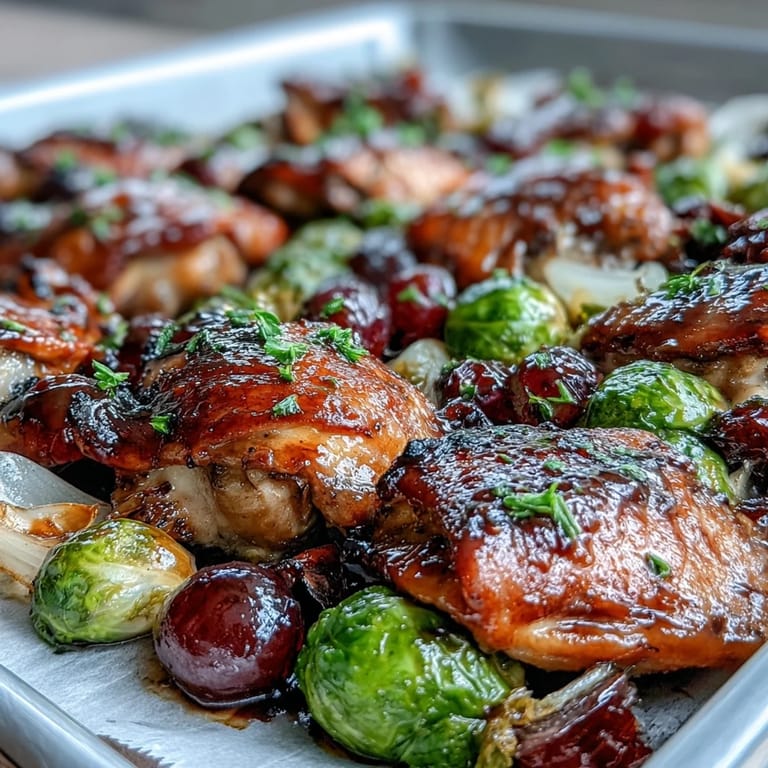
 My neighbor knocked on my door one autumn evening with a basket of Brussels sprouts from her garden and a bottle of balsamic vinegar, insisting I needed to roast them together with something sweet. I had chicken thighs in the freezer and was skeptical about adding grapes to a savory dish, but that first bite changed everything—the way the grapes burst into syrupy pockets of sweetness while the Brussels sprouts turned golden and crispy around the edges felt like discovering a flavor combination that had always been waiting for me. Now when I make this, I think of her kitchen and how the simplest one-pan meals somehow taste like they took hours.
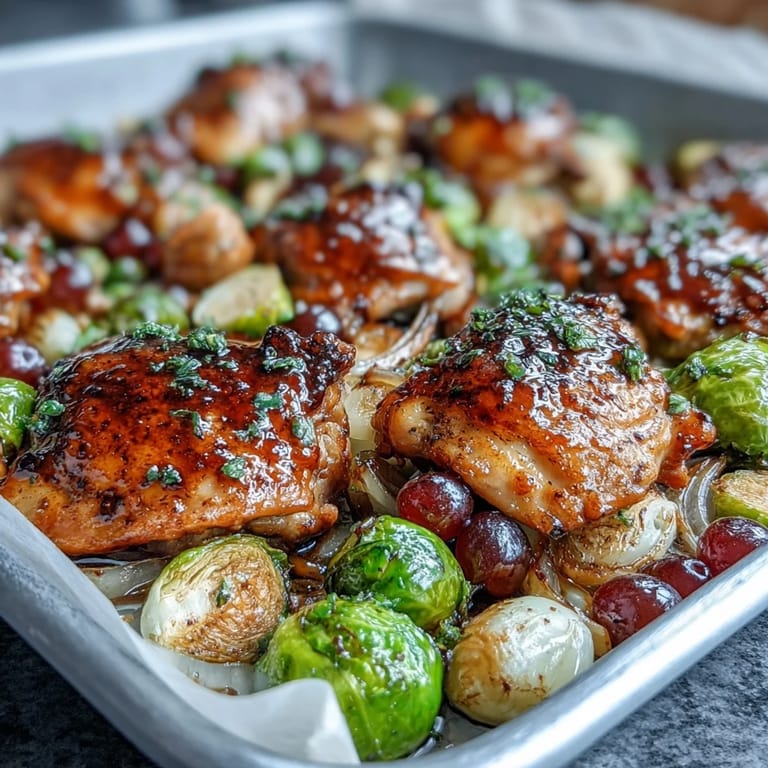
I made this for my sister's book club night, and someone asked if I'd hired a caterer—the presentation was that impressive for something I threw together in under an hour. The way the caramelized edges caught the light made people reach for seconds before I'd even finished explaining what was in it, and I realized then that simple food cooked with intention looks and tastes like so much more than the sum of its parts.
Ingredients
- Boneless, skinless chicken thighs (4 thighs, about 1 lb): Thighs are more forgiving than breasts and stay incredibly moist during roasting, plus they're usually more affordable and have better flavor from the fat content.
- Olive oil: Use a good quality oil you'd actually taste—it matters here since there aren't many ingredients competing for attention.
- Dried thyme and garlic powder: These create an aromatic base that keeps the focus on the balsamic glaze rather than overpowering the delicate grape-and-vegetable balance.
- Brussels sprouts (1 lb, halved): Halving them flat-side-down lets them caramelize into crispy-edged coins that catch all that balsamic goodness.
- Seedless red grapes (1 cup): They'll shrivel and concentrate into little pockets of sweetness, acting almost like a natural sauce when they burst.
- Red onion (1 small, cut into wedges): The onion softens and adds a gentle sweetness that rounds out the balsamic vinegar's sharp edges.
- Balsamic vinegar: This is the soul of the dish—buy something you'd drink, not the cheap industrial kind that tastes like burnt sugar.
- Honey and Dijon mustard: Honey tempers the vinegar's acidity while the mustard adds a subtle tang that makes the glaze feel complex and intentional.
Tired of Takeout? 🥡
Get 10 meals you can make faster than delivery arrives. Seriously.
One email. No spam. Unsubscribe anytime.
Instructions
- Set your oven and prep your stage:
- Preheat to 425°F and line your sheet pan with parchment or foil—this matters because it prevents sticking and makes cleanup feel like a breeze. You want everything ready before you start mixing so the chicken doesn't sit around getting soggy.
- Season the chicken with intention:
- Toss your thighs with olive oil, thyme, garlic powder, salt, and pepper, making sure every piece gets coated evenly. The seasoning should feel generous but not overwhelming—you're building a base, not drowning out the other flavors coming.
- Dress the vegetables and fruit:
- In a separate bowl, toss your Brussels sprouts, grapes, and red onion with olive oil and seasoning until everything glistens. This separate step ensures the vegetables get their own flavor foundation without competing with the chicken's aromatics.
- Arrange your pan strategically:
- Spread the Brussels sprouts mixture across the sheet pan first, then nestle the chicken thighs among them—you want the chicken to roast in contact with the hot pan while the vegetables steam slightly around it. This positioning creates two different textures working together.
- Build the glaze:
- Whisk together balsamic vinegar, honey, and Dijon mustard until it looks like a silky sauce without any streaks of separation. This glaze is what transforms good roasted chicken into something memorable, so don't rush this step.
- First glaze application:
- Drizzle half the glaze over everything—this allows it to caramelize and sink into the vegetables while the chicken roasts. Save the rest for finishing because that second coat of fresh glaze adds brightness and prevents the first application from drying out.
- Roast until golden:
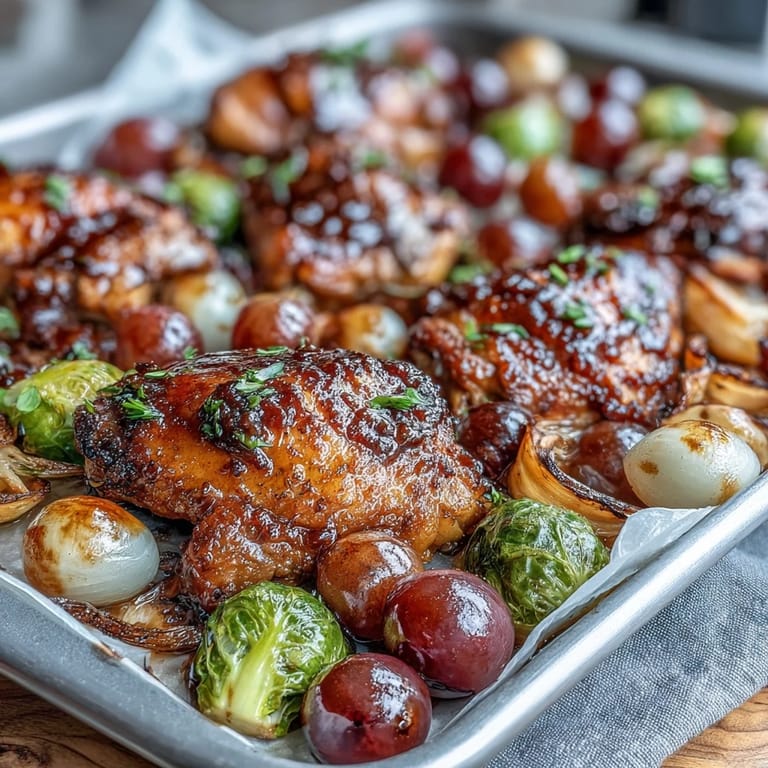
- Into the oven for 25–30 minutes, watching for the Brussels sprouts to turn golden at the edges and the chicken to register 165°F internally. You'll know it's ready when your kitchen smells sweet and savory at the same time, like the balsamic has finally melted into everything.
- Final glaze and serve:
- Remove from the oven and immediately drizzle the remaining glaze over everything—this final coat stays bright and glossy instead of caramelizing too much. Serve while steam is still rising, because the heat makes the flavors feel alive.
 Pin It
 There was a moment when I pulled this out of the oven and the steam rose up carrying the smell of roasted grapes and balsamic, and I understood why my neighbor had been so insistent about this combination. Food becomes memory when it surprises you, and this dish does that every time.
Why This Works as a Weeknight Dinner
The magic of this recipe is that it requires almost no active cooking time once everything hits the pan—just 30 minutes of roasting while you set the table or pour a glass of wine. The Brussels sprouts caramelize while the chicken cooks through, and by the time everything emerges from the oven, the flavors have melded into something that tastes like you spent all day planning it. It's the kind of meal that makes you feel accomplished without requiring actual accomplishment.
The Science Behind the Sweetness
Roasting grapes concentrates their natural sugars, transforming them from crisp fruit into something closer to a natural gastrique—they become almost syrupy while staying whole enough to pop between your teeth. The honey in the glaze doesn't just add sweetness; it helps the balsamic vinegar caramelize on the chicken's surface, creating a savory-sweet crust that keeps the meat moist underneath. This balance of sweet, sour, and savory is what keeps people coming back for more instead of feeling like the dish is trying too hard.
Variations and Flexibility
This recipe is forgiving enough to adapt based on what's in your kitchen or what you're craving that particular week. You can swap the grapes for dried cranberries if you prefer a tarter note, or add chopped walnuts at the very end for crunch that won't soften during roasting. Some people roast it at 400°F for a few minutes longer if they want crispier Brussels sprouts, and honestly, that's fine—the chicken thighs are forgiving enough to handle slight temperature and timing variations.
- Try adding fresh thyme sprigs on top before serving for a pop of herbal freshness that contrasts with the sweet glaze.
- Roast 15 minutes with just the vegetables, then nestle in the chicken if you want the Brussels sprouts extra caramelized and crispy.
- Drizzle with a little bit of fleur de sel after the final glaze application to add a whisper of mineral crunch that makes everything taste more intentional.
 Pin It
 This sheet pan dinner has become my answer to the question of what to make when someone asks what you're good at cooking. It's approachable enough to feel manageable but impressive enough to make you feel proud of yourself at the end.
Recipe FAQs
- → What cut of chicken works best for this dish?
Boneless, skinless chicken thighs are preferred for their tenderness and flavor, but chicken breasts can be used with slight adjustments to cooking time.
- → How do I know when the chicken is fully cooked?
The chicken is done when it reaches an internal temperature of 165°F (74°C) and the juices run clear.
- → Can I add nuts to this meal?
Yes, adding chopped pecans or walnuts after roasting provides a pleasant crunch and complements the flavors.
- → What type of pan is recommended for roasting?
A large sheet pan lined with parchment paper or foil ensures even cooking and easy cleanup.
- → Is it necessary to use Dijon mustard in the glaze?
Dijon mustard adds depth and slight tanginess to the balsamic glaze, enhancing the overall taste, but can be omitted if needed.
- → What wine pairs well with this meal?
A light-bodied red wine such as Pinot Noir complements the balance of savory and sweet flavors nicely.