 Pin It
 I discovered the magic of the cornucopia years ago at my grandmother's Thanksgiving table. While everyone else brought the expected dishes, she unveiled this stunning edible horn overflowing with jewel-toned dried fruits, creamy cheeses, and buttery nuts. I remember being mesmerized—not just by how beautiful it looked, but by how it captured the entire spirit of harvest season in one unforgettable centerpiece. Now, whenever I recreate it, I'm transported back to that moment of pure autumn abundance.
I'll never forget the first time I served this to friends during a casual wine night. One guest walked in, gasped, and said it looked too beautiful to eat. But within minutes, everyone was gathered around, reaching for another fig, another piece of aged cheddar, another walnut—and that's when I realized this wasn't just food anymore. It was an experience, a conversation starter, a reason to linger at the table together.
Ingredients
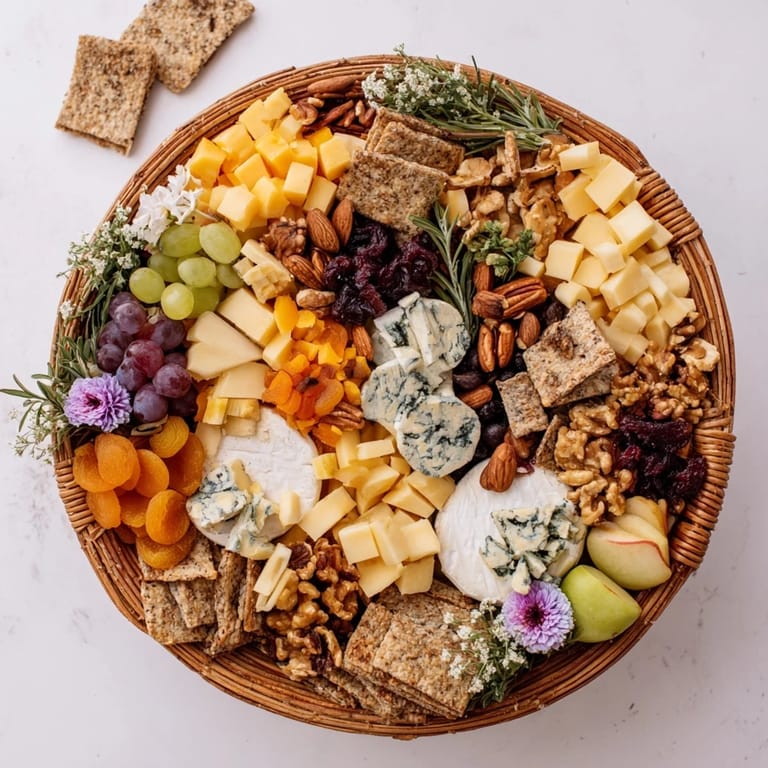
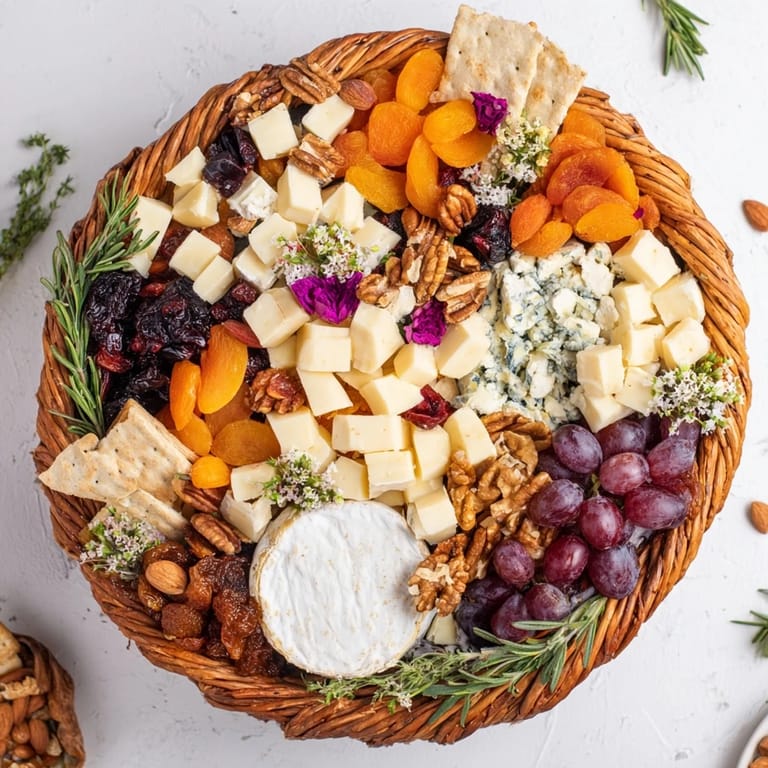
- Dried apricots, figs, cranberries, and apple rings: These are your flavor anchors. I learned to buy them from bulk sections when possible because they're fresher and you can taste the difference. The color contrast matters more than you'd think—it's what makes this arrangement pop visually.
- Seedless grapes: A small handful brings a fresh, juicy surprise among all that richness. They're optional but I include them every time because they keep the platter from feeling heavy.
- Walnuts, pecans, and almonds: Toast them lightly beforehand if you want deeper flavor, but honestly, raw works beautifully too. The variety of shapes and textures is half the appeal.
- Aged cheddar, goat cheese, blue cheese, and aged gouda: This is where personality lives. Don't be afraid to swap these for your favorites—a sharp manchego, a creamy brie, whatever calls to you. Cube them generously so they're easy to grab.
- Rustic crackers and sliced baguette: These are the vehicles for flavor. I always have extras on hand because guests inevitably want more than you'd expect.
- Fresh rosemary and thyme: These aren't just pretty—they perfume the whole platter. Break them into small sprigs so they nestle naturally among the fruits and cheeses.
- Cornucopia basket or bread horn: The wicker basket is traditional and reusable. If you're feeling ambitious, the bread horn is completely edible and absolutely worth the extra step. It turns the centerpiece into something truly magical.
Tired of Takeout? 🥡
Get 10 meals you can make faster than delivery arrives. Seriously.
One email. No spam. Unsubscribe anytime.
Instructions
- Set your stage:
- Place your cornucopia on the center of your most beautiful serving board or platter. Step back and look at it from every angle—this is your canvas, and everything that comes next builds the composition.
- Start with the anchor:
- Nestle your cheeses into the opening of the horn first, letting some cubes and rounds tumble outward onto the board. This creates that sense of abundance that makes the cornucopia feel alive and generous.
- Build the abundance:
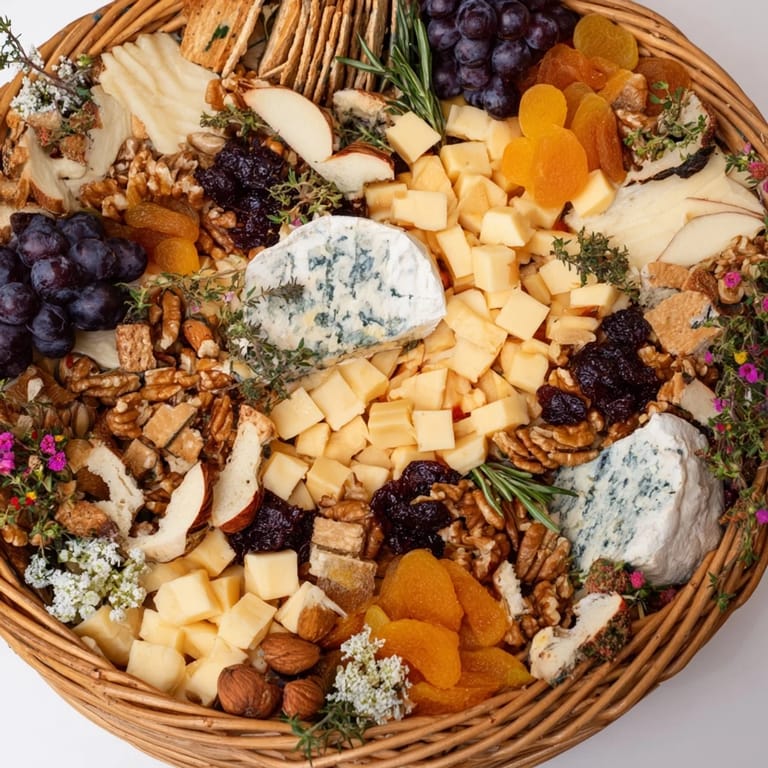
- Now comes the fun part. Grab handfuls of dried fruits and nuts and layer them around and spilling from the horn. Mix the colors deliberately—apricots next to figs, pecans beside almonds. Think of it like painting with food. Let some pieces cascade onto the board, as if the horn is so full it simply can't contain everything.
- Tuck in the crackers:
- Slide your crackers and baguette slices into the arrangement at angles, creating little pathways and pockets. They ground the composition and remind guests these aren't just decorative elements—they're meant to be enjoyed together.
- Finish with fragrance:
- Tuck your herb sprigs throughout the arrangement. A sprig of rosemary here, a whisper of thyme there. If you have edible flowers or seasonal leaves, this is where they go—scattered like nature placed them herself.
- Bring to the table:
- Serve everything at room temperature. Let guests graze, mix flavors, discover combinations. This is finger food at its most elegant.
 Pin It
 The moment I knew this recipe was truly special came when I made it for my first Thanksgiving as a host. My mother walked into the kitchen, saw it, and actually teared up a little. She said it reminded her of a simpler time when food wasn't just about eating—it was about gathering, about witnessing abundance together. That's the real magic of this dish.
Edible Horn (If You're Feeling Ambitious)
If you want to take this completely over the top, make the horn from bread dough. It's easier than it sounds and absolutely worth it. Wrap your favorite bread dough around a foil-covered cone shape, brush with egg wash, and bake until deeply golden. The result is this gorgeous, edible vessel that's practically a sculpture. When guests realize they can actually eat the horn itself, their faces light up. I've made it both ways countless times, and while the wicker basket is traditional and reliable, the bread horn always wins the reaction contest.
Flavor Pairing Secrets I've Learned
This arrangement is about letting each bite be its own discovery. A walnut with gouda and a dried apricot is completely different from that same walnut with blue cheese and a cranberry. I've learned to encourage guests to be adventurous—pair the sweetness of figs with the sharpness of blue cheese. Combine the earthiness of pecans with creamy goat cheese. I always set out small plates and napkins because once people start, they can't stop experimenting with flavor combinations. It becomes interactive, fun, and genuinely delicious in ways you wouldn't expect.
Making It Your Own
This is one of those recipes that becomes better the more personal you make it. Swap in the cheeses that excite you. If you're obsessed with a particular nut, double down on it. I've added candied ginger for warmth, included fresh pomegranate seeds for brightness, swapped pistachios in for traditional almonds. The skeleton of the recipe is solid, but the personality comes from your choices. My best version came from listening to what guests loved most and leaning harder into those elements next time.
- Add honey, fig jam, or apple butter on the side for guests who want extra sweetness or an unexpected dip.
- Pair the whole platter with a medium-bodied red wine, sparkling cider, or even a light white wine for contrast.
- Prep your cheeses the morning of but assemble everything within 2 hours of serving to keep crackers crisp and everything tasting fresh.
 Pin It
 Every time I set this on a table, I'm reminded that the best dishes aren't about complicated techniques—they're about generosity, about saying you're worth slowing down for. This cornucopia does exactly that.
Recipe FAQs
- → What type of cheeses work best for this centerpiece?
Aged cheddar, creamy goat cheese, rustic blue cheese, and aged gouda provide a balanced range of textures and flavors, complementing the dried fruits and nuts.
- → Can I make the horn base at home?
Yes, shape bread dough around a foil-covered cone, bake until golden, and let cool to create an edible horn base for a creative presentation.
- → Are there nut-free alternatives?
To accommodate nut allergies, consider substituting nuts with extra dried fruits or seed-based snacks for crunch and flavor.
- → How should this centerpiece be served?
Serve at room temperature to allow flavors of the cheeses and dried fruits to shine, making it easy for guests to select their preferred bites.
- → What pairings complement this autumn harvest horn?
Medium-bodied red wines or sparkling ciders pair well, enhancing the richness of cheeses and the sweetness of dried fruits.