 Pin It
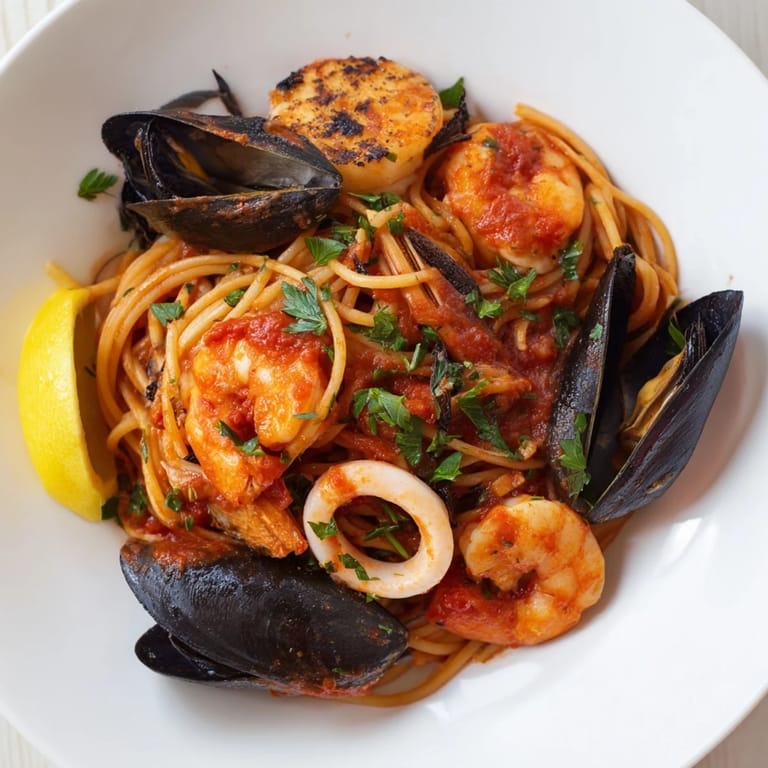
 There's something about the moment you open a container of fresh seafood at the market—that briny, ocean-forward smell that instantly transports you somewhere else. I was in a small Italian trattoria in Rome years ago when a server placed down a bowl of marinara pasta studded with shrimp, mussels, and squid. The sauce was glossy and fragrant, clinging to each strand of pasta like it was meant to be there. I spent the entire meal chasing it with bread, and when I got home, I knew I had to recreate that exact feeling. This recipe is the result of that craving and countless kitchen experiments with timing, seafood selections, and sauce balance.
I made this for my partner on a random Tuesday night when they'd had a rough day at work. The kitchen filled with that garlic-and-wine aroma, and by the time I plated it, they were already setting the table without being asked. We ate it standing up at first, too hungry to wait, and laughed about how the squid had this satisfying chew that made the whole thing feel more real than takeout ever could.
Ingredients
- Large shrimp, peeled and deveined (200g / 7 oz): Buy them from a fishmonger if you can—the quality difference is noticeable, and they'll cook evenly without the flavor-stealing shell.
- Mussels, cleaned and debearded (200g / 7 oz): Check them right before cooking; any that don't close when tapped should go back or straight to the compost.
- Squid rings (150g / 5 oz): Keep these cold until the last second—they cook in minutes and can toughen if left sitting.
- Sea scallops (150g / 5 oz): Pat them dry before adding to the sauce; moisture is the enemy of a good sear.
- Spaghetti or linguine (350g / 12 oz): I prefer linguine here because its flat surface captures the sauce better than round strands.
- Olive oil (2 tbsp): Use your good stuff—not the fancy kind you never open, just something you actually like the taste of.
- Onion, finely chopped (1 small): This softens into the sauce and becomes the sweet foundation everything else builds on.
- Garlic cloves, minced (3): Fresh garlic makes all the difference; jarred tastes like regret in this dish.
- Red pepper flakes (1/2 tsp, optional): I use them every time because the gentle heat plays beautifully against the sweet tomato.
- Canned crushed tomatoes (800g / 28 oz): San Marzano if your budget allows, but any crushed tomato that doesn't have added sugar will work.
- Tomato paste (2 tbsp): This concentrate adds umami depth that rounds out the entire sauce.
- Dry white wine (100ml / 1/3 cup + 1 tbsp): Pick something you'd actually drink—the acid cuts through the richness and builds flavor as it reduces.
- Dried oregano and basil (1 tsp each): Dried herbs are what you want here; fresh basil goes in at the very end if you use it.
- Sugar (1/2 tsp): Just a whisper to balance the acidity of the tomatoes and wake up the overall flavor.
- Sea salt and black pepper: Taste as you go; the pasta water and seafood release their own salt, so go easy early on.
- Fresh parsley, chopped (2 tbsp): This bright green finish cuts the richness and adds a fresh note right at the end.
- Lemon wedges: Squeeze them over the finished pasta to brighten everything just before eating.
Tired of Takeout? 🥡
Get 10 meals you can make faster than delivery arrives. Seriously.
One email. No spam. Unsubscribe anytime.
Instructions
- Get your pasta water ready:
- Bring a large pot of salted water to a rolling boil. The water should taste like the sea—this is where the pasta picks up its flavor. Get it going before you start anything else.
- Cook the pasta:
- Add pasta to the boiling water and cook according to package instructions until it's al dente, which means it has a slight resistance when you bite it. Before you drain it, scoop out about 1/2 cup of that starchy water and set it aside—this liquid gold will help you adjust the sauce later.
- Build your sauce base:
- While the pasta cooks, heat olive oil in a large, deep skillet over medium heat. Add the chopped onion and let it soften for 2 to 3 minutes, stirring occasionally, until it turns translucent and sweet. Add the minced garlic and red pepper flakes, stirring for just 1 minute—you want the garlic fragrant, not brown.
- Deglaze with wine:
- Pour in the white wine and let it simmer for about 2 minutes. You'll hear it hiss and bubble as the alcohol evaporates; this is the sauce developing its backbone. The tomatoes will cling to the pan beautifully after this step.
- Add the tomato foundation:
- Stir in the crushed tomatoes, tomato paste, oregano, basil, sugar, and a pinch of salt and pepper. Everything should come together into a glossy, vibrant red sauce. Let it simmer uncovered for about 10 minutes, stirring every couple of minutes, so the flavors meld and the sauce thickens slightly.
- Time the seafood carefully:
- Add squid rings and scallops first and let them cook for 2 minutes—they take longer than the shrimp and mussels. Then add the shrimp and mussels, cover the skillet, and cook for 3 to 4 minutes until the shrimp turn pink and the mussel shells have popped open. Discard any mussels that stubbornly refuse to open; they're not worth the risk.
- Marry the pasta and sauce:
- Add your drained pasta directly to the skillet and toss gently, making sure every strand gets coated in that beautiful sauce. If the sauce looks too thick, splash in a little of that reserved pasta water—a quarter cup at a time—until you get the consistency you want.
- Final taste and serve:
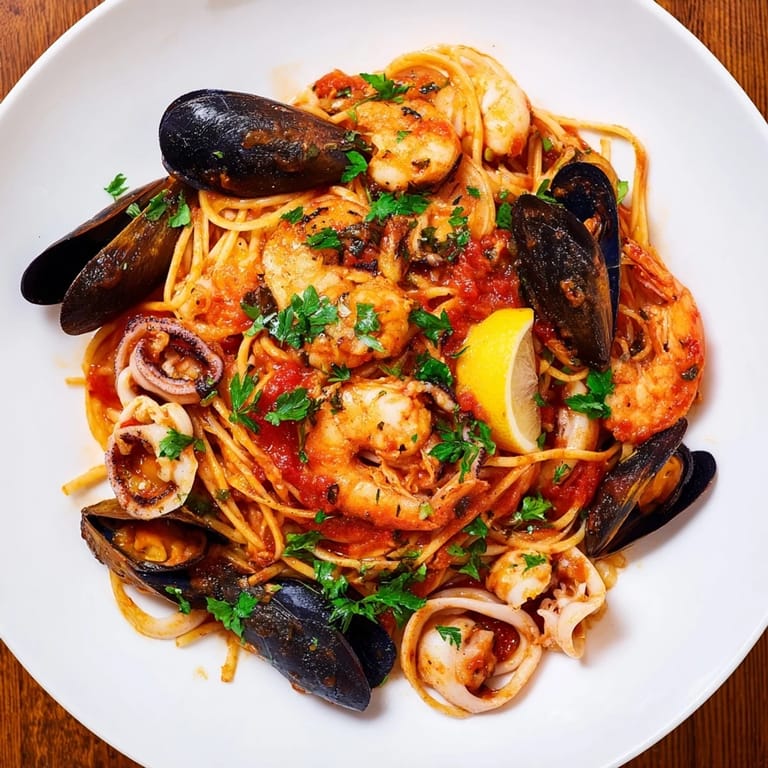
- Take a bite and adjust the salt and pepper. Serve immediately into warm bowls, top with fresh parsley, and set out lemon wedges so people can squeeze them over their own portions.
 Pin It
 There's a quiet satisfaction in plating this dish—watching the seafood shine through the sauce, knowing that everyone who eats it is about to have a moment of pure contentment. I've learned that the best meals aren't always complicated; they're just made with attention and the good sense to use fresh ingredients and let them shine.
The Seafood Selection Secret
The magic of this pasta comes from mixing seafood types, not relying on just one. Shrimp alone would be nice, but shrimp with mussels and squid and scallops creates this symphony of different textures—tender, briny, slightly chewy—that makes you actually think about what you're eating. I started doing this because I was at a fishmonger once and didn't want to commit to a single choice, so I bought a little of everything. That small decision became the heart of this recipe. When you're shopping, don't be afraid of the squid or the scallops; they're not intimidating once you understand they just need minimal cooking.
The Wine Matters More Than You Think
I used to skip the wine or substitute it with water, thinking the alcohol would cook off anyway and the acidity wasn't essential. That was wrong. The wine does something to the sauce that tomatoes alone can't achieve—it adds a subtle brightness and complexity that rounds out the earthiness. Now I always use something I'd actually drink, because cheap wine tastes cheap, and you can taste the difference in the final dish.
Timing Is Everything (Here's How Not to Rush It)
The temptation with seafood is to cook it fast, and while it's true that seafood cooks quickly, rushing this dish leads to a thin sauce and overcooked shrimp. Let the tomato sauce simmer and develop for its full 10 minutes before you even think about the seafood. Your future self will thank you when the sauce is silky instead of watery. This is also why timing the pasta to finish at almost the same moment as your seafood is so important—you're not waiting around once everything goes together.
- Start your pasta water first, then begin the sauce base; they'll finish around the same time if you time it right.
- Don't open the skillet to peek at the seafood while it's cooking; the steam is doing important work.
- Have everything prepped and within arm's reach before you start cooking, because things happen fast once they do.
 Pin It
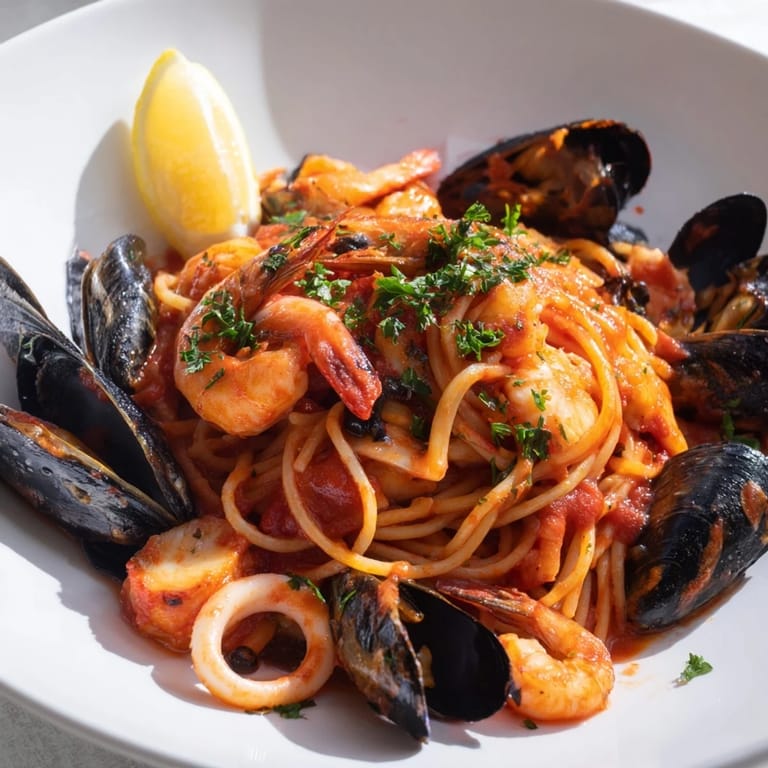
 This dish has become my go-to when I want to feel fancy without spending hours in the kitchen. Every time I make it, I'm grateful for that moment in Rome and the willingness to chase a feeling in my own kitchen.
Recipe FAQs
- → What seafood works best in this dish?
A combination of shrimp, mussels, squid rings, and scallops creates a rich variety of textures and flavors ideal for marinara sauce.
- → Can I use a different type of pasta?
Spaghetti or linguine are traditional choices, but any long, thin pasta will complement the sauce well.
- → How can I adjust the sauce's flavor?
Adding a splash of dry white wine and balancing herbs like oregano and basil enhances depth, while a pinch of sugar balances acidity.
- → What is the best way to ensure the seafood cooks properly?
Add seafood in stages: start with rings and scallops, then shrimp and mussels last, cooking until shrimp turn pink and mussels open.
- → How do I keep the pasta from drying out?
Reserve some pasta water before draining to loosen the sauce and help it cling to the pasta smoothly.