 Pin It
 One autumn afternoon, my kitchen filled with the most intoxicating smell—charred tomato skin and caramelized onion edges turning everything golden in the oven. My neighbor stopped by asking what I was making, and when I explained it was just roasted tomatoes becoming soup, she seemed skeptical until that first spoonful proved that sometimes the simplest ingredients reveal their deepest magic through heat and time. That day I understood why Italians have been perfecting tomato soup for centuries.
I made this for my sister's book club on a rainy Tuesday, and watching four different women asking for the recipe felt like a small victory. One guest mentioned she usually avoided tomato soup thinking it was always too acidic or thin, and this one changed her mind completely. That moment taught me that a truly good recipe isn't about complicated techniques—it's about respecting your ingredients enough to let them shine.
Ingredients
- Ripe tomatoes (1.5 kg): Use tomatoes at peak ripeness if possible, as they carry the sweetness you're chasing; pale or underripe ones will taste thin and acidic even after roasting.
- Yellow onion (1 large): The sweetness here balances tomato acidity naturally, so don't skip it or substitute with red onion.
- Garlic cloves (6): Roasted garlic becomes mellow and almost nutty, a far cry from the harsh bite of raw garlic.
- Extra-virgin olive oil (2 tbsp): This isn't the place to use budget oil; good olive oil makes a real difference in the final flavor.
- Kosher salt and black pepper: Season generously before roasting so the vegetables caramelize properly.
- Vegetable broth (2 cups): Low sodium matters here because you'll be tasting salt from the roasted vegetables too.
- Fresh basil leaves (1/2 cup): Add this after the soup is off heat so the brightness stays intact instead of turning dark and muted.
- Unsalted butter and sugar (optional): Butter adds silkiness if you want it, and a pinch of sugar rounds out any lingering sharpness without making it taste sweet.
- Heavy cream or crème fraîche (1/4 cup): A drizzle on top gives elegance, though the soup is rich enough without it.
- Croutons or toasted bread: Adds texture contrast and makes the bowl feel more complete.
Tired of Takeout? 🥡
Get 10 meals you can make faster than delivery arrives. Seriously.
One email. No spam. Unsubscribe anytime.
Instructions
- Prep your mise en place:
- Halve your tomatoes and quarter the onion while your oven preheats to 220°C (425°F). This takes just minutes but keeps you organized when things move quickly.
- Coat and roast:
- Spread everything on a parchment-lined baking sheet, drizzle with olive oil, season with salt and pepper, then slide it into the oven. You'll want to roast for 35-40 minutes until the tomato edges char slightly and the onions soften completely.
- Build the soup base:
- Scrape every bit of those roasted vegetables and their caramelized juices into a pot, add broth, and let it simmer gently over medium heat. The simmering takes about 5 minutes to start pulling flavors together.
- Stir in the finishing touches:
- Add fresh basil, butter if you're using it, and a touch of sugar to balance acidity. Let these meld briefly over the heat.
- Blend until silky:
- An immersion blender works wonderfully right in the pot, but a regular blender in batches works just as well. Blend until completely smooth, or leave a little texture if that appeals to you.
- Taste and adjust:
- This is when you discover whether you need more salt, a touch more sugar, or perhaps that optional balsamic vinegar splash. Trust your palate here.
- Strain for polish (optional):
- Running the soup through a fine sieve removes any lingering tomato skin fragments, giving it that restaurant-quality finish. It's extra but noticeable.
- Serve with ceremony:
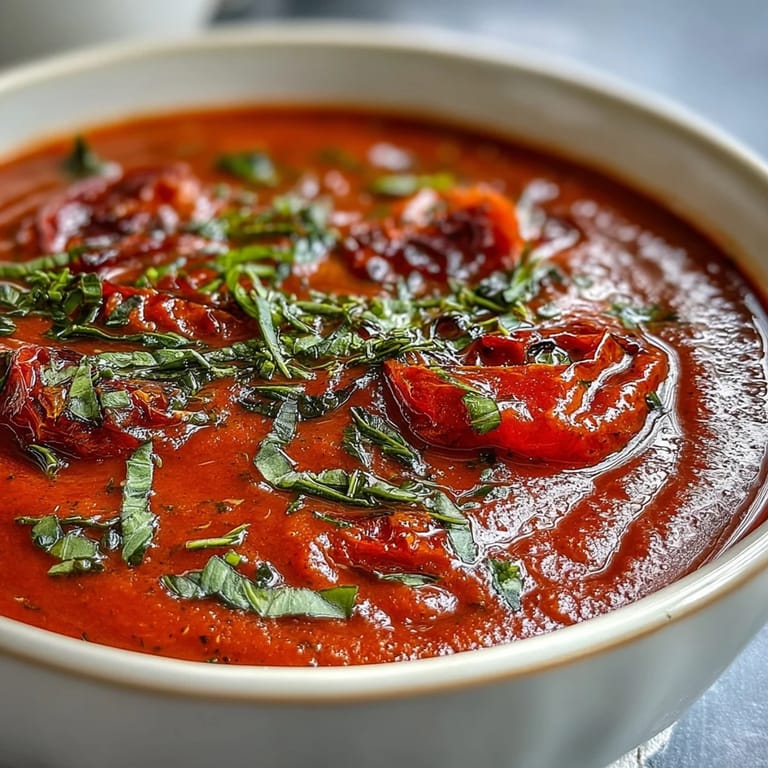
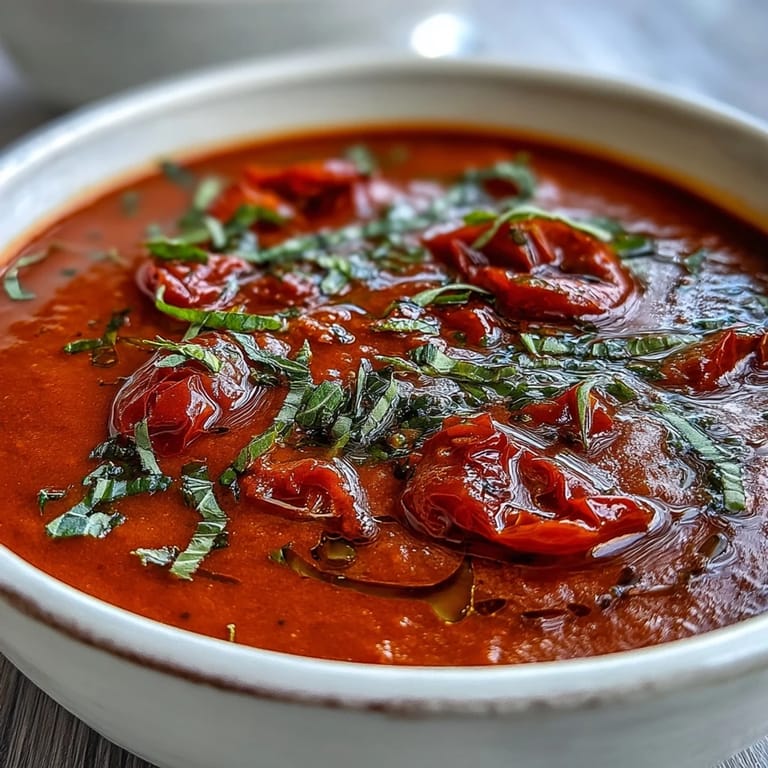
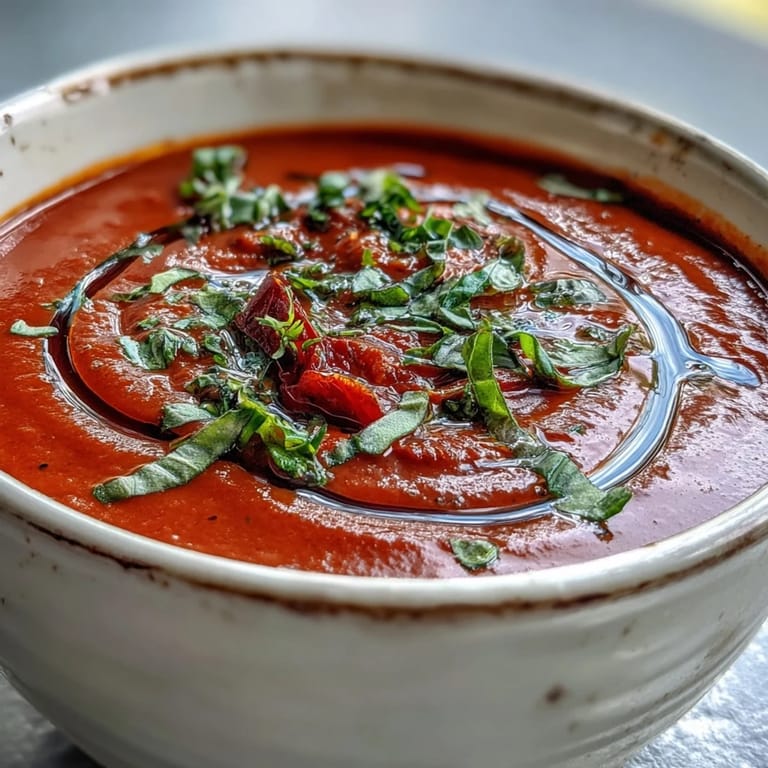
- Ladle into bowls, add a swirl of cream if you like, scatter fresh basil on top, and maybe add some croutons for crunch. Hot soup in a warm bowl tastes infinitely better.
 Pin It
 There's something grounding about serving a bowl of soup that tastes entirely different from the sum of its parts, as if the oven unlocked flavors that were always hiding inside the tomatoes. My family started requesting this soup as their comfort meal, which felt like the highest compliment.
The Science of Roasting
When you roast tomatoes at high heat, their water content evaporates while their natural sugars concentrate and caramelize on the cut surfaces. This is why roasted tomato soup tastes so much more vibrant than simmered versions—the flavor becomes dense and layered instead of watered down. The onions and garlic follow the same logic, their sulfur compounds breaking down into sweet, mellow compounds through the maillard reaction that happens during roasting.
Variations Worth Trying
Once you master the base, this soup becomes your canvas for creativity. I've added roasted red peppers for smokiness, stirred in a splash of balsamic vinegar for depth, and even finished a batch with a sprinkle of crispy pancetta for guests who eat meat. Each variation respects the core but gives it a different personality, which is exactly how recipes should evolve in a home kitchen.
Storing and Reheating Tips
This soup keeps beautifully in the refrigerator for three to four days and actually tastes better on day two as flavors meld. You can also freeze it in portions for up to three months, though I find the fresh basil garnish matters more after freezing since reheating can dull the herb's brightness anyway.
- Reheat gently over medium-low heat rather than boiling, which can make the texture grainy.
- Add fresh basil again when serving leftovers to recover that just-made vitality.
- If frozen soup seems thick after thawing, thin it with a splash of broth or cream to restore the silky consistency.
 Pin It
 Make this soup when you want to feel like you've done something special with your afternoon, because honestly, you have. There's real magic in turning tomatoes into something this good.
Recipe FAQs
- → Can I make this ahead of time?
Yes, this soup actually improves overnight as flavors meld. Store in an airtight container in the refrigerator for up to 4 days. Reheat gently over medium-low heat, adding a splash of broth if needed to adjust consistency.
- → How do I achieve the smoothest texture?
Use an immersion blender directly in the pot for convenience, or process in batches using a countertop blender. For an ultra-silky finish, press the pureed soup through a fine-mesh sieve to remove any remaining fibers or seeds.
- → What tomatoes work best?
Roma or San Marzano tomatoes are ideal due to their meaty texture and lower water content. However, any ripe, in-season tomatoes will produce excellent results. Avoid using mealy out-of-season tomatoes as they lack sweetness and depth.
- → Can I freeze this soup?
Absolutely. Cool completely before transferring to freezer-safe containers, leaving space for expansion. Freeze for up to 3 months. Thaw overnight in the refrigerator and reheat gently. Note that cream may separate; stir well while reheating.
- → What can I serve with this soup?
Crusty garlic bread, grilled cheese sandwiches, or homemade croutons are classic pairings. For a lighter option, serve alongside a simple green salad with balsamic vinaigrette. A crisp Sauvignon Blanc or Pinot Grigio complements the acidity beautifully.
- → How can I add more depth?
Stir in a tablespoon of tomato paste with the broth, or add a splash of balsamic vinegar before blending for complexity. A sprig of fresh thyme or oregano during roasting also adds herbal layers. A dash of smoked paprika introduces subtle smokiness.