 Pin It
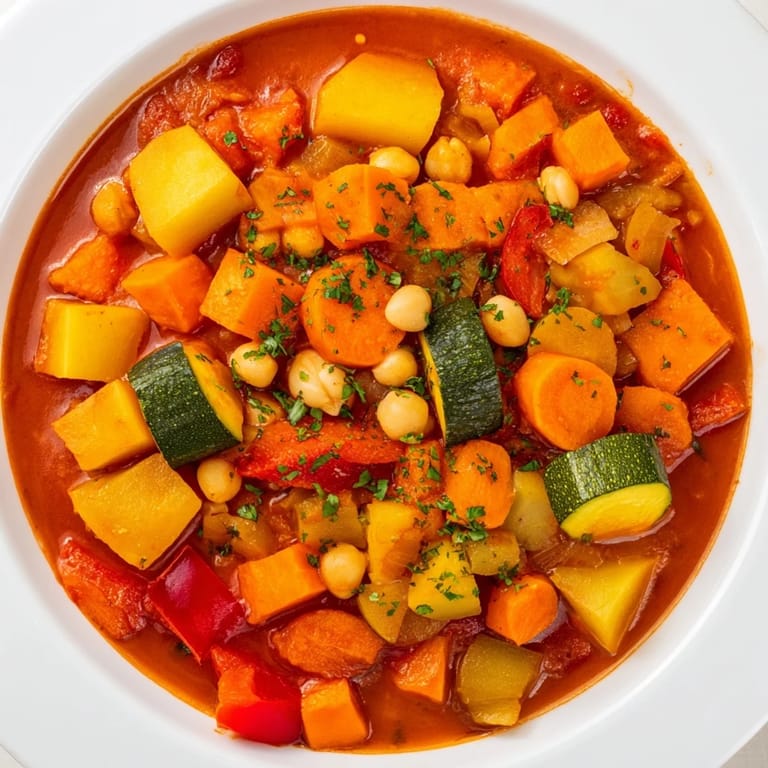
 I discovered this stew on a gray October afternoon when my fridge held nothing but sweet potatoes and a half-empty can of tomatoes. What started as improvisation became something I now make whenever the temperature drops, watching the kitchen fill with the smell of caramelized onions and cumin. There's something about the way the bright orange sweet potato softens into the deep red broth that feels both elegant and utterly simple. My partner called it a hug in a bowl, and I haven't called it anything else since.
I remember serving this to a friend who'd just moved to a new city and was feeling lonely. She came over on a Friday night, and while the stew simmered, we talked about everything and nothing. By the time we ate, that pot had somehow become a vessel for comfort—not fancy, not trying too hard, just genuinely there when she needed it. She's made it three times since and always texts me photos of her version.
Ingredients
- Sweet potatoes: The heart of this stew—their natural sweetness balances the acidity of tomatoes and creates that creamy texture when they break down.
- Regular potatoes: These add substance and help thicken the broth as they release their starch, keeping everything nourishing without extra cream.
- Carrots: Buy them whole if you can and slice them yourself; they stay firmer and taste brighter than pre-cut.
- Onion, celery, and garlic: This is your flavor foundation—don't skip the aromatics step, as it transforms everything that comes next.
- Red bell pepper and zucchini: They add sweetness and keep the stew colorful, but honestly you can swap them for whatever looks good at the market.
- Cannellini and chickpeas: I use one of each for a mix of textures, but you can double one type if that's what you have on hand.
- Diced tomatoes and tomato paste: The paste is non-negotiable—it adds depth that fresh tomatoes alone can't quite reach.
- Vegetable broth: A good broth makes all the difference; if yours tastes tinny, add an extra pinch of salt and a bay leaf.
- Smoked paprika, thyme, cumin: These three spices work like a team—they're earthy, warm, and completely transformative.
- Olive oil: Use what you have, but good oil makes the sauté stage sing.
Tired of Takeout? 🥡
Get 10 meals you can make faster than delivery arrives. Seriously.
One email. No spam. Unsubscribe anytime.
Instructions
- Build your base:
- Heat olive oil in your pot and let the onion, celery, and carrot soften for 5 minutes, stirring occasionally until the onion turns translucent and the kitchen smells alive. You'll know it's ready when the celery seems almost soft enough to break with a spoon.
- Add brightness:
- Stir in the garlic, red pepper, and zucchini and cook for 3 minutes, letting everything release its fragrance. The garlic should smell sweet, not harsh.
- Introduce the stars:
- Add your diced potatoes and sweet potatoes along with all the spices—the paprika, thyme, cumin, pepper, and salt—then sauté for 2 minutes until the spices bloom and coat every vegetable. This step matters more than it sounds; it wakes up the spices and settles them into the oil.
- Build the broth:
- Stir the tomato paste directly into the vegetables, stirring for about 30 seconds so it coats everything in rust-colored richness, then pour in your diced tomatoes and broth. Add the bay leaf and bring everything to a boil.
- Let it become tender:
- Cover and reduce heat to low, then simmer for 20 minutes until the potatoes are just soft when you pierce them with a fork. The sweet potatoes will want to disintegrate; catch them right before that happens.
- Bring in the beans:
- Add your drained cannellini and chickpeas, then simmer uncovered for 10 to 15 minutes more while the flavors meld and the broth becomes deeper and slightly thicker. Taste it now and you'll notice how much more complex it tastes.
- Finish with green:
- If you're using spinach, stir it in and cook for just 2 minutes until it disappears into the broth. Remove the bay leaf, taste, and adjust your salt—you might be surprised how much you want.
 Pin It
 I learned to make this stew during a winter when everything felt uncertain, and somehow ladling it into bowls became a small ritual of taking care of myself. Now whenever someone is going through a hard time, they get a batch of this with crusty bread and a quiet text saying "You're doing better than you think."
Why This Stew Wins in Winter
There's something about warm, plant-based comfort food that makes you slow down without trying. The sweetness of the potatoes prevents this from tasting like deprivation, and the spices give it enough character that you're genuinely looking forward to the next spoonful. I've served this to meat-eaters and plant-based eaters alike, and no one feels like they're missing anything.
Make It Your Own
The beauty of this stew is how forgiving it is—add what you have, skip what you don't. I've made versions with butternut squash instead of sweet potato, added kale instead of spinach, and thrown in mushrooms when I had them. Once you understand the building blocks—aromatics, spices, potatoes, broth, and beans—you can improvise endlessly.
Serving and Storage Wisdom
This stew is even better the next day when the flavors have had time to find each other. It keeps in the fridge for 4 days and freezes beautifully for up to 3 months, which means you can make a double batch and thank yourself later. Serve it with crusty bread to soak up the broth, over rice for something heartier, or straight from the bowl when you want pure comfort.
- For a spicier version, stir in a pinch of chili flakes right before serving so you can adjust to your taste.
- Add lemon wedges at the end; a squeeze of brightness completely changes how the stew tastes.
- Leftover stew sometimes needs a splash of broth when you reheat it, since the starches from the potatoes keep absorbing liquid.
 Pin It
 This stew has taught me that the most nourishing meals are often the simplest ones, built on patience and good ingredients rather than complexity. Make it when you need comfort, make it to care for someone you love, make it and freeze it for the person you'll be next month when you're tired.
Recipe FAQs
- → Can I substitute the beans with other legumes?
Yes, lentils or other seasonal legumes can be used to adjust texture and flavor while maintaining protein content.
- → How can I make the stew spicier?
Add ½ teaspoon of chili flakes during the sautéing step to introduce a mild heat boost.
- → Is this dish suitable for meal prepping?
Absolutely, the stew stores well in the refrigerator and flavors deepen over time, making it ideal for make-ahead meals.
- → Can I use other vegetables instead of those listed?
Seasonal vegetables like butternut squash or sweet corn work well and can add variety to the stew.
- → What is the best way to serve this stew?
Serve it hot with crusty bread or over rice for a heartier, satisfying meal.
- → How do I enhance the flavor if using store-bought broth?
Check broth flavors and consider adding extra herbs or seasonings to enrich the stew’s taste.