 Pin It
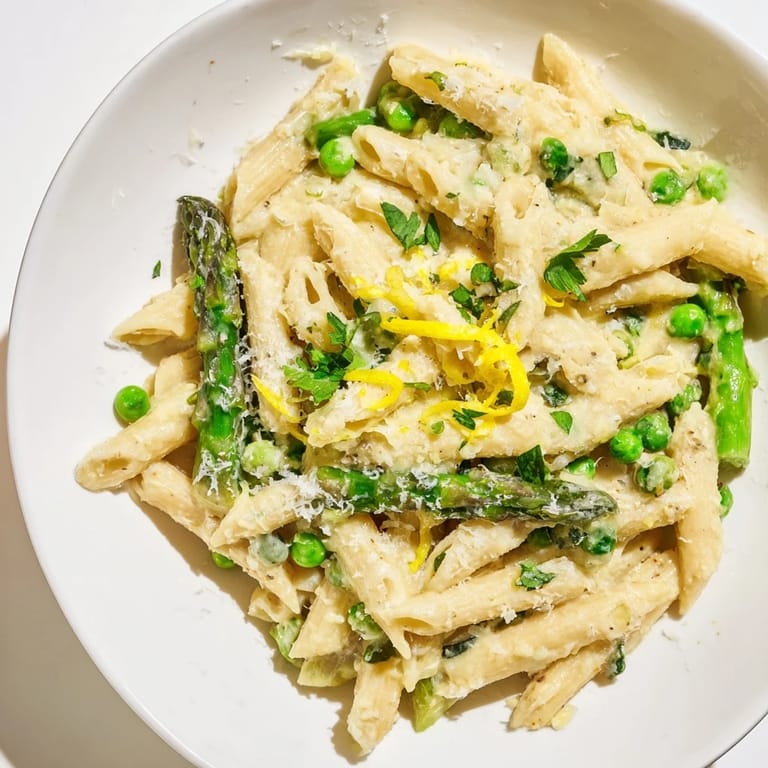
 The first time I made this pasta, it was a Tuesday evening and I'd grabbed whatever looked fresh at the market, not really planning anything beyond dinner needed to happen. My kitchen smelled like garlic and spring vegetables, and something about that bright green mix against the creamy sauce just felt right after a long gray winter. Now it's become my go-to when I want something that feels special but doesn't take forever to put together.
Last spring my sister came over for dinner and we ended up eating this straight from the cooking pot while standing at the counter, talking and laughing and forgetting to actually sit down at the table. Sometimes the best meals happen when you're not trying to make everything perfect.
Ingredients
- 350 g (12 oz) penne pasta: The ridges catch the sauce perfectly, and I've found penne holds up better than longer pasta shapes when you're tossing it with all those vegetables
- 200 g (7 oz) asparagus, trimmed and cut into 2.5 cm (1-inch) pieces: Look for tight, closed tips and stalks that snap rather than bend
- 150 g (1 cup) fresh or frozen peas: Fresh peas are wonderful if you can find them, but frozen work perfectly fine here
- 150 g (1 cup) green beans, trimmed and cut into 2.5 cm (1-inch) pieces: Keep them roughly the same size as the asparagus so everything cooks evenly
- 2 tbsp olive oil: This creates the base for your sauce, so use something you like the taste of
- 3 cloves garlic, finely minced: Freshly minced garlic makes a huge difference here over pre-minced jar versions
- 60 ml (1/4 cup) vegetable broth: Helps deglaze the pan and adds depth to the cream sauce
- 120 ml (1/2 cup) heavy cream: Creates that silky texture, though half-and-half works if you want something lighter
- 60 g (2/3 cup) freshly grated Parmesan cheese: Freshly grated melts so much better than the pre-shredded stuff that never seems to fully incorporate
- 1/2 tsp freshly ground black pepper: Freshly cracked pepper makes a noticeable difference in the final flavor
- 1/4 tsp salt (or to taste): Start with less and add more at the end since the Parmesan is already salty
- Zest of 1 lemon: This brightens everything up and cuts through the richness of the cream
- 1 tbsp fresh lemon juice: Add this right at the end to keep the flavors popping
- Extra grated Parmesan and fresh basil or parsley, chopped: For serving and making everything look inviting
Tired of Takeout? 🥡
Get 10 meals you can make faster than delivery arrives. Seriously.
One email. No spam. Unsubscribe anytime.
Instructions
- Cook the pasta:
- Bring a large pot of salted water to a boil and add the penne, cooking until al dente according to package directions. Before draining, scoop out 120 ml (1/2 cup) of the starchy cooking water and set it aside, then drain the pasta.
- Start the vegetables:
- While the pasta cooks, heat the olive oil in a large skillet over medium heat. Add the minced garlic and sauté for about 1 minute until it becomes fragrant, watching carefully so it does not brown or burn.
- Cook the spring vegetables:
- Add the asparagus, green beans, and peas to the skillet. Sauté for 3 to 4 minutes until the vegetables are just tender but still bright green and vibrant.
- Build the sauce base:
- Pour in the vegetable broth and let it bubble for about 2 minutes, using your spoon to scrape up any flavorful bits from the bottom of the pan.
- Add the cream:
- Reduce the heat to low and stir in the heavy cream and 60 g of Parmesan. Keep stirring until the cheese melts completely and you have a smooth, velvety sauce.
- Combine everything:
- Add the cooked penne to the skillet and toss it well to coat every piece with sauce. Add some of the reserved pasta water if the sauce seems too thick.
- Season and serve:
- Season everything with black pepper, salt, lemon zest, and lemon juice. Toss again and serve immediately, topped with extra Parmesan and fresh herbs.
 Pin It
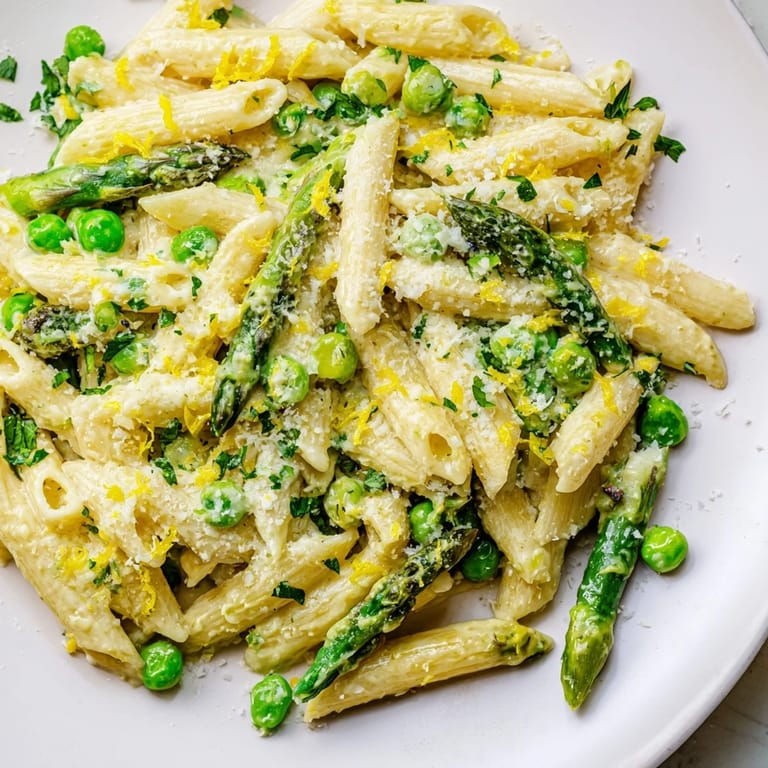
 This recipe has become a regular in my rotation because it hits that sweet spot between comforting and fresh. There's something about the combination of tender vegetables and that creamy, cheesy sauce that just works.
Make It Your Own
Sometimes I'll add a handful of baby spinach right at the end, letting it wilt just slightly in the hot pasta. Other times I've tossed in some cherry tomatoes that burst and create little pockets of sweetness throughout the dish.
Getting The Timing Right
The trick is getting your vegetables to that perfect tender-crisp stage. You want them cooked through but still with some bite, not mushy. I usually test a piece of asparagus with my fork to check.
Serving Suggestions
This pasta stands beautifully on its own with a glass of crisp white wine and some crusty bread to soak up any extra sauce. A simple green salad with a vinaigrette cuts through the richness nicely.
- A light arugula salad with lemon vinaigrette balances the creamy pasta
- Grilled chicken or shrimp work well if you want to add some protein
- Leftovers reheat surprisingly well with a splash of cream or pasta water
 Pin It
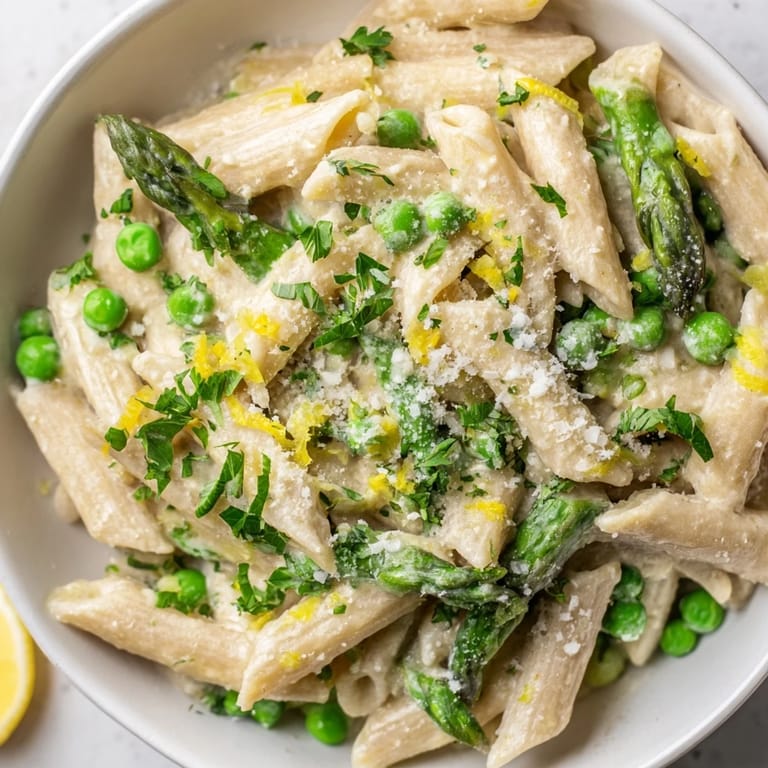
 Hope this bright, creamy pasta finds its way to your table soon. Sometimes the simplest recipes are the ones we come back to again and again.
Recipe FAQs
- → Can I use frozen vegetables instead of fresh?
Yes, frozen vegetables work beautifully in this dish. Use the same quantities and cook them slightly longer (4-5 minutes) until tender, as they may take a moment longer than fresh to soften.
- → How do I prevent the sauce from breaking?
Keep the heat low when adding cream and cheese to prevent curdling. Stir constantly and add the cheese slowly, allowing it to melt smoothly. The reserved pasta water helps create a silky sauce.
- → Can this be made ahead?
This dish is best served immediately after preparation. However, you can prep ingredients in advance. If you must store it, keep it in an airtight container for up to two days and reheat gently on the stovetop, adding a splash of pasta water to restore creaminess.
- → What can I substitute for heavy cream?
Half-and-half creates a lighter version with less richness. For dairy-free options, use plant-based cream alternatives like oat or cashew cream. Adjust quantities slightly as non-dairy options may behave differently when heated.
- → How do I achieve the perfect al dente pasta?
Follow package instructions but begin testing two minutes before the suggested time. Properly cooked al dente pasta should be tender with a slight firmness in the center. This prevents mushiness when tossed with the warm sauce.
- → What are good wine pairings for this dish?
A crisp white wine like Pinot Grigio, Sauvignon Blanc, or Vermentino pairs wonderfully. The acidity cuts through the creamy sauce while complementing the fresh spring vegetables and bright lemon notes.